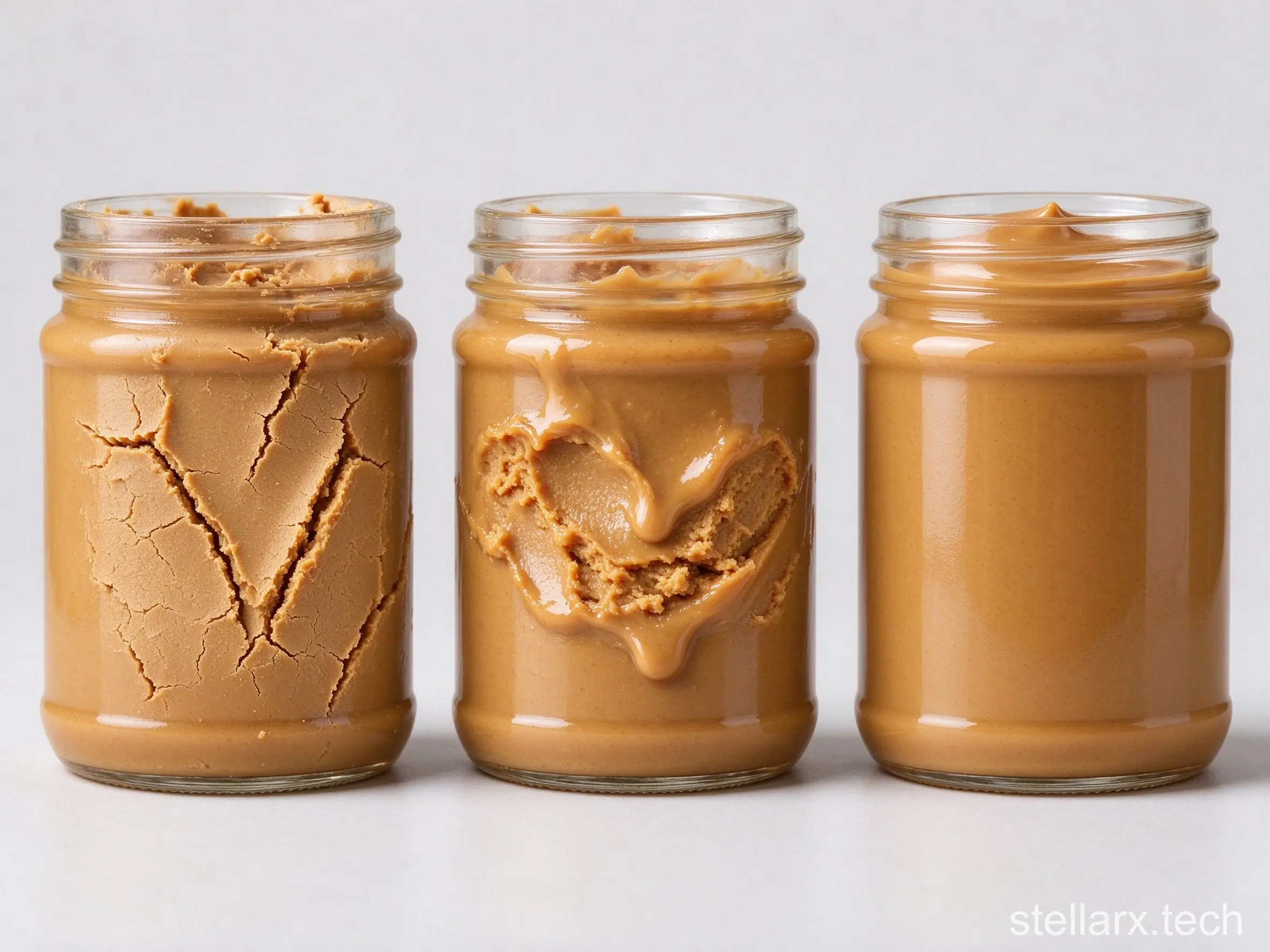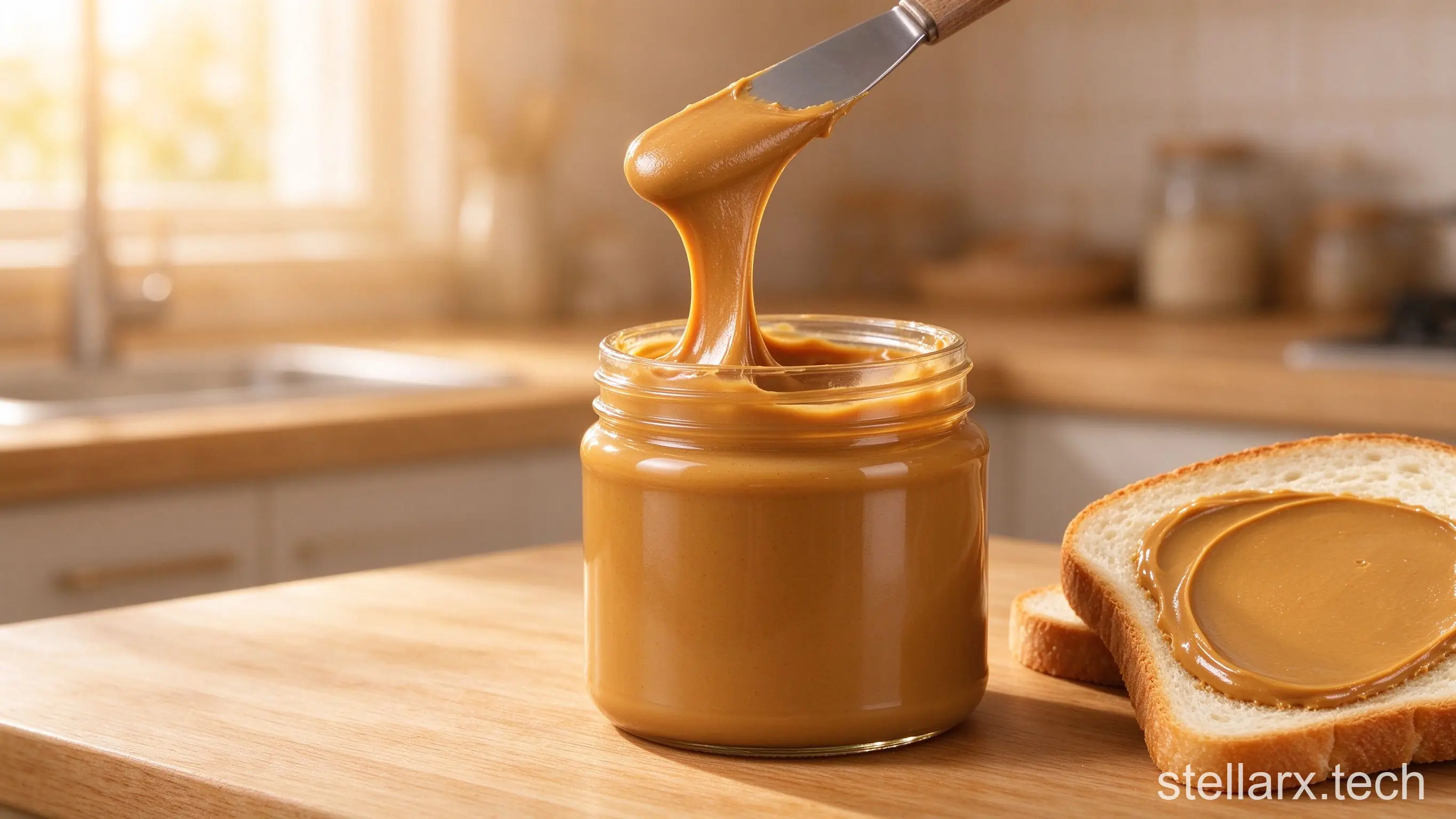
A jar of sesame paste sat in the kitchen for months. The bottom went hard, impossible to dig out. Grandma didn't throw it away. She added water, a little at a time, and stirred with a spoon — and the paste turned smooth, and never separated again.
That trick is the same physics that decides whether a peanut butter is silky or "frozen." Good peanut butter is a balance: rich enough not to leak oil, soft enough not to harden.
Why a Jar of Sesame Paste "Freezes"
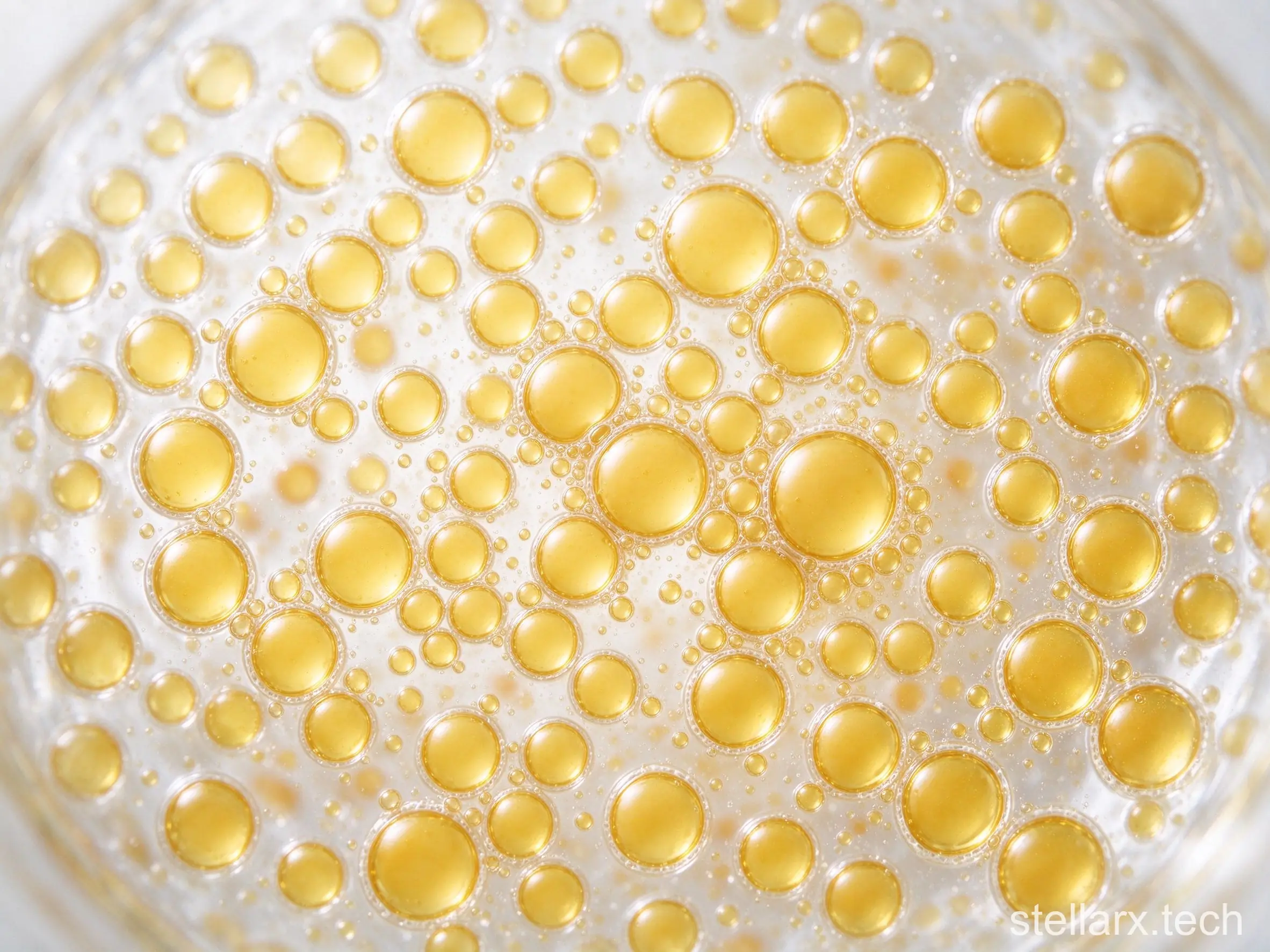
Unstirred sesame paste separates because it is mostly oil and solid particles. Oil is light and floats; the solid particles are heavy and sink. Without enough water and no emulsion structure to hold the oil droplets in place, the oil slowly rises and pools on top.
Add water in small amounts and keep stirring, and everything changes. Proteins in the paste absorb water, swell, and thicken the mix. The paste's natural proteins and phospholipids act like tiny coats around each oil droplet, keeping droplets evenly spread in water. The mix shifts from "more oil than water" to a stable oil-in-water emulsion. Now the paste is thicker, and a protein network plus solid particles support the droplets — they can't float up fast, and they can't bump into each other and merge.
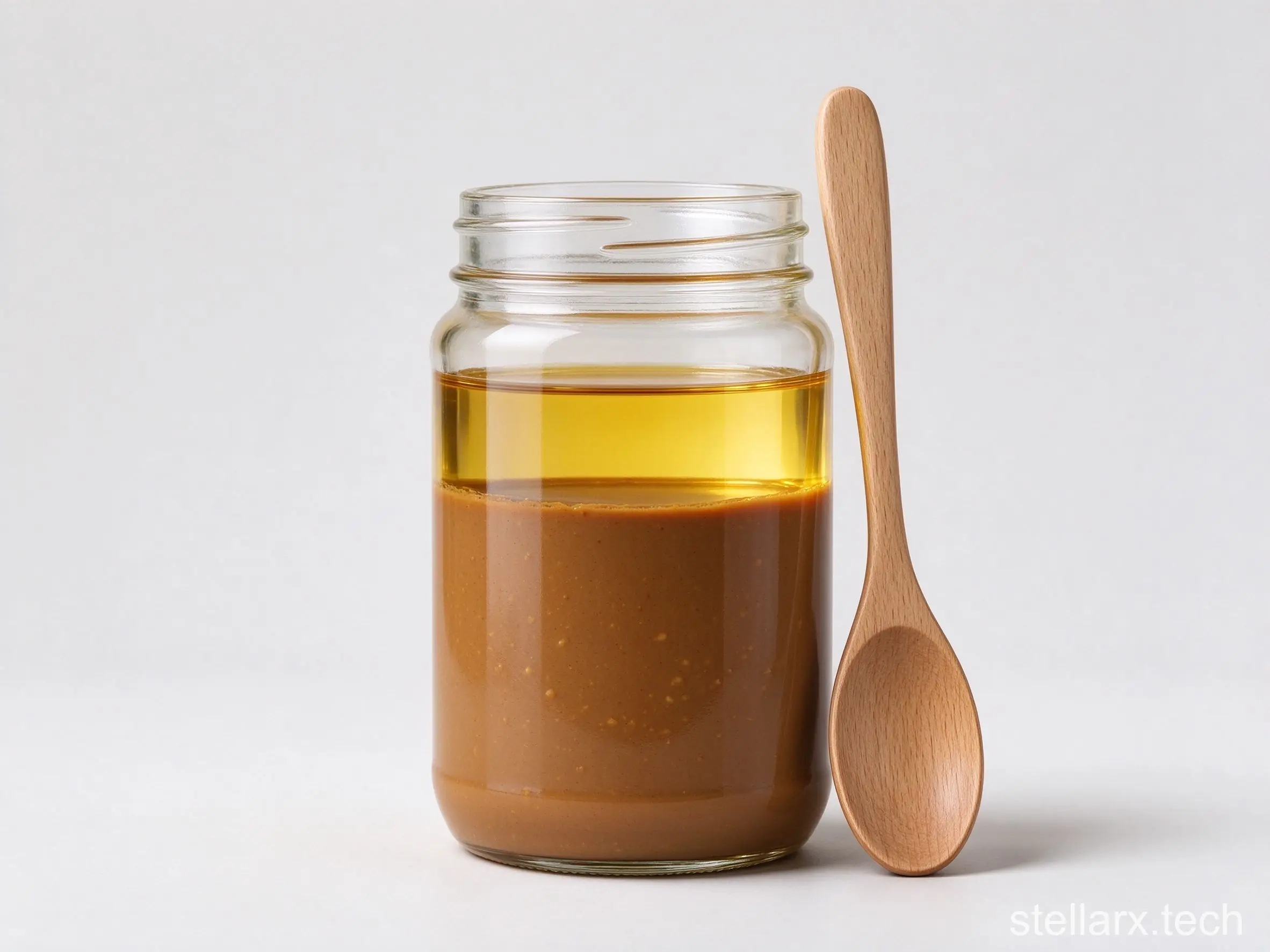
Separation only happens after droplets first merge into bigger ones and then rise. That is why stirred, water-tempered sesame paste stops separating — and why an unstable peanut butter keeps turning oily on top, stiff underneath.
Does the Peanut Variety Matter? Yes — Protein and Oleic Acid
Peanut butter hardening is tied to the variety, through two molecules.
Protein is the direct driver. Peanut proteins act as solid particles that stick to each other. More protein means denser packing and stronger molecular bonds — a thicker, stiffer paste. It needs no water; it is pure particle filling and protein-to-protein contact. "Like sand," the original kitchen wisdom puts it: the more sand, the harder to stir.
Oleic acid acts indirectly, through oxidation. The advantage of high-oleic peanut varieties is oxidative stability. Ordinary peanuts are rich in polyunsaturated fats, which oxidize easily. The oxidation products attack peanut proteins, changing their structure and rearranging them — a major reason stored peanut butter gradually turns hard and sticky. High-oleic varieties slow that oxidation at the source.
More Protein Isn't Always Smoother
Protein is the "skeleton" of the paste — and a skeleton can be too stiff.
Too much protein: more solid particles, proteins that cling together, higher yield stress. The paste stands firm — and spreads like cement.
Too little protein: the paste can't hold its shape, turns soft, runny, even splits into oil and solids.
The ideal jar sits in the middle: thick enough not to leak oil, soft enough not to harden.
That balance is rare, because it costs effort. Fine grinding heats the nuts: one pass to 200-mesh fineness — particles around 75 micrometers, while a peanut cell is only about 40 micrometers — generates enough heat to oxidize the oil and damage the aroma. Doing it in two gentle passes keeps the temperature down and the roasted smell intact.