At some point, your face starts mutinying without permission. The laugh lines show up the moment you smile. The nasolabial fold stops hiding under concealer. And when you press a palm against your temple and pull upward, the skin holds for exactly as long as you keep pulling — then snaps back into the old shape.
Nobody slept badly. Nobody stopped washing their face. The skin just… decided to move downward.

The two usual answers are both expensive in their own way. Injectables — Botox, fillers, threads — give a visible result, but you pay for it with money, downtime, and the knowledge that it never ends: injections wear off, and you rebook. Luxury creams are gentler, but slow enough that people quietly suspect they are paying for the jar.
There is a third road, and it runs through a molecule that was once more expensive than gold.
The Molecule That Cost $150,000 a Kilogram
Hyaluronic acid — the ingredient now printed on half the world's skincare bottles — was, in the 1980s, a Western monopoly priced at $150,000 to $200,000 per kilogram. The extraction technology was locked abroad; every gram was imported.
A research institute in Shandong spent nearly a decade on the problem. In 1992, it broke through with microbial fermentation: bacteria produced the molecule instead of extraction labs, and the price collapsed. Today China supplies more than 80% of the world's hyaluronic acid, and the ingredient that once cost more than gold sits in a tube you can buy for a few dollars.

A Wrinkle Is Not One Thing — It's Three
Most skincare arguments miss the basic fact: a wrinkle is not one thing. It is three.
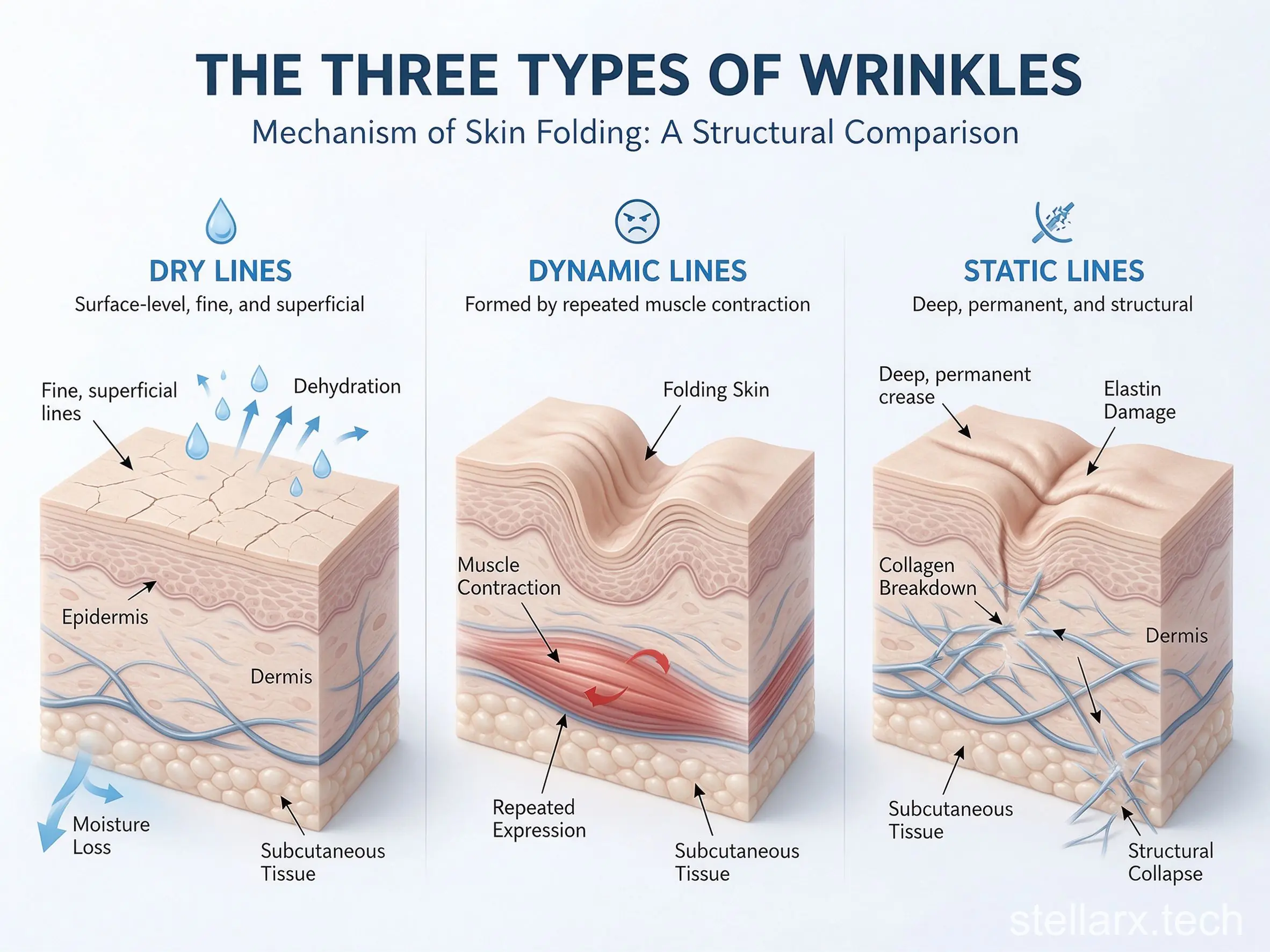
Dry lines are fine, shallow creases from dehydrated skin. Moisture fixes them.
Dynamic lines appear when you make an expression. The root cause is muscle: the same facial muscles contract and fold the skin thousands of times, and the fold leaves a mark.
Static lines stay even when your face is relaxed. These are aging lines — the skin has lost collagen and elastin, the protein scaffolding that holds it up, and the tissue sinks.
The frown line between your brows while you are frowning? Dynamic. The same line that stays when you relax? Static. Two different problems, two different treatments.
The Peptides That Mimic Botox
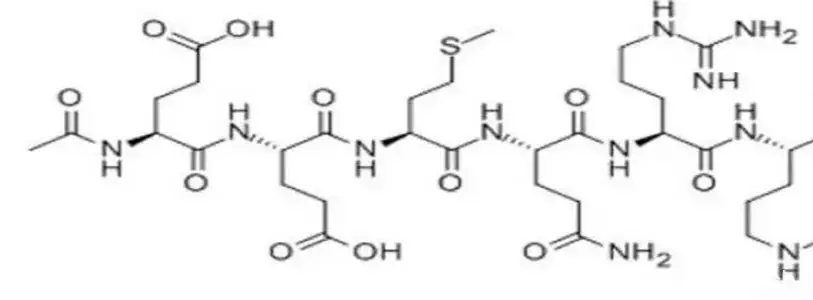
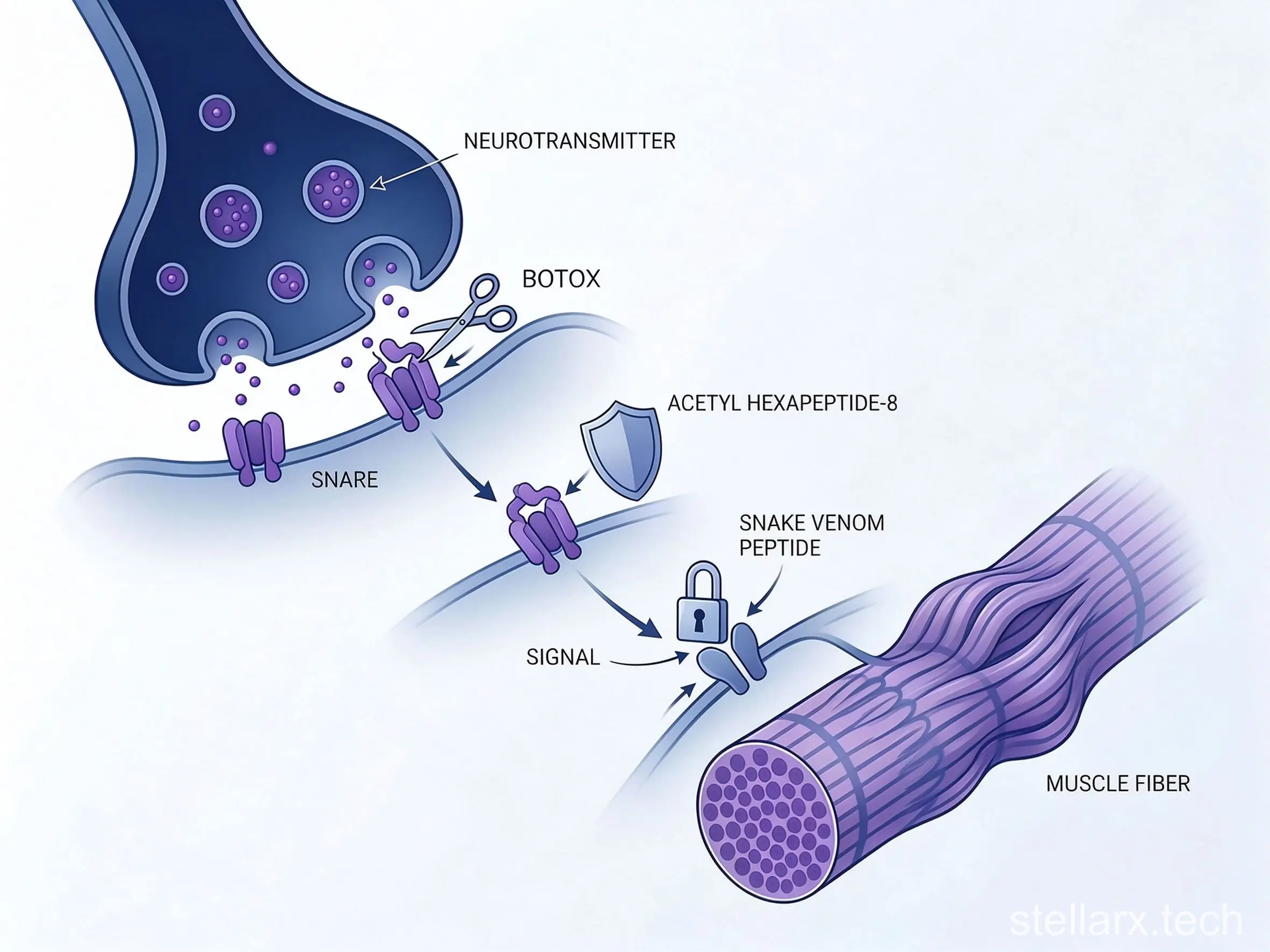
This is where "topical Botox" enters. The nickname belongs mostly to acetyl hexapeptide-8, sold under the brand name Argireline. It is a short peptide modeled on a fragment of SNAP-25 — one of the proteins that Botox itself snips. The peptide competes inside the SNARE complex, the molecular machinery that releases the chemical signal telling a muscle fiber to contract. Weaker signal, softer fold.
The second peptide in the pair, dipeptide diaminobutyroyl benzylamide diacetate — sometimes called snake venom peptide — blocks the other end of the line: the receptor that receives the nerve's excitement signal.
One intercepts the signal at the front end. The other blocks the receiver at the back end. Together they cover the two steps that turn "thinking about frowning" into "a fold in your skin."
Why "Topical Botox" Isn't Botox
The marketing name is a nickname, not a biological identity. Botox is a toxin that irreversibly cuts SNARE proteins inside the muscle. A peptide is a mimic: it competes for space, it does not cut. It works on the surface, on dynamic lines formed by repeated contraction.