Your gut is not born hating vegetables and loving peanuts. The real story: most vegetables are actually low in dietary fiber — not nearly enough to push your intestines along — and different types of fiber work on blood lipids, blood sugar, stool and weight loss through very different mechanisms.
Vegetables Are Not Fiber Powerhouses
There is a widespread misunderstanding: people treat "vegetables" and "rich in fiber" as the same thing, then assume that gnawing through a mountain of greens will cure constipation.
In fact, most vegetables are mostly water — usually over 90% — so their fiber content is not high at all, typically 0.5%–2.8%. Leafy greens: Chinese cabbage about 0.8%, lettuce 1.0%–1.3%, spinach about 2.2%, kale about 4.1%. Flower vegetables: broccoli 1.6%–2.6%, cauliflower 2.1%. Root vegetables: carrot about 2.8%, potato 2.1%, lotus root 4.9%. Melons and nightshades: tomato about 0.5%, cucumber 0.7%, pumpkin 1.5%–3.2%.
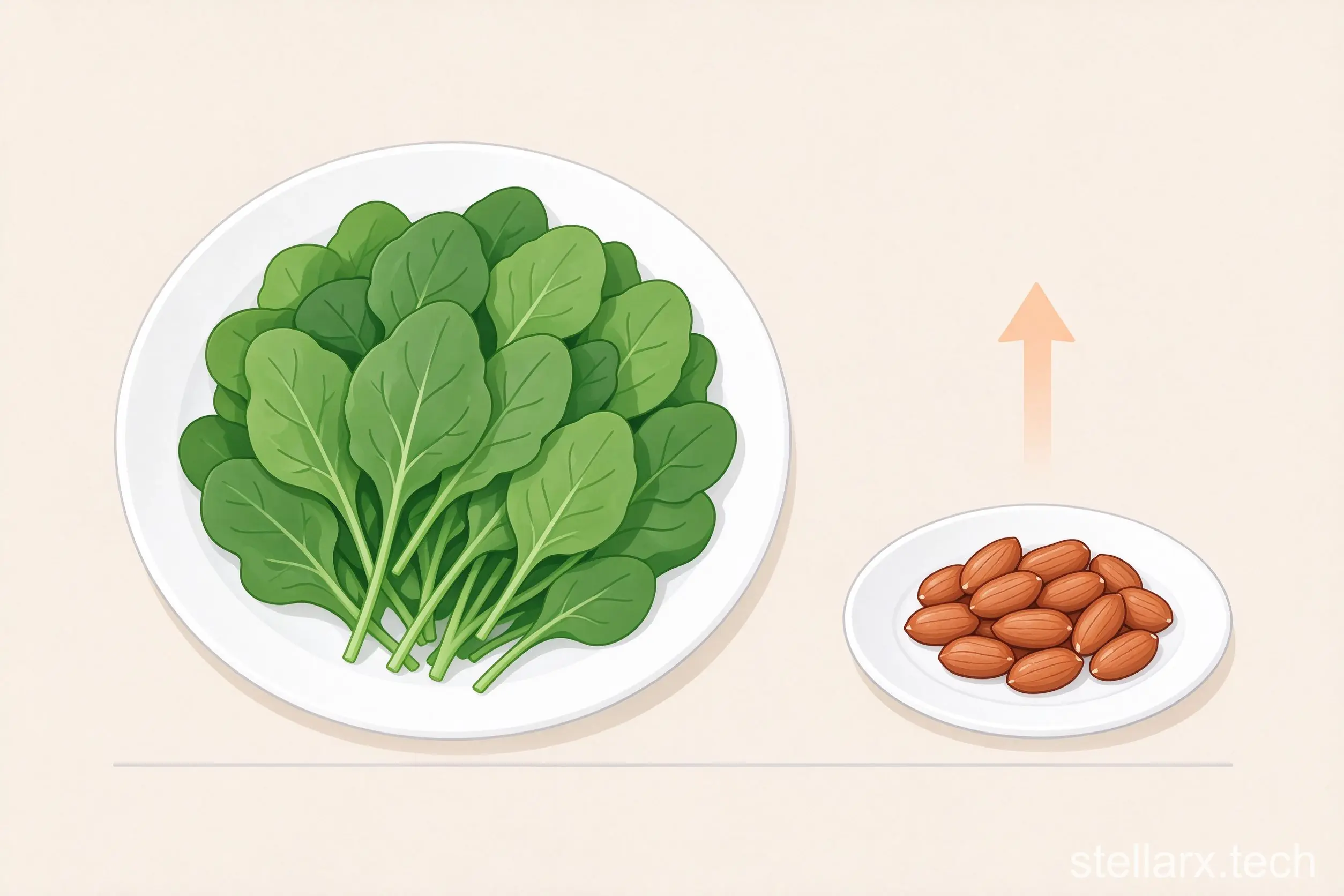
Now the math. The Chinese dietary reference intakes (2023 edition) recommend 25–30 g of fiber per day for adults over 18. Take 27 g as the middle value: to get it entirely from spinach, you would need 27 ÷ 2.2 × 100 ≈ 1,272 g — almost 2.5 jin of raw spinach. From broccoli, the better option: 27 ÷ 3.7 × 100 ≈ 730 g, over 1.5 jin. Even following the food-guide pyramid's 500 g of vegetables a day gives you only about 10 g of fiber.
Chinese residents are not close to this target: the average daily fiber intake in 2015–2017 was just 10.4 g — less than half the recommendation.
So why do nutrition guides insist on vegetables? Because vegetables are loaded with vitamins, minerals and plant phenolics; fiber is simply not their strongest suit. Their core job is diverse nutrition and filling dietary volume — which is exactly why a balanced diet matters.
[
Why Peanuts Work
Peanuts sit high in the fiber family: about 8 g of fiber per 100 g raw, 5–7 g per 100 g when boiled. To hit 27 g from peanuts alone, you would need about 450 g — roughly a jin. Compare that with 1,273 g of spinach.
But here is the catch: a jin of peanuts also delivers about 2,300–2,500 kcal — nearly one and a half days of energy for an adult man — and roughly 200 g of fat. Peanut kernels carry about 44.3 g of fat per 100 g. Most of it is the "good" kind — monounsaturated (MUFA) and polyunsaturated (PUFA) fats that can lower bad cholesterol and support heart health — but the total fat still blows past the daily recommendation.
Fiber achieved, calories and fat exceeded. Peanuts are a highly efficient fiber fighter, but they cannot — and should not — fight alone.
The Fiber Army: A Combination Strategy
The winning move is a diverse, high-fiber food army, which is exactly why the food pyramid exists.
The main force — whole grains and legumes. The dietary guide recommends that a quarter to half of your daily staples be whole grains and legumes. Per 100 g dry weight they deliver about 6–15 g of fiber; making them a third of your staple intake (about 100 g) brings roughly 10 g. The pyramid calls for 200–300 g of staples a day, including 50–150 g of whole grains and legumes.
The special forces — nuts and seeds. Peanuts, almonds and similar nuts carry 4%–11% fiber (black sesame 14%, pine nuts 12.4%). They pair fiber with healthy fats, but they are calorie-dense, so keep the portion small: a handful of 10–15 g a day as a snack or side. Their protein (peanuts rank second only to almonds among nuts) brings strong satiety, and their unsaturated fats stimulate cholecystokinin, which lowers appetite through both vagal and non-vagal pathways. The 2021 Chinese expert consensus on type 2 diabetes even suggests diabetics drink water before meals and eat a small handful of nuts — say 10 almonds or 20 peanuts.
The support troops — high-fiber vegetables and fruits. On top of the daily 300–500 g of ordinary vegetables, consciously add fiber-rich picks: edamame, peas, mushrooms, pears, strawberries. A handy pattern is the "3-2-1" vegetable mode: 3 liang of leafy greens, 2 liang of any other vegetables (excluding potato, yam, lotus root, taro), and 1 liang of fungi and seaweed — mushrooms, enoki, laver, kelp, black fungus.
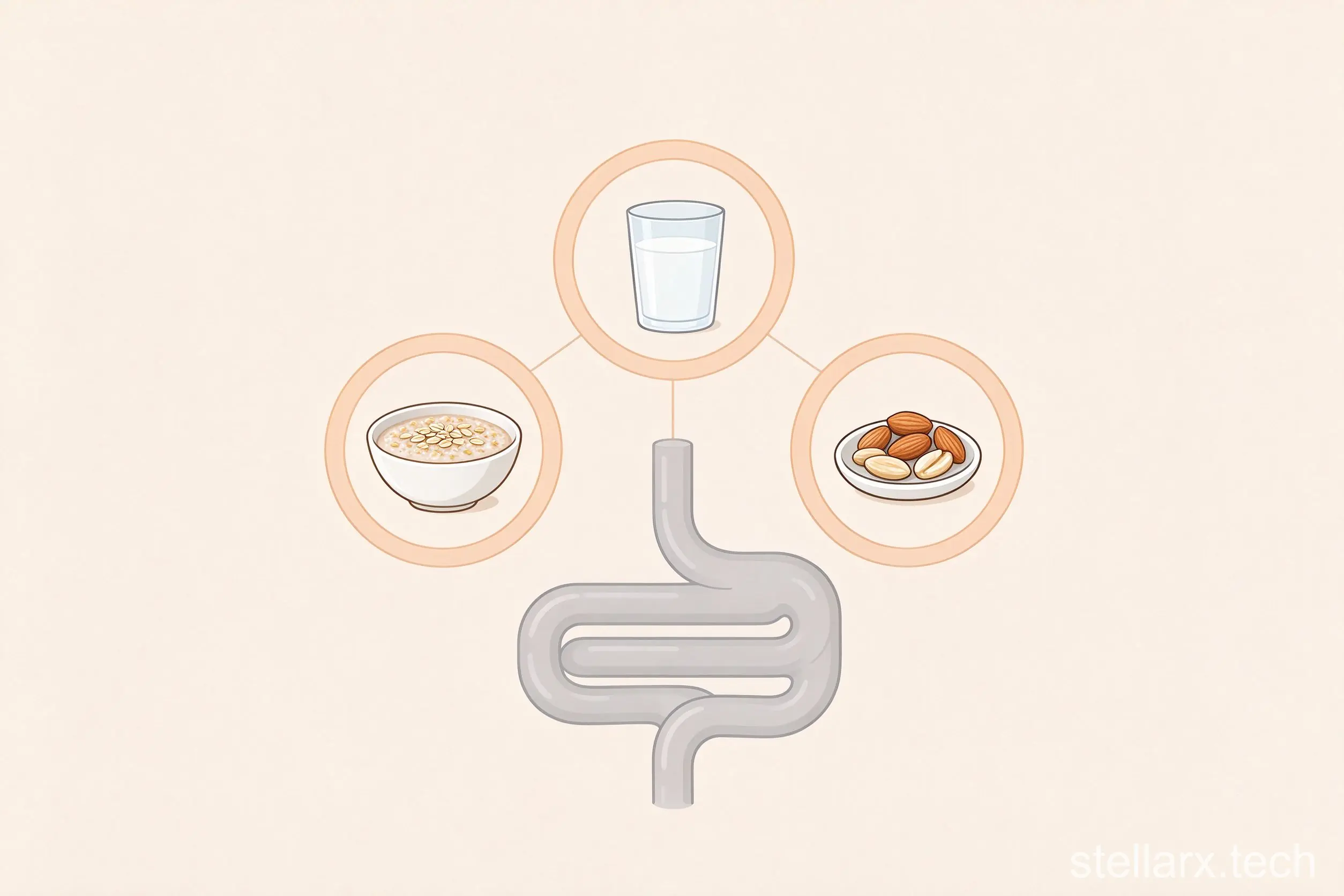
A full day then writes itself: a bowl of oatmeal (5–8 g), half of lunch and dinner staples switched to brown rice or whole wheat (8–10 g), a jin of vegetables and fruit (8–10 g), plus a small handful of peanuts or almonds (2–3 g). Target reached, nutrition balanced.
Quality Matters: Soluble vs Insoluble Fiber
Not all fiber is the same. Per the Chinese Nutrition Society's 2021 scientific consensus and the national food-nutrient terminology standard, dietary fiber must be: naturally present in plants or extracted/synthesized from them; a polymer of at least 3 carbohydrate units; edible but not digestible or absorbable in the human small intestine; and beneficial to health.
The 2023 dietary guide for hyperlipidemia recommends 25–40 g of fiber daily for those with high blood lipids, including 7–13 g of soluble fiber.
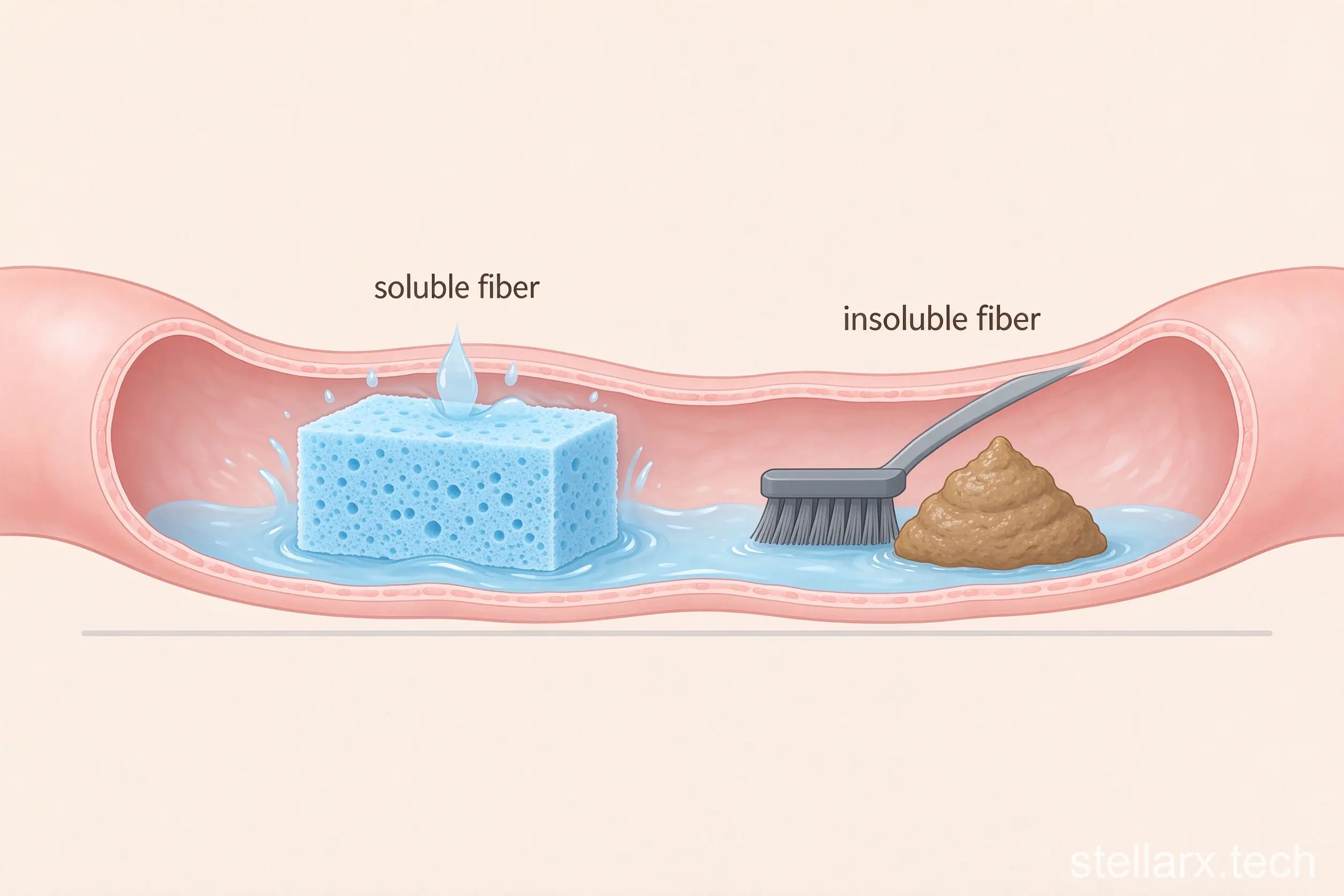
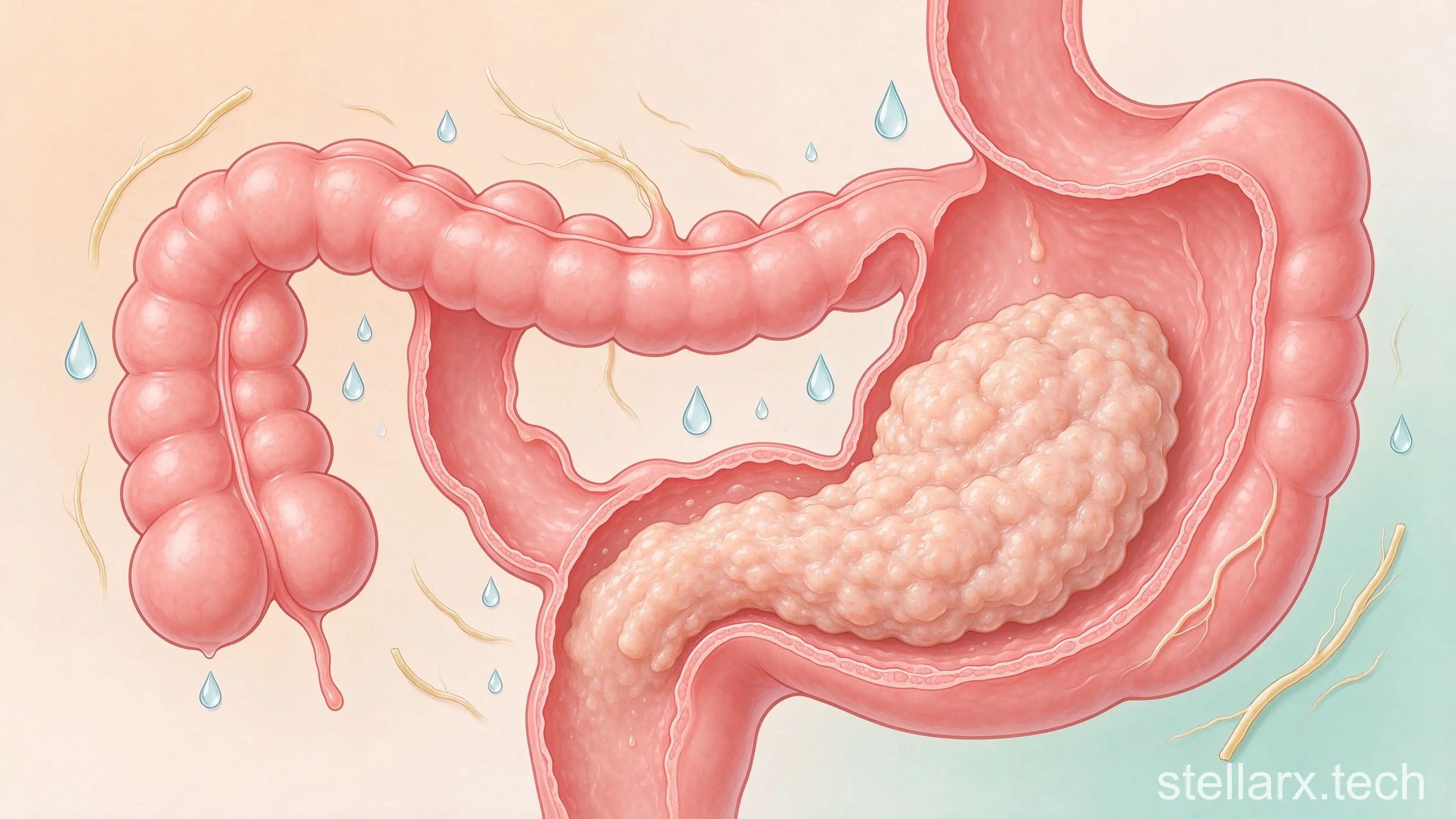
Soluble fiber dissolves in water and forms a gel: it slows food movement, brings satiety, and is fermented by colon bacteria — increasing bacterial numbers and stool bulk. It works like a sponge: soaking up water, softening the stool, expanding its volume. It also acts as a prebiotic, feeding beneficial gut bacteria and supporting the microbiome — helpful for constipation, but to be limited during diarrhea.
Insoluble fiber does not dissolve in water, is not fermented, and adds no calories: it increases stool bulk, speeds colonic transit and prevents constipation. Think of it as a gentle "brush" that mechanically stimulates the gut wall, adding volume and pushing things along.