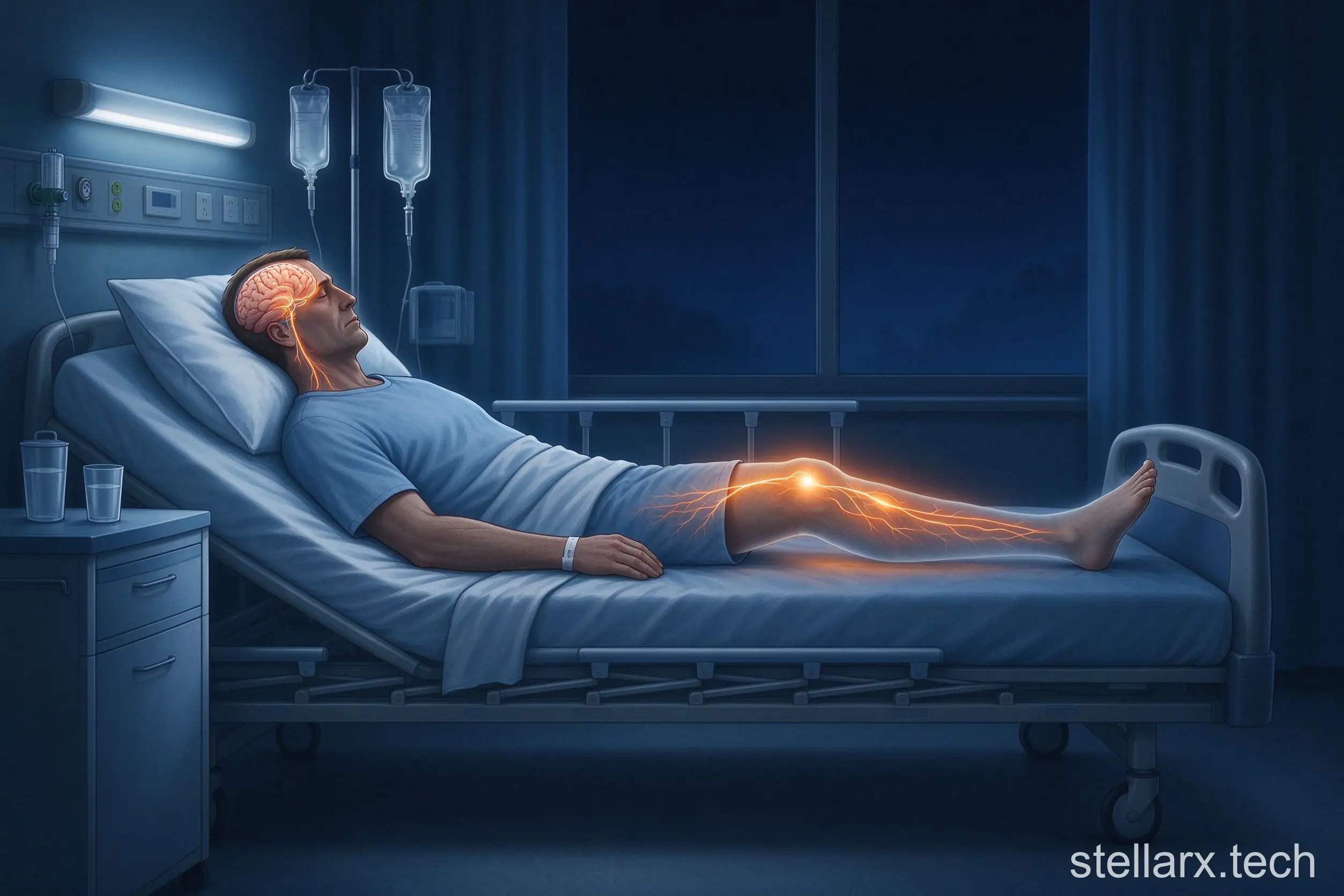
The scalpel is slicing through your skin and your muscle right now — and you feel nothing. Not because you are frozen in shock. Because your conscious mind has signed off, while your body quietly runs itself.
An anesthesiologist watches this happen every day. Under anesthesia, he says, our deepest assumptions about the body get overturned one by one.
Your body is not you.
When you are awake, your brain, nerves and limbs stay perfectly synchronized: think "raise your hand" and the hand rises; tense up and your heart speeds up; get hurt and it hurts immediately. So we assume "I = my body."
Then general anesthesia arrives, and the whole silent partnership collapses.
Many patients look like switched-off machines — still, silent, unaware. But the truth is the opposite. The high-level consciousness has clocked off: no thoughts, no memories, no emotions. Meanwhile the brainstem and the spinal cord — the low-level neural machinery — stay fully on duty, running an automatic program that no longer answers to the brain upstairs.
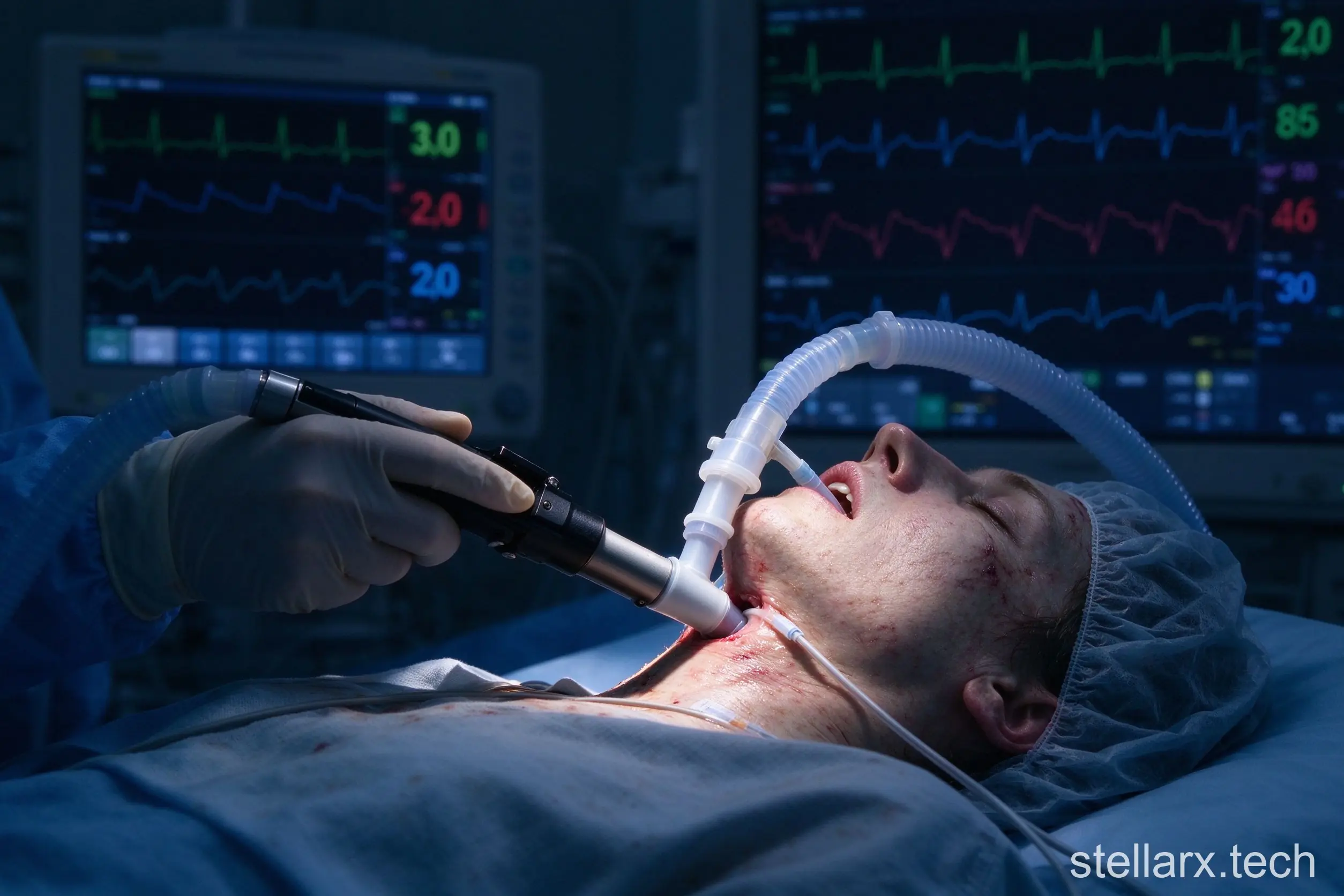
Watch what happens during intubation. The patient is completely unconscious, yet the moment the laryngoscope touches the throat, the body fires off a violent coughing spasm, blood pressure spikes, the heart races. No fear, no discomfort, no awareness of any of it. It is pure primitive reflex, running on its own.
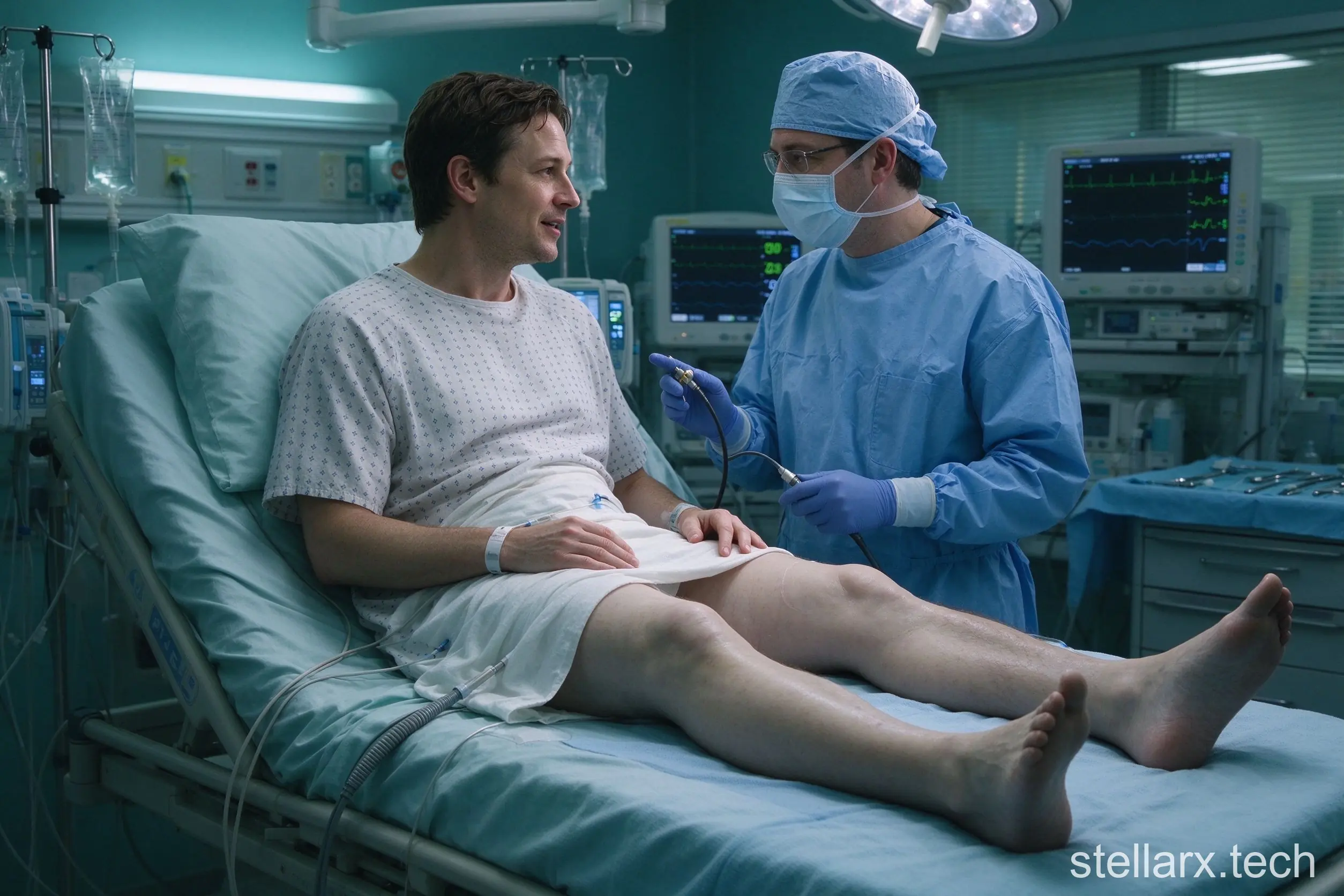
Then there is spinal anesthesia — an epidural's cousin, a "lower-body block." The patient stays wide awake: chatting, thinking, fully clear-headed. Only the lower half of the body stops obeying. Many patients describe the same thing: the mind is fine, but the legs no longer feel like theirs — two strange, heavy objects. Some start shivering violently mid-surgery, calm and collected in the mind while the body trembles on its own.
The point is not scary. It is precise: your conscious mind is only a temporary manager of the body, never the ultimate controller. The body carries an independent operating system of its own — reflexes, stress responses, nerve conduction — that keeps running even when the manager leaves the building.
Pain is not the wound's report.
Here is the second thing anesthesia teaches: being injured is not the same as feeling pain, and feeling pain is not the same as being injured.
We assume any wound, any touch, hurts. Anesthesia says otherwise, because nerve fibers are not a simple light switch. Sensory nerves run as two clearly separated channels: thin fibers carry pain and temperature, thick fibers carry touch, pressure and body position. A low-concentration local anesthetic is a precise directional blocker — it switches off the thin pain fibers while leaving the thick touch fibers intact.
Which produces a scene straight out of a surgical room: the scalpel really is cutting and pulling living tissue — 100 percent real physical injury — and the patient feels zero pain. They can even report, calmly: "I can feel something touching me, pulling on me." No pain at all.
The reverse is also true. Some of the most agonizing pain on Earth comes with no injury whatsoever. Phantom limb pain is the classic case: the limb is gone, amputated; there is no wound, no stimulus — and the brain still manufactures a tearing, unbearable pain. The best-known treatment exploits exactly that: mirror therapy places a mirror so the brain "sees" the missing limb — and the phantom pain often fades.