If you have opened any social media app in the past two weeks, you have seen it. "Lean muscle" is everywhere. People are posting before-and-afters, debating training splits, and arguing about whether the "lean muscle look" is the new standard for male attractiveness.
Here is the thing no one in the comments is telling you: there is no such thing as lean muscle.
Your muscles do not come in flavors. There is no "lean muscle fiber" and no "bulky muscle fiber." Skeletal muscle is skeletal muscle. When it grows, it grows through hypertrophy — an increase in the cross-sectional area of each fiber. When it shrinks, it atrophies. That is the entire menu. There is no third option called "getting toned" or "getting lean."
So what is everyone actually chasing?
Lean Means Low Fat, Not Special Muscle
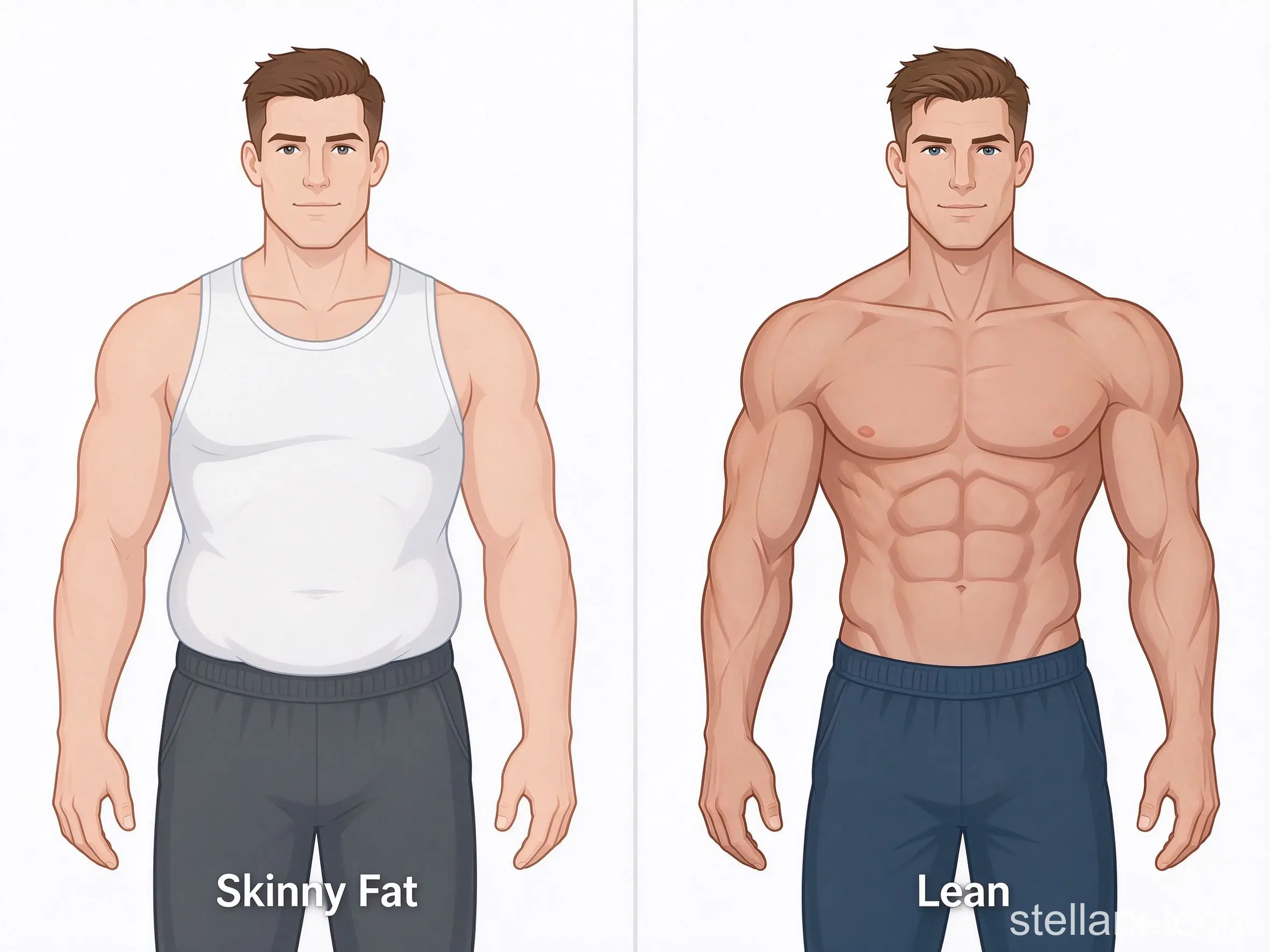
The "lean muscle" look is a ratio, not a tissue type. It is what happens when you have enough skeletal muscle to create visible shape, and low enough body fat that the shape is not hidden under a layer of subcutaneous fat.
A man at 15% body fat with average muscle development will look "lean." The same man at 25% body fat with the exact same amount of muscle will look soft and undefined. The muscle has not changed. The fat covering it has.
This is why fitness coaches say you cannot "spot reduce" and you cannot "tone" a specific area. Toning is not a physiological process. It is low body fat plus muscle definition, and it is achieved through the boring combination of resistance training, adequate protein, and a modest caloric deficit — not through "light weights and high reps to get lean."
The Skinny Fat Problem
The flip side of this conversation is a group that rarely gets mentioned: people who look thin but are metabolically obese.
Doctors call it "normal weight obesity" or "metabolically obese normal weight" (MONW). You look fine in clothes. Your BMI is normal. But your body fat percentage is elevated — often 25-30% or higher — while your skeletal muscle mass is below the healthy range of 30-35%.
Research published in the European Heart Journal suggests that roughly 30% of normal-weight adults in the United States fall into this category. They are not overweight by any standard measure, yet they carry the same metabolic risks as people who are: insulin resistance, elevated triglycerides, high blood pressure, and an increased risk of type 2 diabetes and cardiovascular disease.
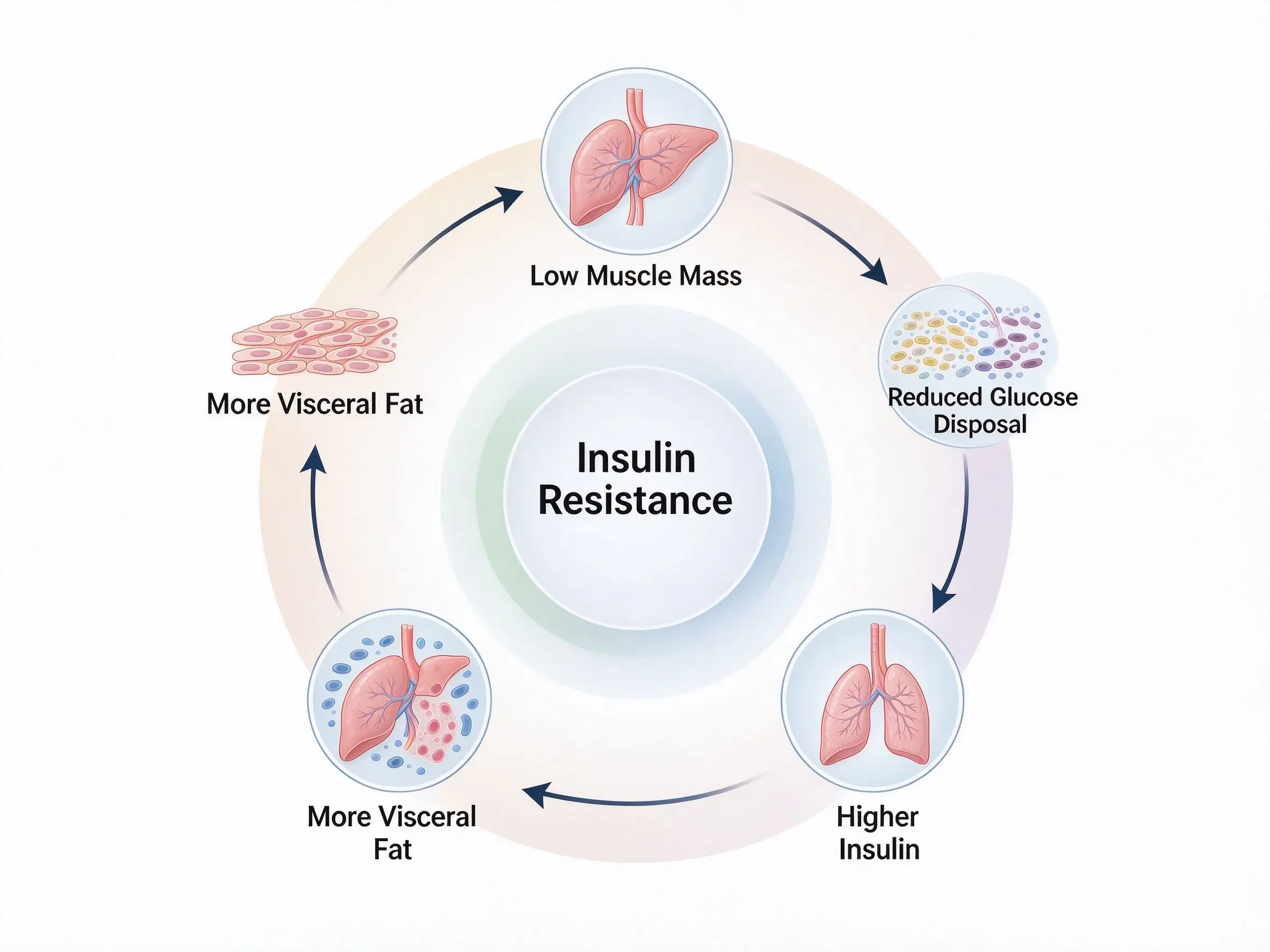
The mechanism is straightforward. Muscle is the body's largest glucose sink. When you eat carbohydrates, insulin signals muscle tissue to absorb glucose from the bloodstream. Less muscle means less glucose disposal, which means higher circulating insulin, which means more calories get stored as fat — especially visceral fat around the organs. It is a feedback loop that starts with too little muscle and ends with too much fat.
And because these people look "normal," they rarely get screened. The warning signs are invisible until something breaks.
Why Muscle Is Your Metabolic Currency
Muscle is expensive tissue. A pound of skeletal muscle burns roughly six calories per day at rest, compared to about two calories for a pound of fat. That difference sounds small until you multiply it across decades and across 30-40 pounds of muscle.
But the caloric burn is almost the least interesting thing muscle does. More importantly:
Muscle is a glucose buffer. Every pound of skeletal muscle increases your body's capacity to clear sugar from the blood after a meal.
Muscle is a protein reservoir. During illness, injury, or starvation, the body breaks down muscle to supply amino acids for immune function and tissue repair. People with low muscle mass recover more slowly from surgery and infection.
Muscle is functional independence. Grip strength, walking speed, and the ability to rise from a chair without using your hands are all predictors of longevity and disability-free aging.
In April 2026, China's National Health Commission released the Dietary Guidelines for Sarcopenia in Adults (2026 Edition) — an official document essentially telling the country to "bank muscle." The prevalence of sarcopenia (age-related muscle loss) in Chinese adults over 60 ranges from 5.7% to 23.9%, and the numbers climb sharply with age. The message is clear: muscle built in your 20s and 30s is the reserve you draw down in your 60s and 70s.
How to Actually Get There
If "lean muscle" is low body fat plus adequate muscle, the path has three non-negotiable components:
Resistance training, 2-3 times per week. This is the only signal that tells your body to build and maintain skeletal muscle. Cardio is good for cardiovascular health but does not stimulate hypertrophy meaningfully. You do not need to become a bodybuilder. Two to three sessions of compound movements — squats, pushes, pulls, hinges — at a challenging weight is enough for most people.