Be honest. How many half-finished bottles are within arm's reach right now? One on the desk, one in your bag, one rolling around the car floor. You took a sip this morning, forgot about it, and now you are eyeing it again.
It looks fine. It tastes fine. So you take another sip.
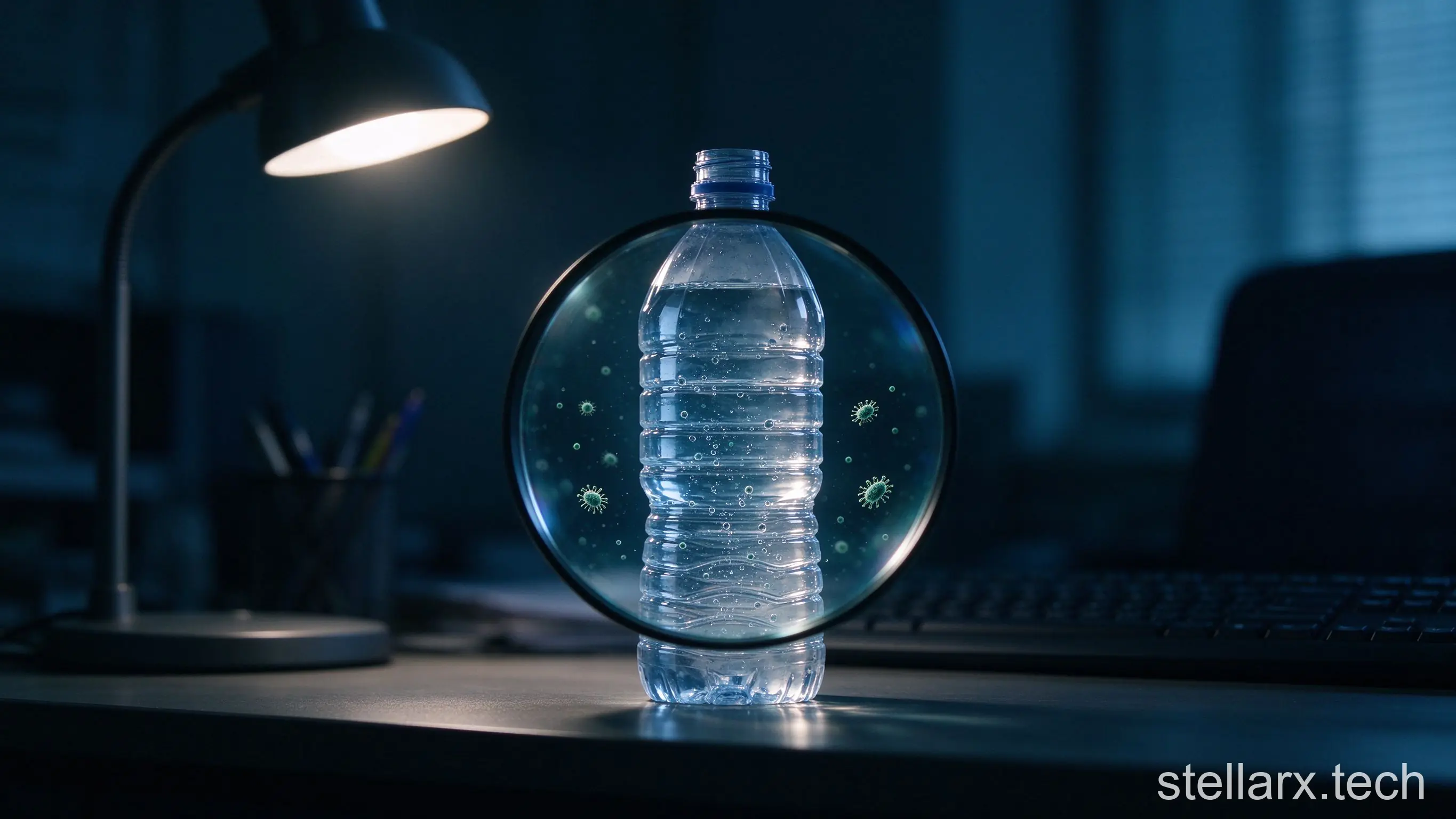
That hesitation you feel — the little voice asking "is this still okay?" — is right. Because once you take that first sip, the bottle stops being just a drink. It becomes a petri dish.
One Sip, and the Whole Bottle Changes
A science class once ran a vivid experiment. They had kids coat their mouths with edible food coloring, then take a normal sip from a bottle of water.
One sip. That was all it took. The entire bottle lit up with color.
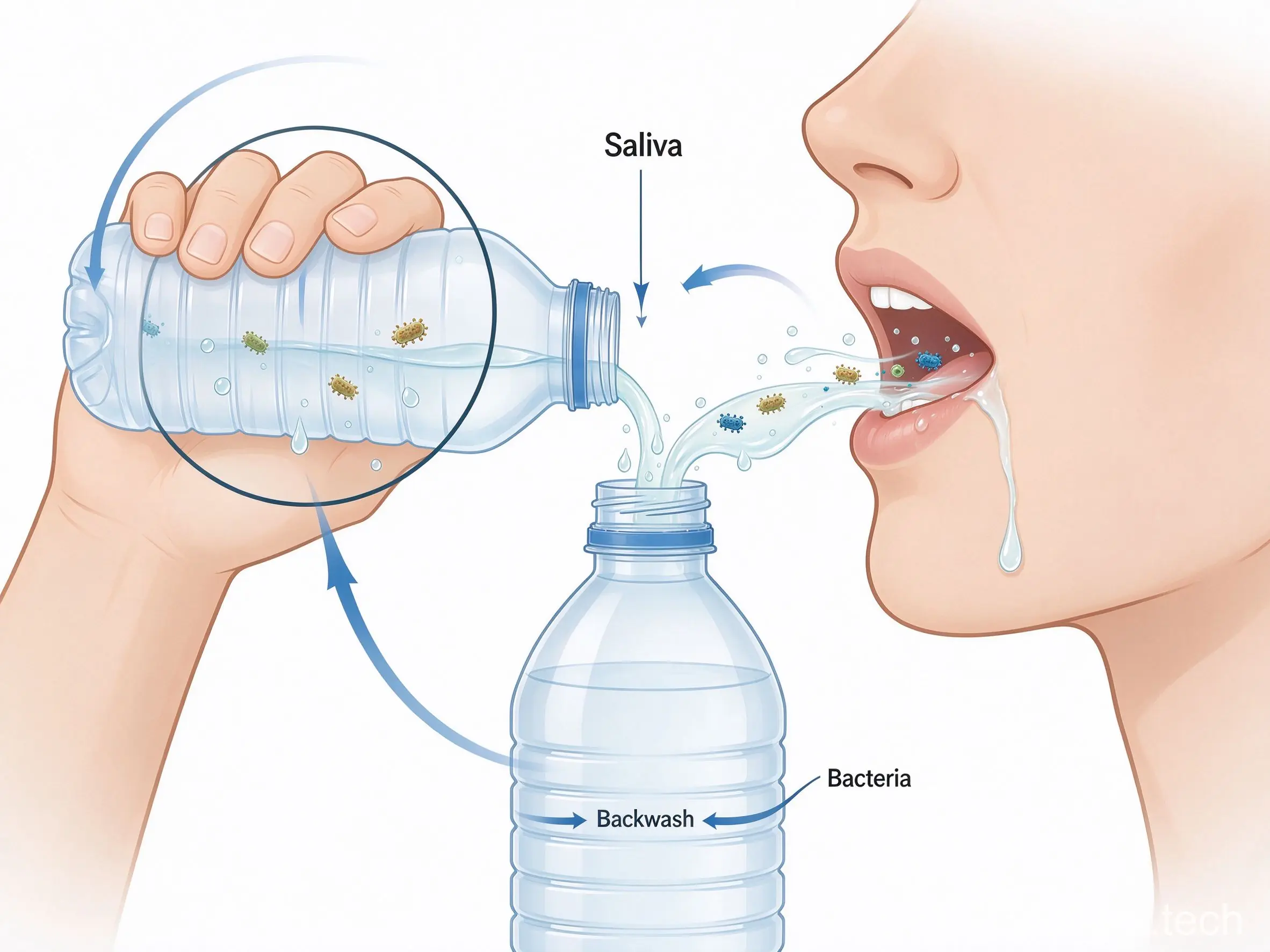
What you are seeing when that happens is backwash: saliva, food particles, and bacteria flowing from your mouth back into the bottle. Every single time you drink directly from a bottle, a small amount of what is in your mouth goes the wrong way. You are not just drinking — you are gently spitting into your own beverage.
It is your own personal mouthwash, and you do not even notice.
Three Ways to Drink, Three Levels of Dirty
Scientists tested this properly. They compared three drinking styles and measured how much microbial contamination each introduced.
Whole mouth around the bottle — the dirtiest. This is the most common way people drink, and it is also the worst. Your lips, tongue, and the rim of the bottle all make contact, and the backwash is maximized.
Just the upper lip touching — still dirty. Even this minimal contact introduced about 15.5 colony-forming units per 10 square centimeters of bottle surface. The whole-mouth method was 3.4 times worse.
Pouring into a cup — also dirty. Even without any mouth contact at all, 18.8% of poured drinks showed microbial growth, mostly mold. The act of opening the bottle itself introduces microbes from the cap, your hands, and the air. Nothing is sterile once the seal is broken.
The difference is not "dirty versus clean." It is "very dirty versus less dirty."
The Bacteria That Can Actually Make You Sick
Some bacteria are harmless. Some are not.
When researchers simulated real-life conditions — drinking directly from the bottle, then leaving it at room temperature — more than half of the drinks became contaminated. And among the microbes they found were two names worth knowing:
Staphylococcus aureus. Commonly lives on skin and in the nasal passages. Some strains produce toxins that cause rapid-onset nausea, vomiting, and abdominal cramps.
Bacillus cereus. Found in soil and food. Its toxin is a classic cause of "I ate something and spent the night in the bathroom" food poisoning — vomiting and diarrhea that hit fast and hard.
These bacteria start in small numbers from your mouth. Then the bottle becomes a warm, nutrient-rich bath. Given time and the right temperature, they multiply and produce toxins. The drink looks the same. It might even taste the same. But the bacteria have done their work.
Some people have opened a week-old bottle and found things growing inside that they could not unsee. Mold mats. Fuzzy rafts. Things that should not be in a beverage. If it has not happened to you yet, you have just been lucky.
Not All Drinks Go Bad the Same Way
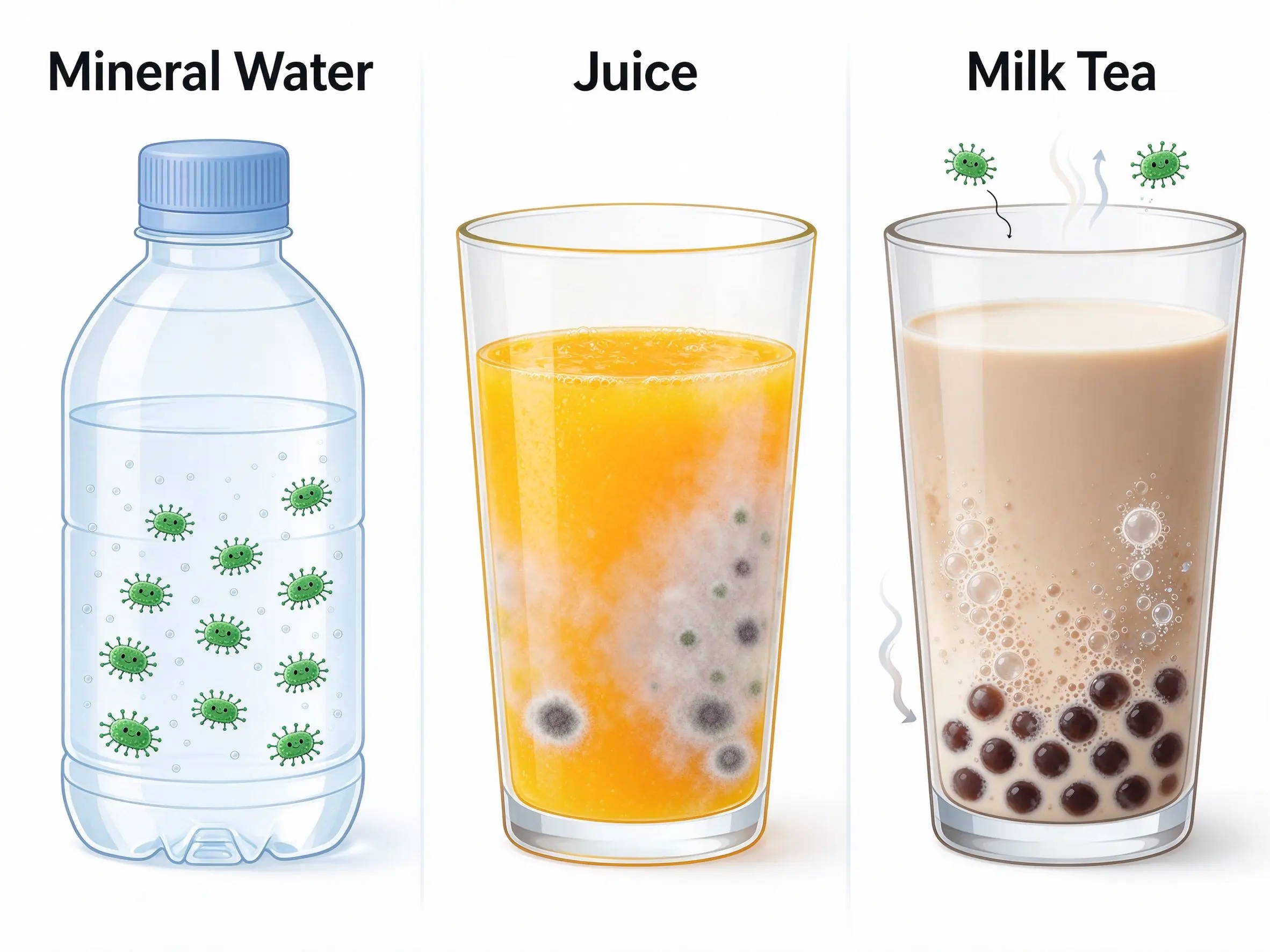
The study tested common drinks: mineral water, oolong tea, orange juice, sparkling fruit soda, tomato juice, sports drink, milk tea, latte, and blended tea.
Over two weeks at room temperature, some drinks visibly changed — sediment, separation, cloudiness, even fermentation and gas buildup. But here is the unsettling part: mineral water looked almost completely unchanged, while its bacteria count still skyrocketed.
Clear does not mean clean. A bottle of water that looks perfectly fine can be hosting a thriving microbial community.
Sugary drinks — juice, milk tea, sports drinks — are the fastest to go bad because sugar is food for bacteria. Acidic drinks like orange juice slow some bacteria down but do not stop all of them. And milk-based drinks are essentially a growth medium once they warm up.
How Long Is Too Long?
Most bottles actually tell you, if you read the fine print. Many say "drink entirely on the day of opening," or "refrigerate and finish within 6 to 12 hours." Some are more cautious: "consume as soon as possible after opening."