When mice went without dietary fiber, some gut bacteria switched to feeding on the mucus lining their intestines. The experiment helps explain what that protective layer does.
Meat, eggs and dairy supply no dietary fiber. Beans, vegetables and whole grains do. Some of that fiber feeds the microbes that live in the intestine.
Dietary fiber has a long list of benefits: it softens stool, keeps the bowels moving, and improves blood sugar and blood lipids. Beyond that, it feeds the microbes in our gut, promotes the production of short-chain fatty acids, and regulates the immune system and inflammatory responses — lowering the risk of colorectal cancer, cardiovascular disease and more.
Symbiosis
In a 2016 study published in Cell, researchers compared mice that ate fiber with mice deprived of it continuously or intermittently. They tracked what the bacteria consumed as the animals’ diets changed.
As the mucus thinned, the mice became more susceptible to an intestinal pathogen used in the experiment. The study did not measure how often people who eat little fiber develop colitis.
They may have settled into our gut when we were very small. According to a 2025 study published in Nature Medicine, the gut microbiome enters a stage of rapid development from the moment we are born, passes through a transition period after weaning, and stabilizes at age 3 into an adult-like gut system.

For humans, these pathogens are very much a double-edged sword. On one side, they are important participants in the normal development and maturation of the immune system and in establishing immune homeostasis; without them, we would struggle to survive in good health. On the other side, once they can no longer be held in check, they produce toxic substances, trigger inflammation, and even invade the body.
So we cannot kill them off completely — we need ways to suppress them, and the most common one starts with diet. Scientists have long observed that plant-based diets are closely tied to improvements in gut health, yet a great deal remains unknown. In a recent study published in PNAS, scientists at Princeton University's Lewis-Sigler Institute for Integrative Genomics took the investigation of plant-based diets a step further.
Amino acid metabolites
When hard-to-digest plant material reaches the colon, gut bacteria do more than use it to make short-chain fatty acids. They also produce beneficial phenolic metabolites such as phenylpropionate and hippuric acid — two metabolites of phenylalanine. The study found that higher hippuric acid levels are associated with better markers of glucose metabolism, and seem to improve uric acid metabolism as well. Phenylpropionate, for its part, can improve insulin resistance and reduce the buildup of fat in the liver.
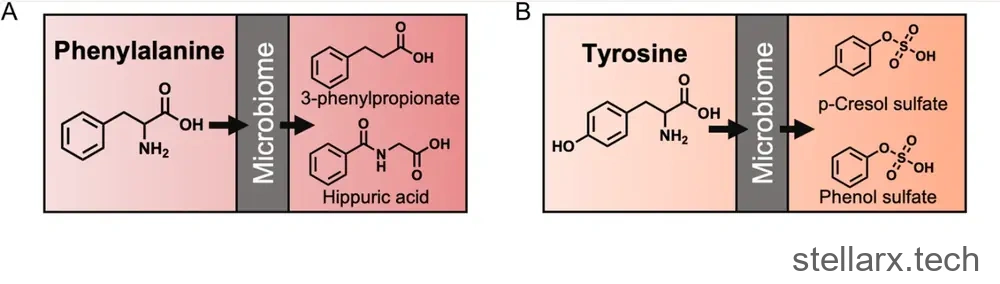
The researchers also found that levels of certain harmful phenolic compounds fall — the two phenolic metabolites of tyrosine, p-cresol sulfate and phenol sulfate. These are linked to poor prognosis in cancer patients and to systemic damage in kidney disease patients. Once the two compounds enter the bloodstream, both can damage the renal tubules, cause oxidative stress, and may interfere with insulin metabolism.
But how does a plant-based diet act on these phenolic compounds? That is precisely the question the Princeton researchers wanted to answer, and they designed a series of experiments to do it.
They first gave mice intravenous injections of phenylalanine and tyrosine labeled with 13C. After 60 hours, they found that in the mice's cecum, 85% of the p-cresol sulfate and 57% of the phenol sulfate carried the 13C label. That means the gut microbes had not only used the labeled tyrosine to synthesize mucins and build the gut's mucus barrier — afterwards, some gut bacteria broke that mucus barrier down and used the labeled protein. This is not a good sign.
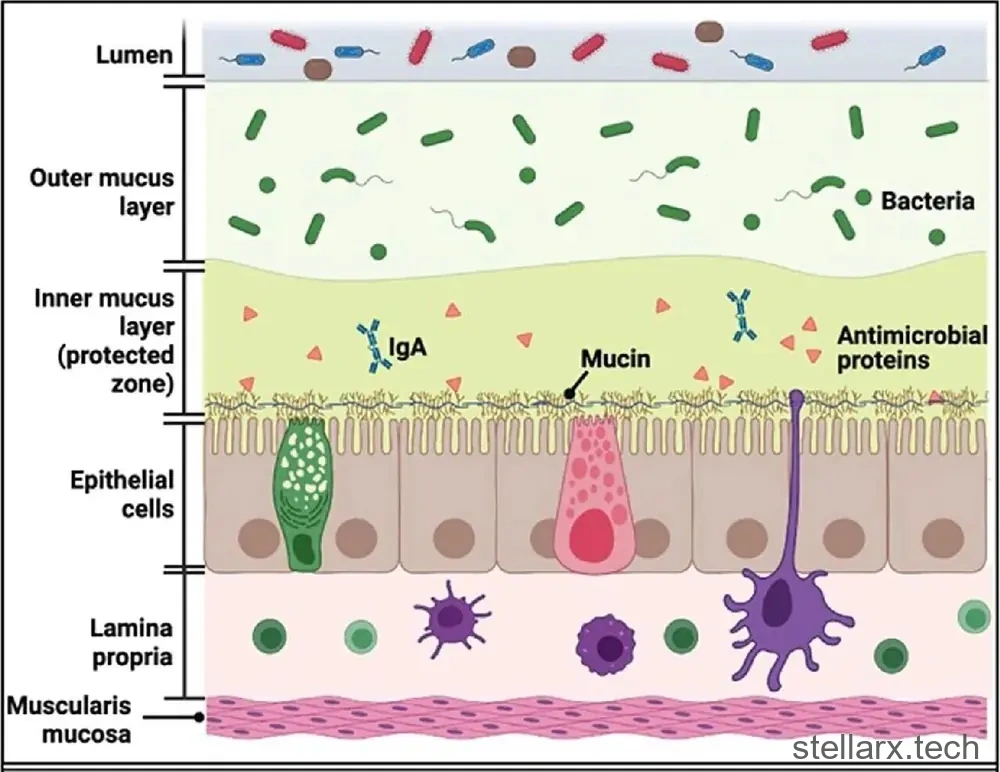
To ease this destruction, the researchers began adding pectin, a soluble dietary fiber, to the diet of one group of mice, while the control group received amylopectin. After 10 days on these diets, they found that the addition of pectin had lowered the mice's levels of both sulfates. Not only that: the sulfates converted from the mucins of the intestinal mucosa dropped as well. In other words, dietary fiber had suppressed the bacteria's destruction of the mucus barrier. Further testing found that Oscillospiraceae, a bacterial family present in both humans and mice, is involved in the production of p-cresol sulfate.
Beneficial molecules that come only from plant protein
Next, the researchers went after the source of phenylpropionate and hippuric acid. The earlier experiment had not turned up labeled phenylpropionate or hippuric acid, which means they do not come from bacteria destroying the gut barrier. By feeding mice 8 different proteins, the researchers found that, compared with animal-derived protein, the mice's digestibility of plant-derived protein was markedly lower. They called these hard-to-digest proteins Prif — proteins that act like dietary fiber.