A reader asked me what five hours of sleep on a school night means for a teenager. I thought of what it takes to study even one short night in my lab.
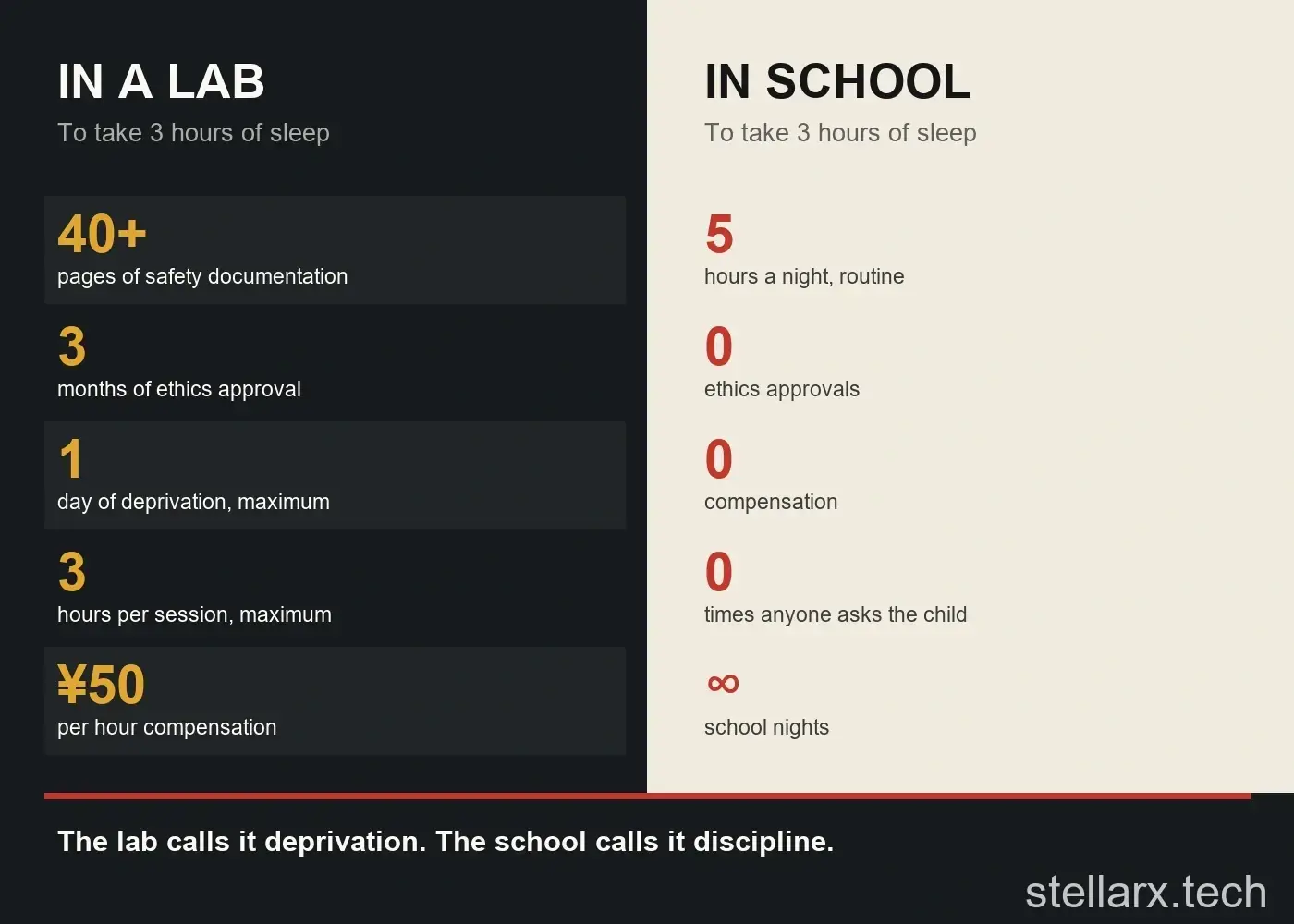
I run sleep-deprivation experiments. The safety documentation runs more than 40 pages. Ethics approval takes three months. We may deprive someone of sleep for one day only. One session takes three hours, no more. We pay 50 RMB per hour in compensation.
I did my master's in neuroscience, specializing in sleep medicine. My PhD is in psychiatry, specializing in sleep health. After reading the comments under that question, I am afraid to go home. I am afraid a colleague there will produce a miraculous result proving five hours is enough, and crush everything we know.
I will say the quiet part out loud. If you cannot change this system, do not have children.
From lived experience, most people can feel the link between too little sleep, fractured attention, and a bad mood. Academic damage may be the cheapest price you pay. Feeling sleep matters only after your grades slip is both helpless and funny.
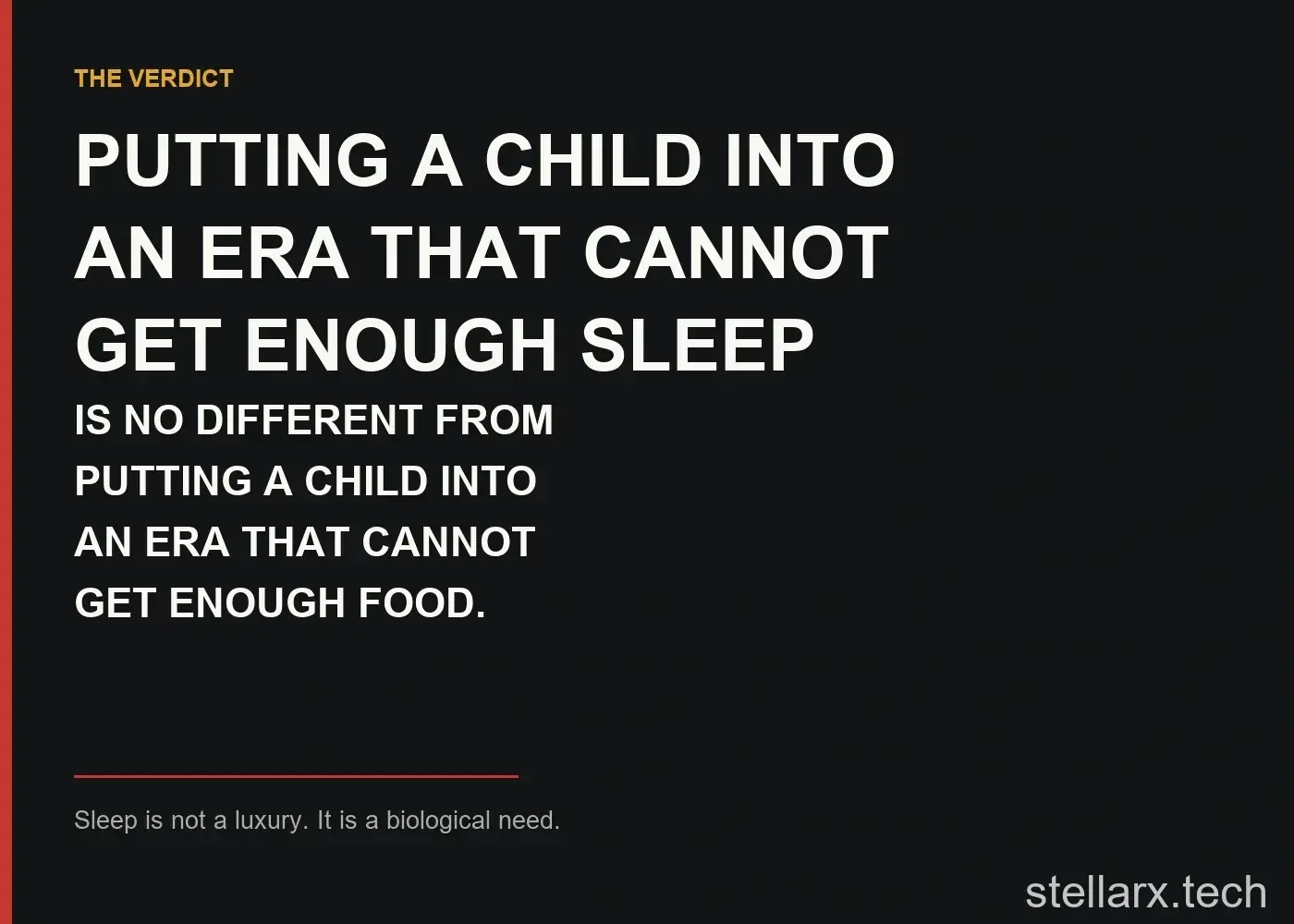
Sleep is a spontaneous physiological process. Not getting enough sleep is as cruel as not getting enough food.
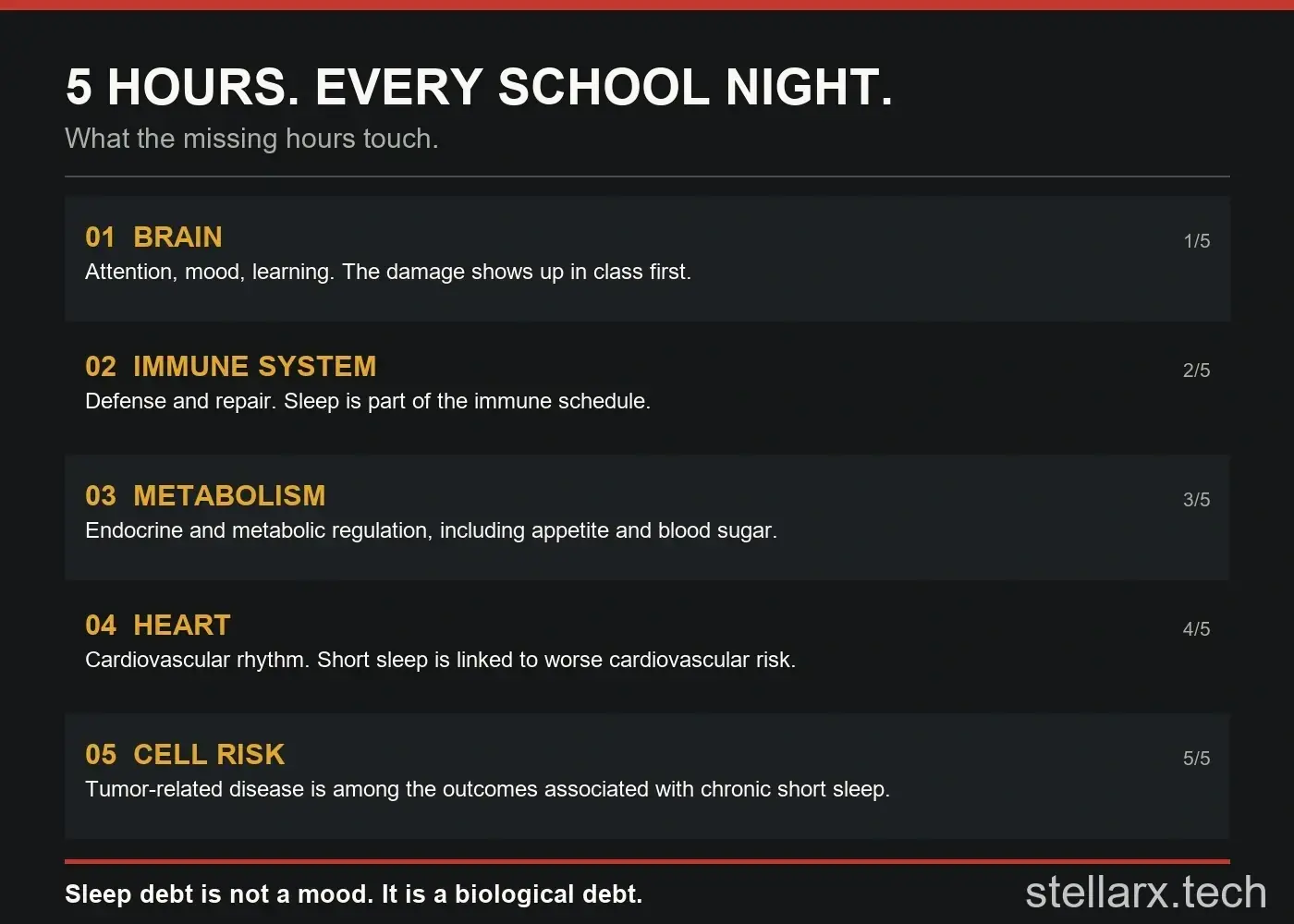
Sleep regulates immune, endocrine and metabolic, cardiovascular, and tumor-related disease. “Sleep debt makes you sick” — remember it that way.
Do not come at me with “I sleep little and I am fine.” Laugh all you want: some painters never get acute leukemia. That does not make paint safe. It is the 21st century. If you still trust your own experience over the laws and the science, a child in your care is out of luck.
Do not tell me you are a natural short sleeper, either. Outside disease, genes are the first thing shaping sleep duration and circadian rhythm. A child's sleep pattern will not differ much from a parent's. The odds of winning the “short sleep” genetic lottery are tiny — rare-disease tiny.
Most people who claim they sleep little and feel fine fall into one of five groups.
They smoke or drink coffee, dosing themselves with stimulants to hold off sleepiness.
They daydream or nap; local sleep and micro-sleep pay back part of the debt.
They are older; sleep-maintenance problems shorten the night.
They have depression or bipolar disorder.
They are dead-duck stubborn.
Sleep and psychiatric illness need no emphasis. Open a diagnostic manual: how many diagnoses have nothing to say about sleep? Parents complain that their child is depressed or anxious — some are already bipolar — and they have no concept of preventive psychiatry.
Subjective sleepiness and sleep debt are two different things. Not feeling sleepy does not mean you slept enough. It does not mean the debt is not hurting you. I advise you not to be so confident about your own and your child's body and mind.
Where I trained, sleep medicine is its own branch, not a subsection of neurology or psychiatry. It stands level with other departments. It has its own department, its own students, its own training system.
Back home, people are still asking how to view the fact that middle-schoolers do not get enough sleep.
How to view it? I say it is slow murder. Do you like hearing that?
We track residents' sleep health across three generations and build a database. We do not just follow the child. We follow you, and your father.
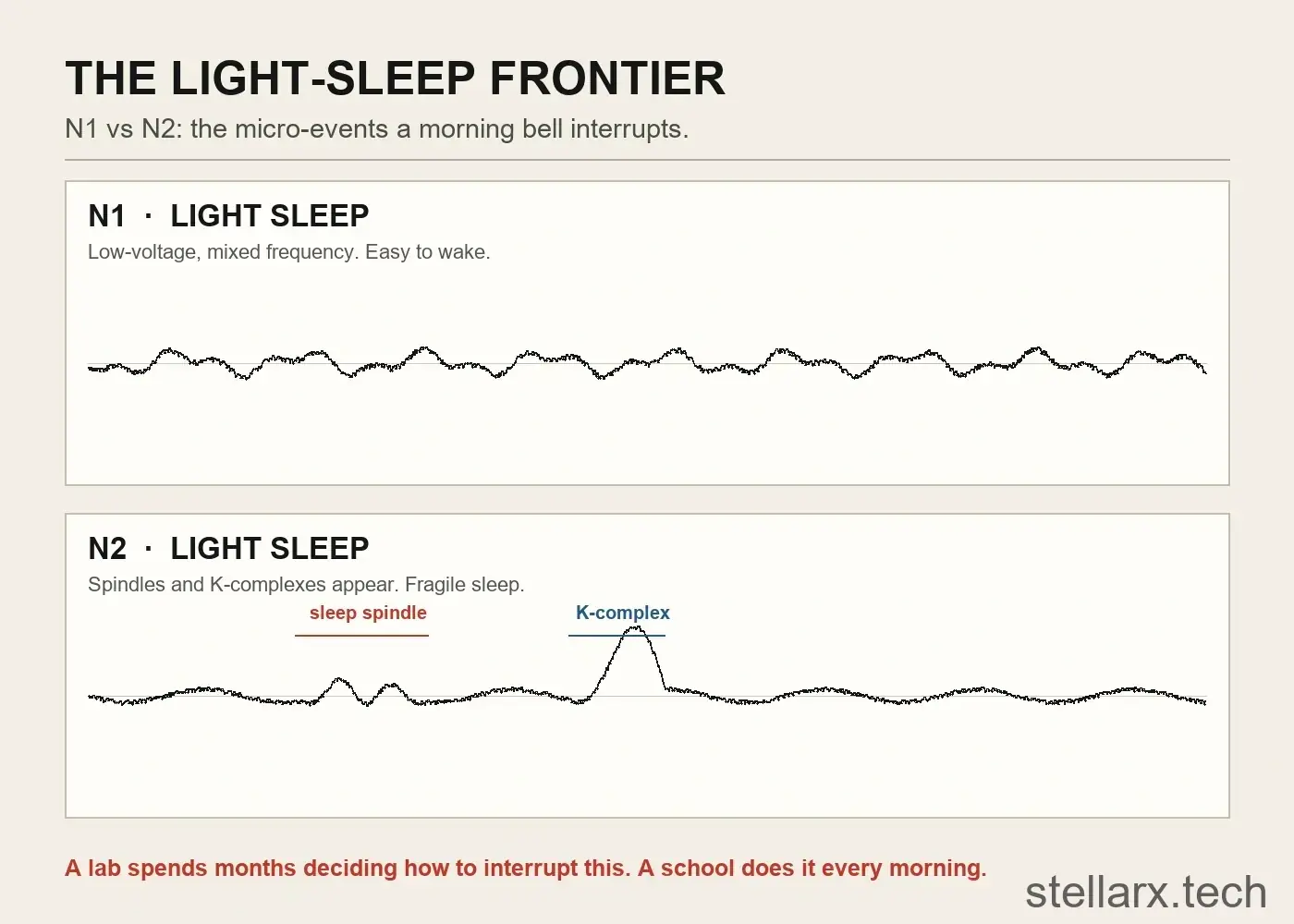
Labs are still comparing whether it is better to wake a person in N1 or N2, whether it is worse to interrupt a sleep spindle or a K-complex. N1 and N2 are the light sleep stages; spindles and K-complexes are the fragile signatures that labs worry about breaking.
Middle-school students cannot even hope for enough sleep.