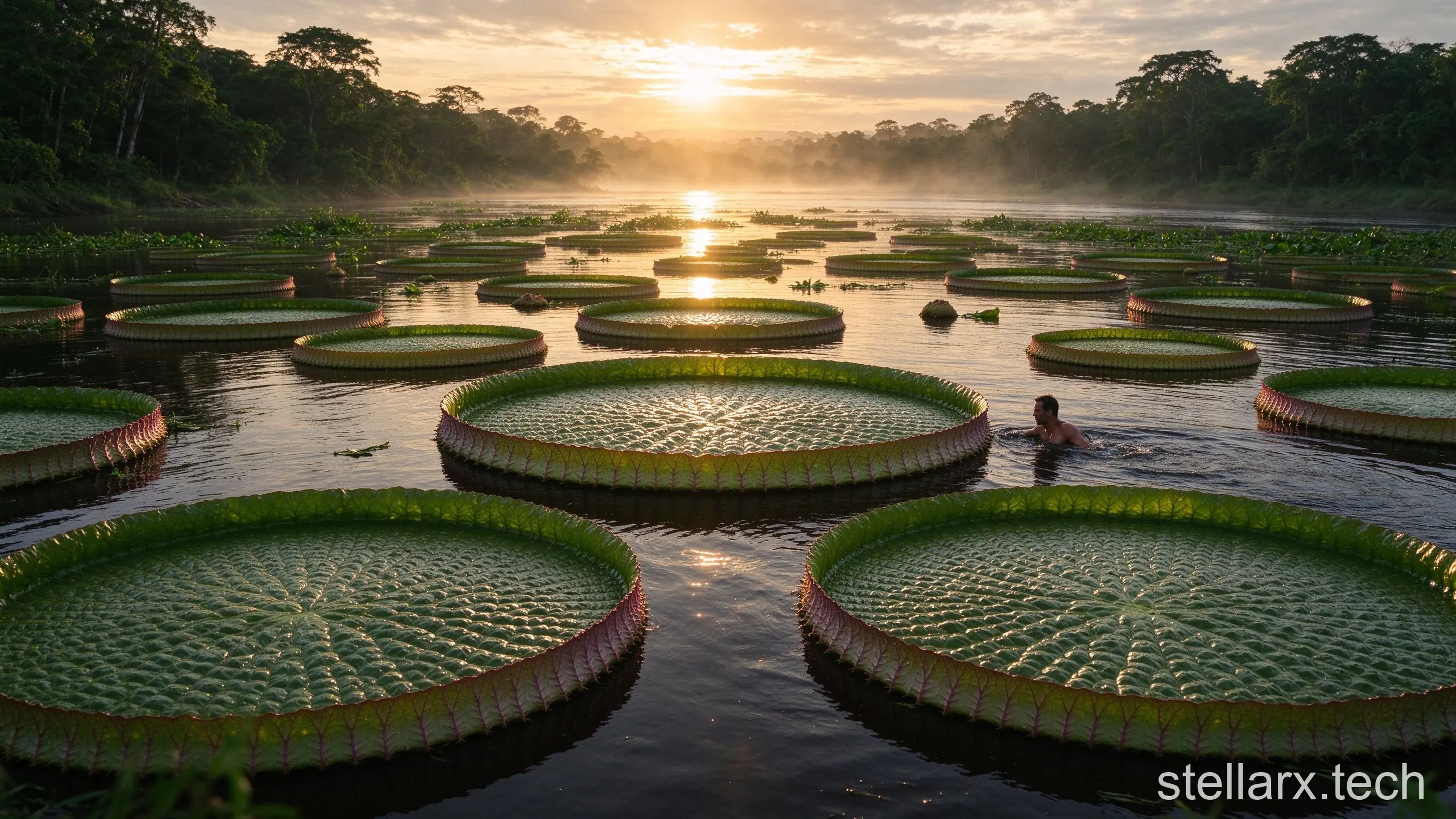
In May 2024, Thomas Watson, a 28-year-old British tourist, was travelling through Mexico. His favourite thing to do in a new place was to walk the local markets and try fruits he had never seen.
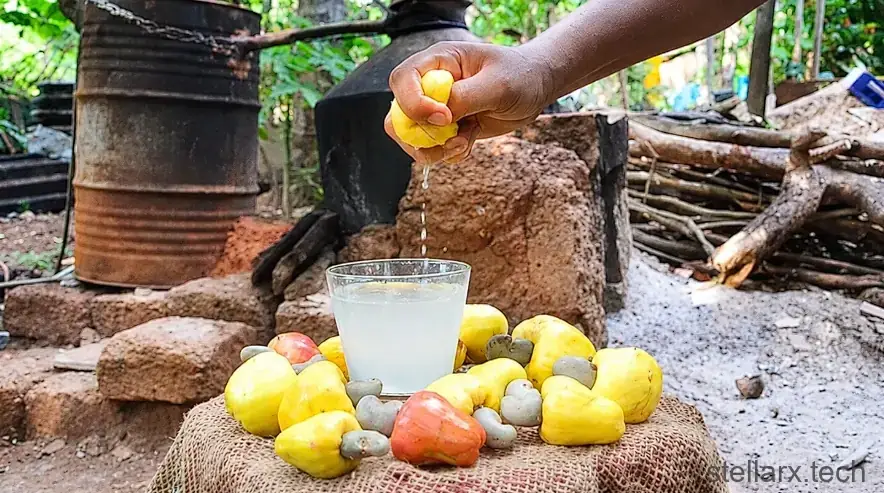
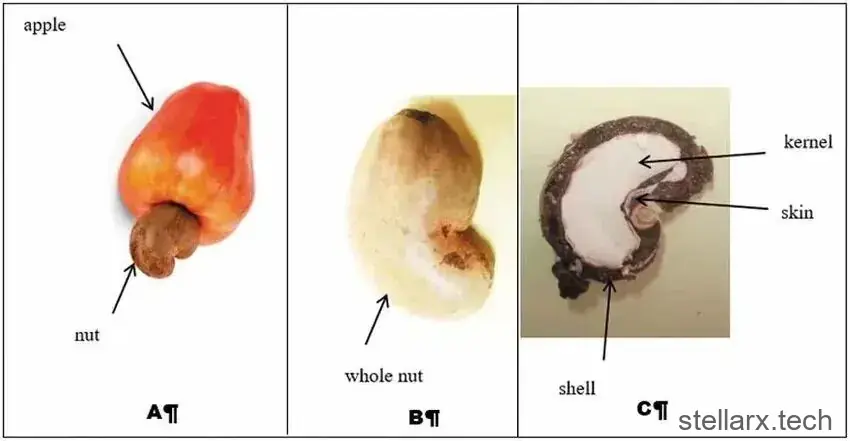
At one stall he found something strange: a red-and-yellow pear-shaped piece of flesh on top, and a curved nut hanging underneath. The vendor told him it was a cashew apple, and that locals ate it all the time.
Watson had heard of it. He bought a few without hesitating.
He tried the red-and-yellow "apple" first. It was sweet, with a mixed-fruit aroma.
Then he picked up the nut below it and tried to crack the shell open with his teeth, to see what a fresh cashew tasted like.

The moment his teeth broke through, his mouth was on fire.
"I thought I could crack it open like a passion fruit," he later recalled. "Then I bit through that thin sac and it exploded. It was like catching fire. I could feel the fire burning its way through my mouth."
The pain made him stop. He still did not understand how bad it was.

He spent the night tossing and turning. In the morning his lips and face were badly swollen, blistered and crusted. His fingers looked as if they had been splashed with sulphuric acid.
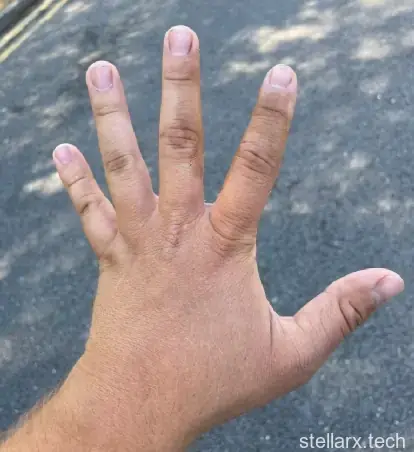
Worried about the cost of medical care, he decided not to go to a hospital. He would wait it out. "After my lips were burned it felt like they were melting," he said. "A dry hard crust formed, like baking paper, and it lasted three or four days."
When he finally peeled the scab off in one piece, it left scars that looked hard to undo.
Plain cashews from a shop are safe, crunchy and mildly sweet. So why did one bite turn a man's face into a burn ward?
The answer is the shell.
A cashew plant produces two different fruits: the nut and the cashew apple, as a 2022 study of cashew from Burkina Faso puts it. What we call the cashew apple is not a true fruit at all. It is a swollen flower stalk, a pseudocarp: the "apple" is the stalk, and the nut hanging below is the real fruit.
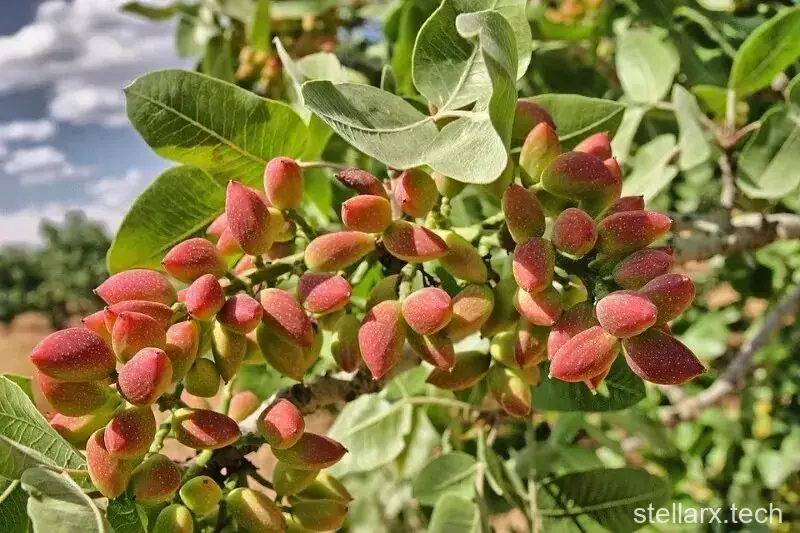
Cashew belongs to the Anacardiaceae, the cashew family. The family is hard to love without reservation. On one side are mango, pistachio and cashew. On the other are poison ivy and poison sumac, plants people cross the road to avoid.
Even the pistachio, whose scientific name is Pistacia vera, carries a toxic outer husk.
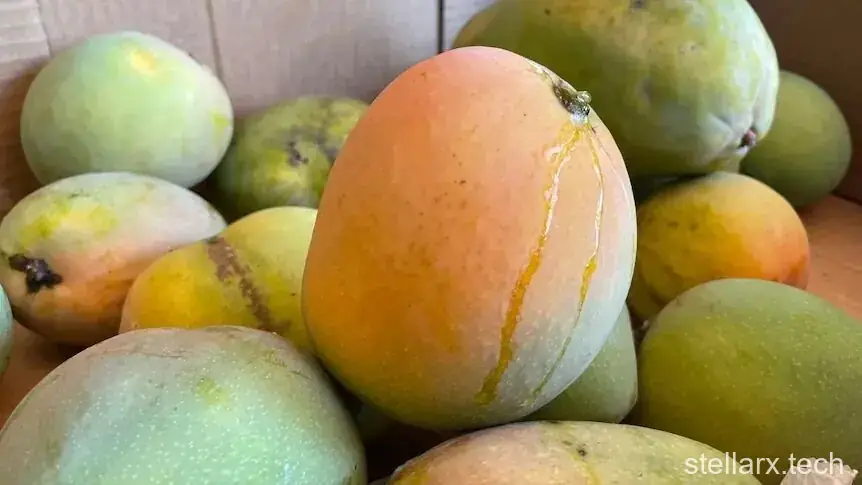
Most members of the family contain phenolic compounds that irritate skin and trigger allergies. Poison ivy is famous for urushiol, one of the best-known sensitising substances in the plant kingdom. Mango peel and the area around the stem contain similar irritants. Some people who handle them break out in red, itchy skin, or a rash around the mouth: mango dermatitis.
The cashew keeps its danger in a different place: the spongy middle layer between its two hard shells.
That layer holds a brown oily liquid called cashew nut shell liquid, or CNSL. It is not ordinary plant sap. It contains anacardic acid, cardanol and cardol, a group of phenolic compounds that irritate and sensitise. On skin they can cause redness, peeling and blisters; in bad cases they produce a chemical burn, hot and sharp.
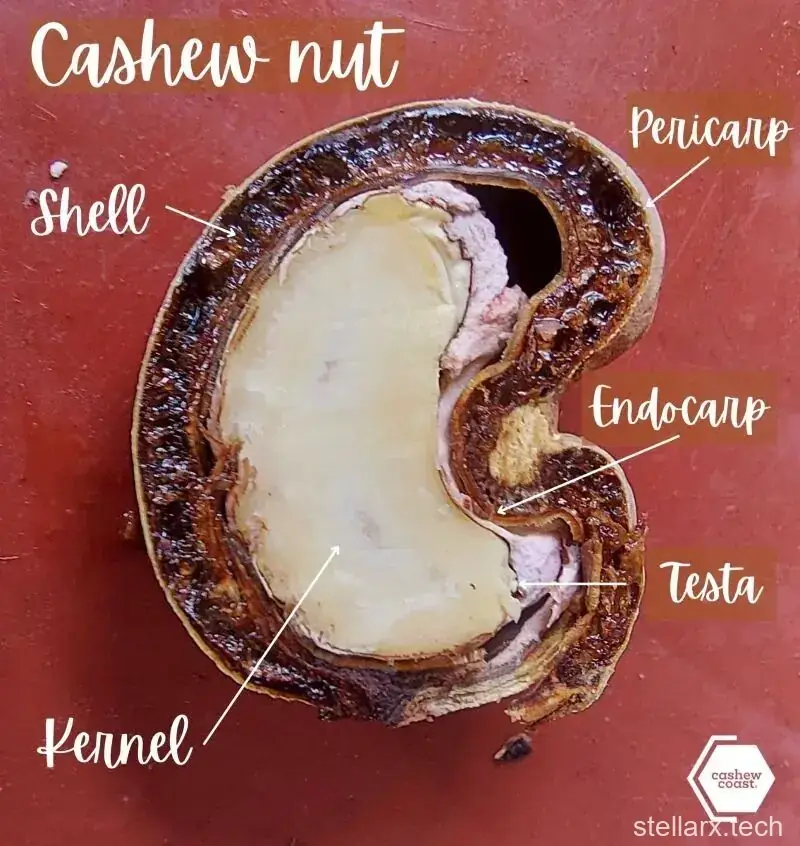
Biting straight into that shell is a reliable way to get burned.
Watson is not the only person to pay for it. In some cashew-growing regions, the shell liquid is something workers face every day.
In India and parts of Africa, many cashew factories still shell by hand. Workers crack the hard outer shell and try to lift the kernel out whole. The liquid sits between the two shells. The moment they crack or squeeze, it can leak.
Without proper gloves, the liquid burns. Repeated exposure can leave dark patches. Old wounds barely heal before new ones arrive. Day after day, the women who shell cashews end up with hands covered in scars.
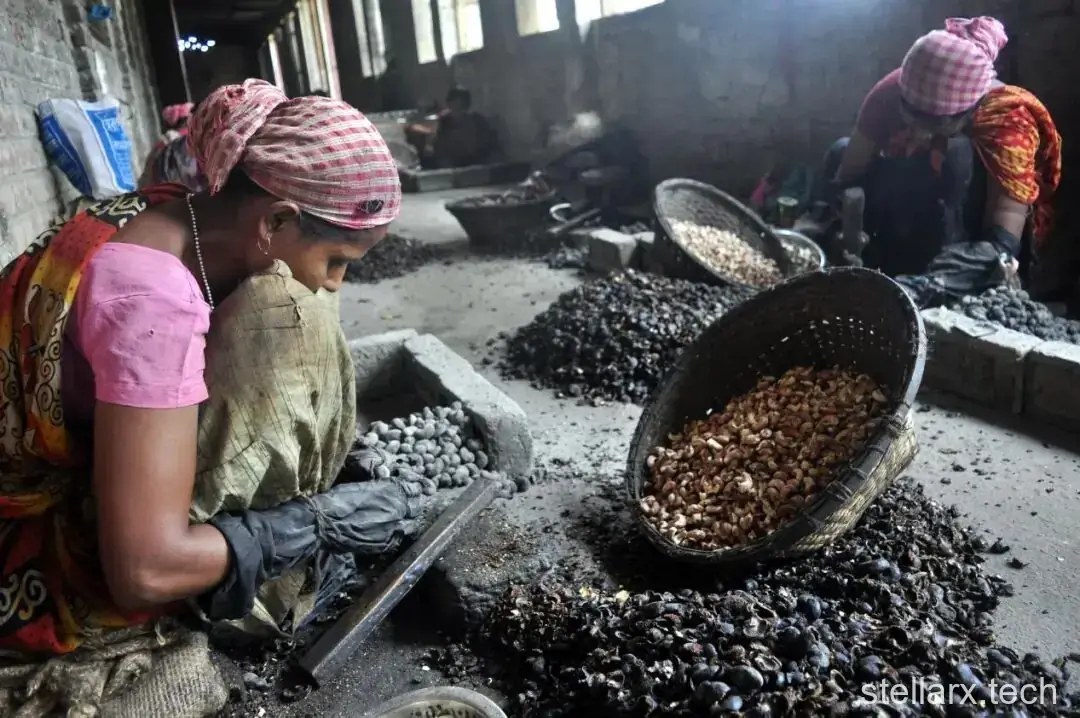
The burns are not only from the heat of roasting. The shell liquid itself does the damage.
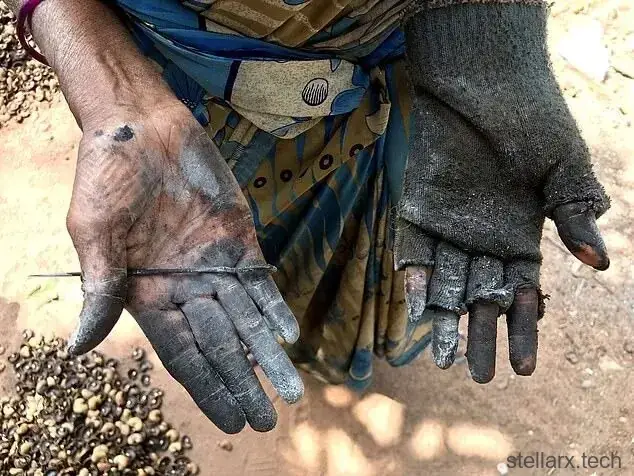
Some factories pay by piece. The more whole kernels you shell, the more you earn. A worker with blisters still does not dare stop for long: every pause costs money. In one reported case, the pay was 200 rupees a day, about 14.2 yuan, with no rest day. Even grabbing curry with that hand becomes painful.
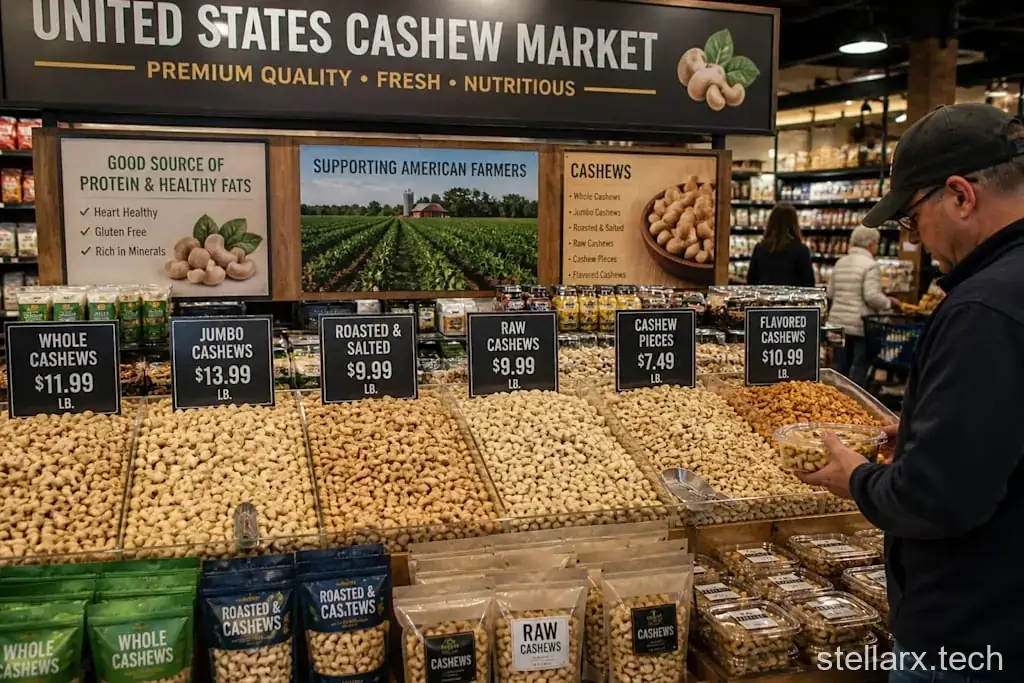
Because the shell is caustic, cashews must be processed before they reach a shop. Industry usually steams or roasts the nuts in the shell first, to reduce the corrosiveness, then shells, peels and dries them. That is why you almost never see cashews in their shells, or raw cashews on a shelf. It is also part of why roasted cashews cost what they do.