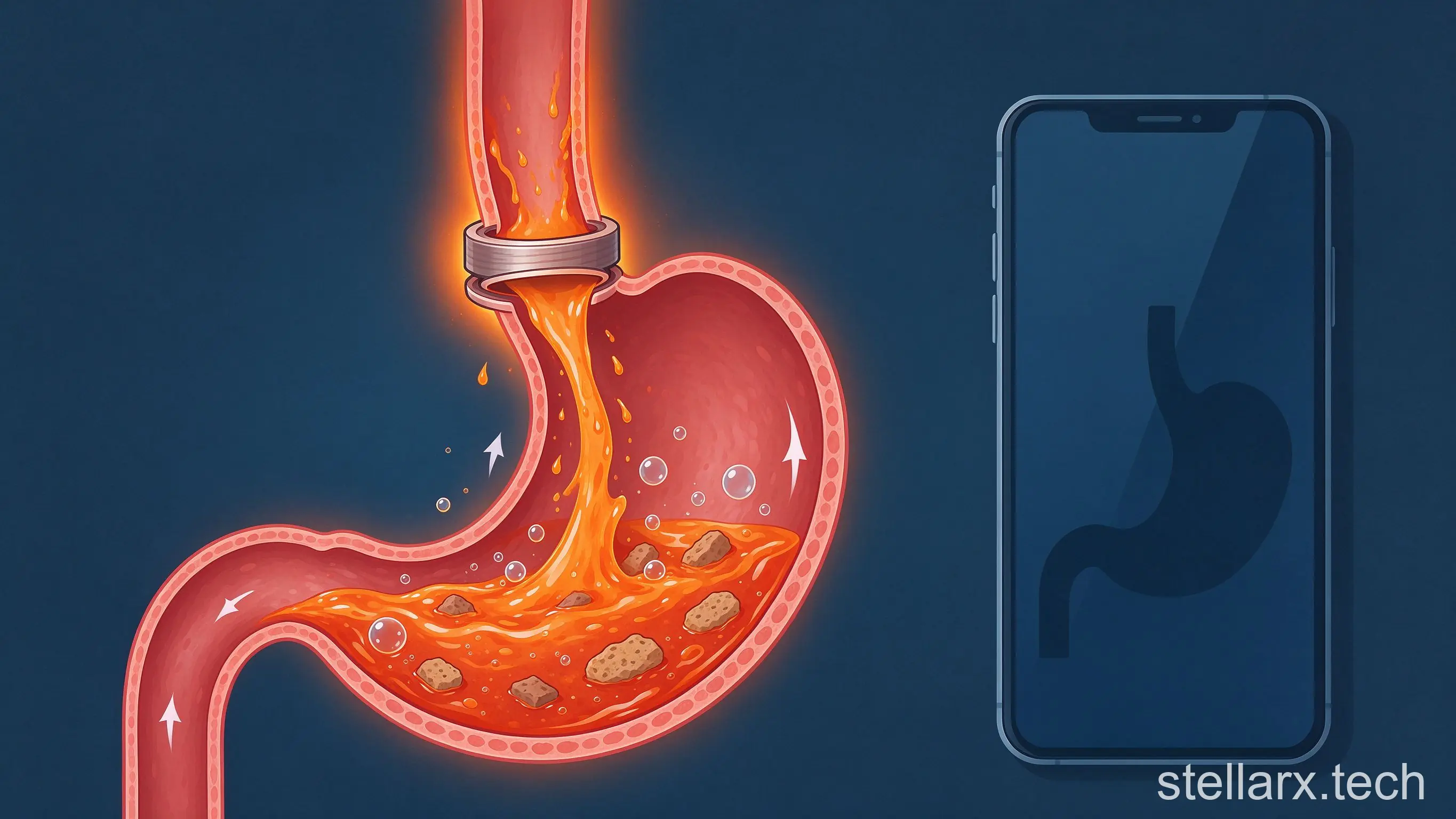
Your stomach can dissolve a piece of steak into mush. Its hydrochloric acid reaches a pH of 1.5–3.5 — strong enough to kill most bacteria and viruses. So why does a tiny parasite egg pass through completely unharmed?
Because evolution turned parasite eggs into enteric-coated capsules.
The egg shell is built like armor
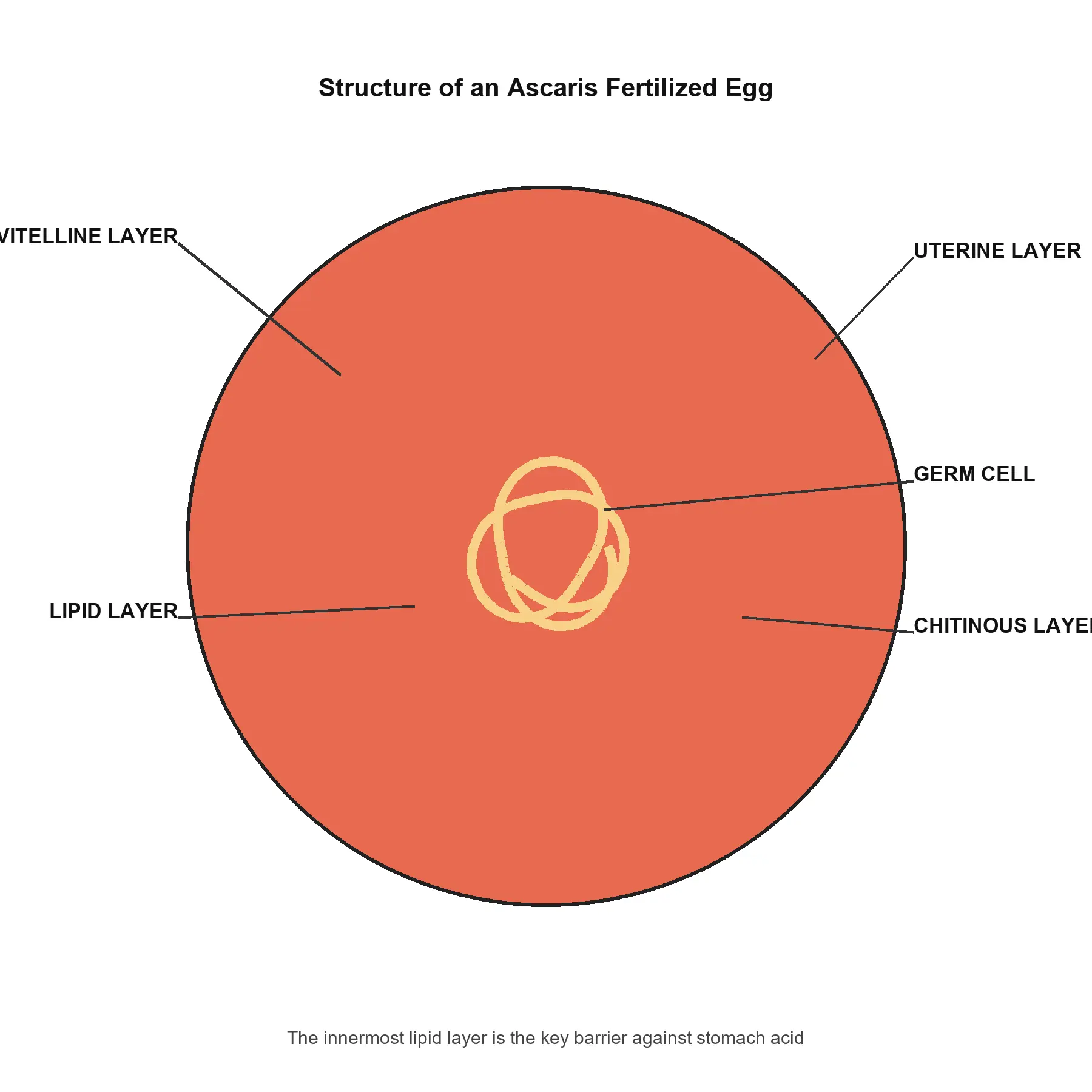
Take the roundworm (Ascaris) egg. Its shell is not one layer but three, each with a different job:
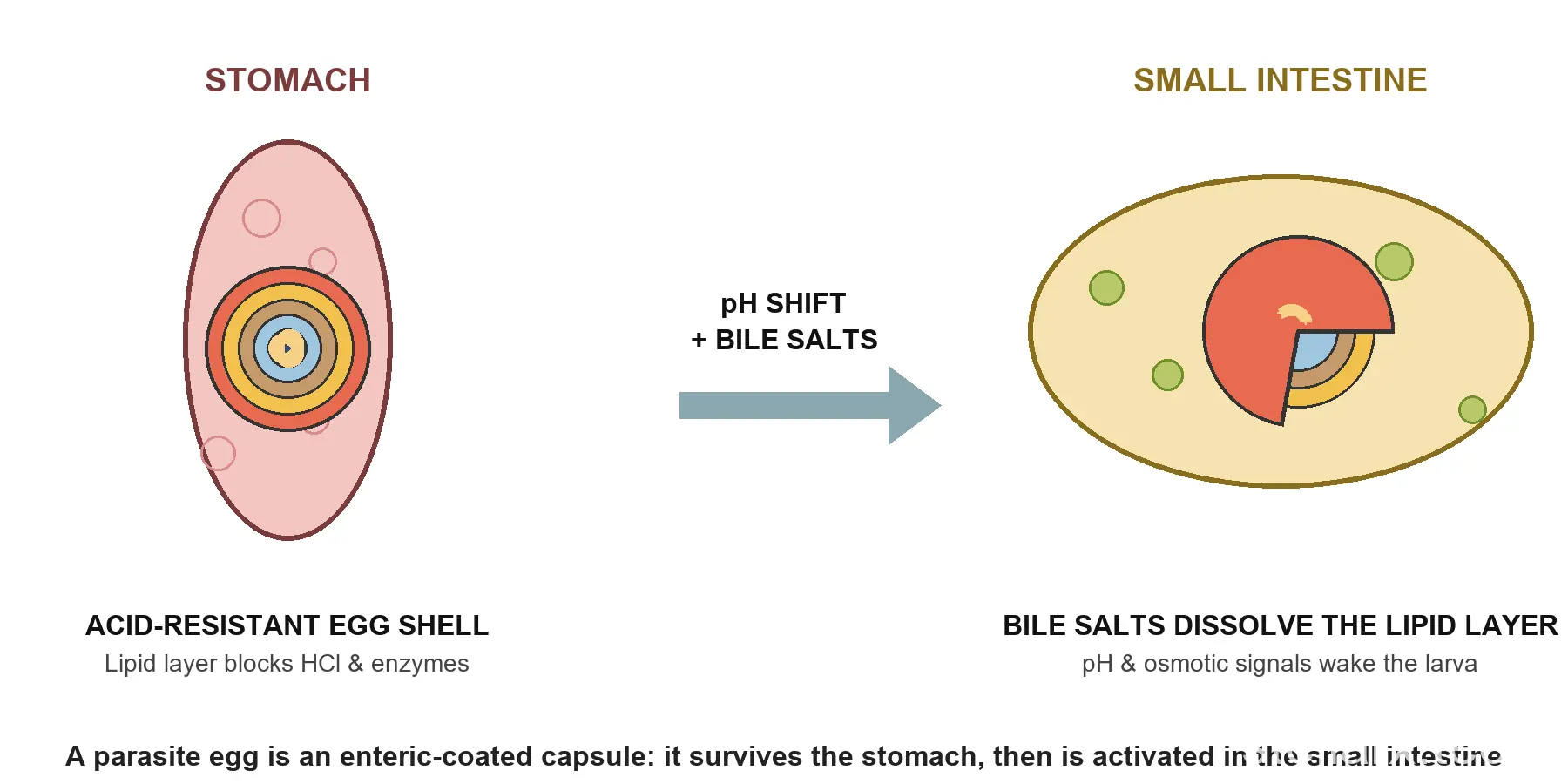
The outer layer is made of protein and glycoprotein. The middle layer is chitinous — the same tough material that makes up insect exoskeletons. And the innermost layer is a lipid layer: an almost waterproof film that acid, water, and digestive enzymes cannot easily cross.
That lipid layer is the key barrier against stomach acid. The acid attacks from outside, and the egg simply refuses to let it in.
What is already inside the egg
A fertilized roundworm egg does not start its journey as a helpless cell. In soil or damp environments, it develops from a fertilized egg through an embryo into a larva, molting once inside the shell to form an L2-stage larva.
Other parasites use the same trick
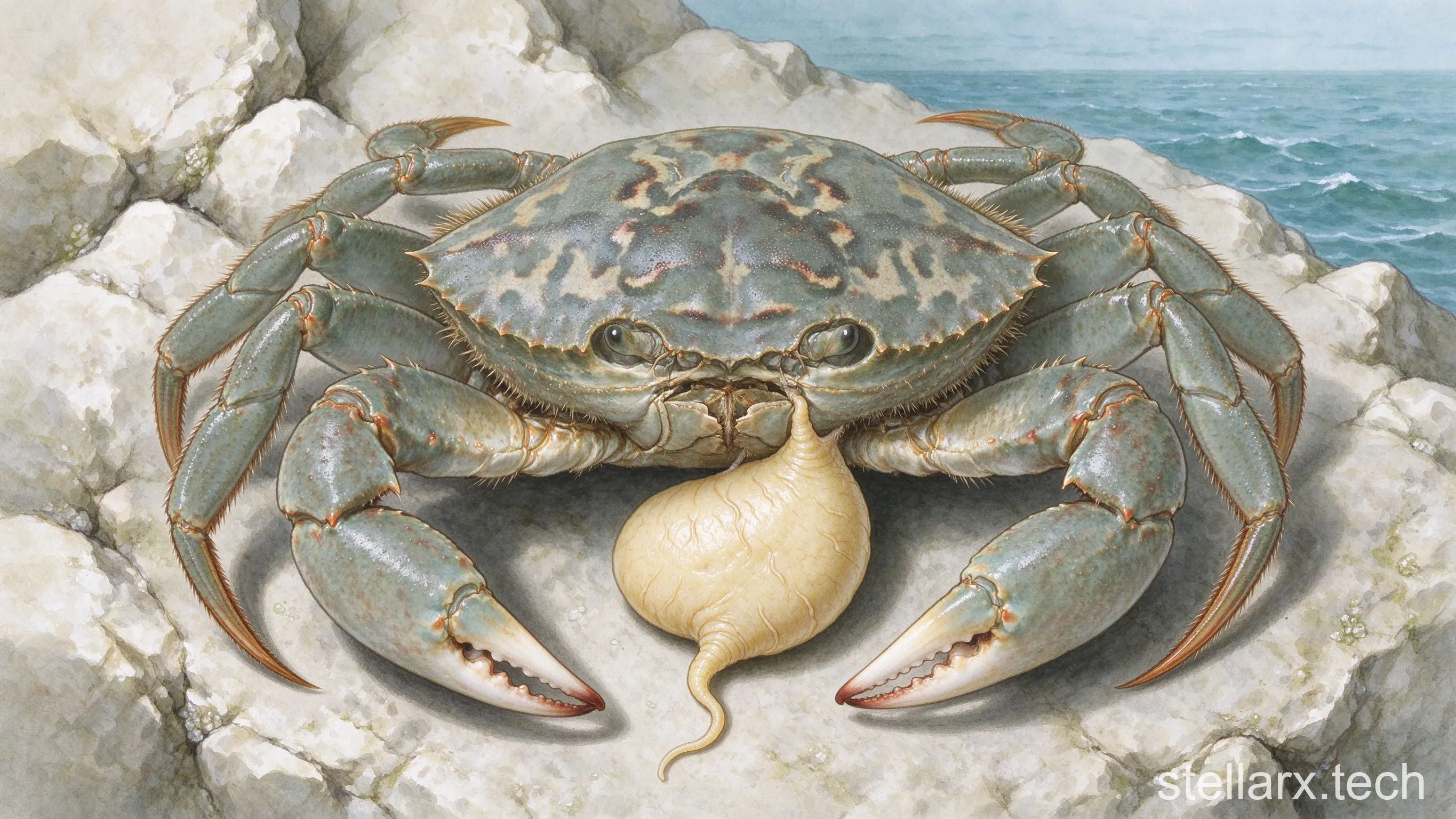
Roundworms are not the only ones. Intestinal protozoa such as Giardia and Toxoplasma also form cysts and oocysts with lipid-rich walls, giving them the same acid- and enzyme-resistant protection.
The stomach actually helps them wait
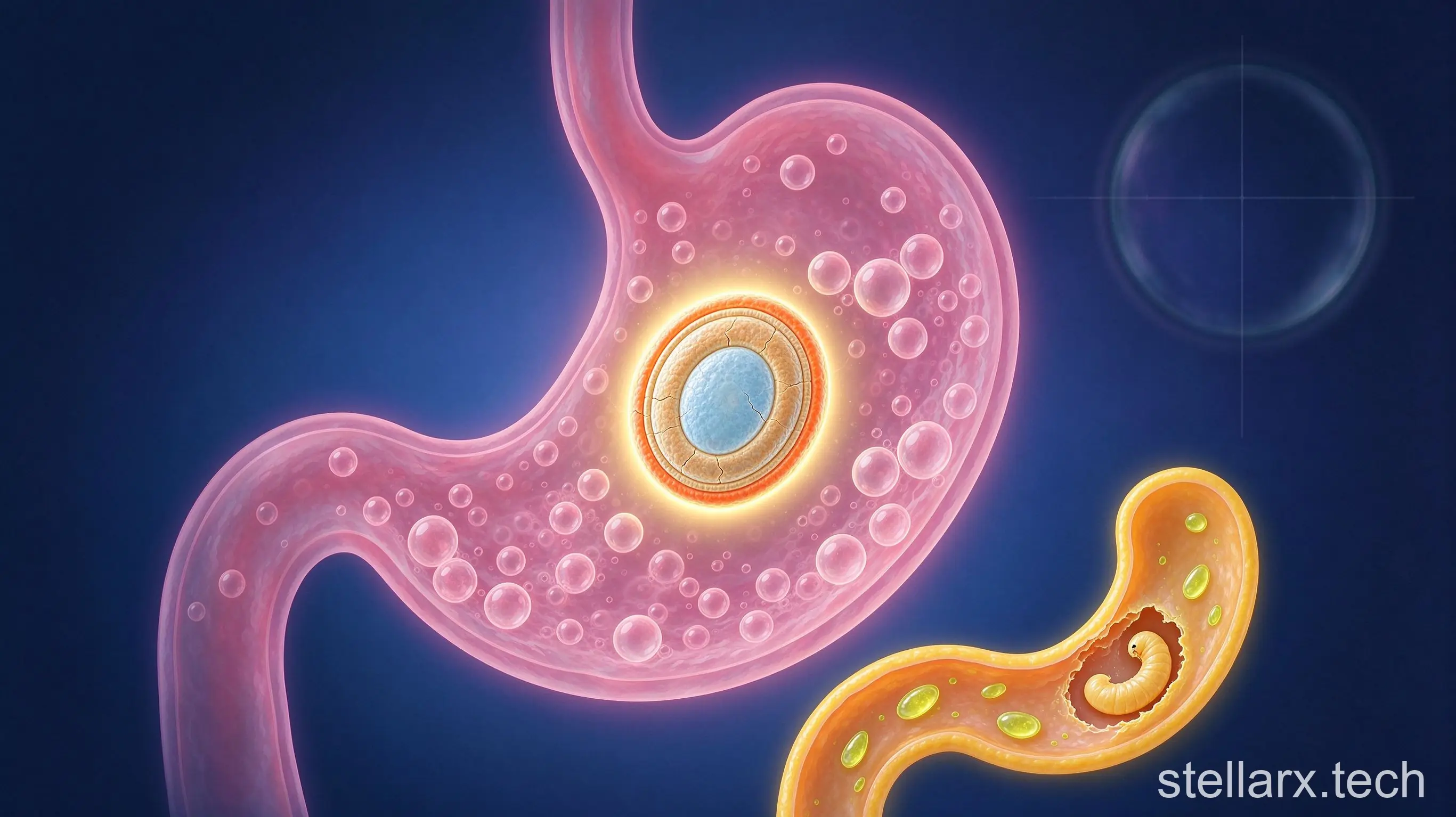
A dormant egg is protected by its multiple shell layers, living in a sealed environment with an extremely low metabolic rate. Stomach acid does not destroy it — it actually suppresses hatching, which helps the egg survive the extreme conditions of the stomach.
The alarm clock is in the small intestine
So what finally opens the capsule?
When the egg reaches the small intestine, bile salts such as taurocholate — amphiphilic molecules that normally emulsify fat — dissolve and disturb the lipid layer that stomach acid could not penetrate, increasing the shell's permeability. The egg then senses the pH and osmotic signals of the small intestine and wakes from dormancy.
The stomach cannot crack the shell. The small intestine is exactly where the shell is meant to open. Evolution engineered parasite eggs to survive exactly where you would expect them to die — and to hatch exactly where they can do the most harm.