Why do we sway when we stand still — and why does closing your eyes make it so much worse?
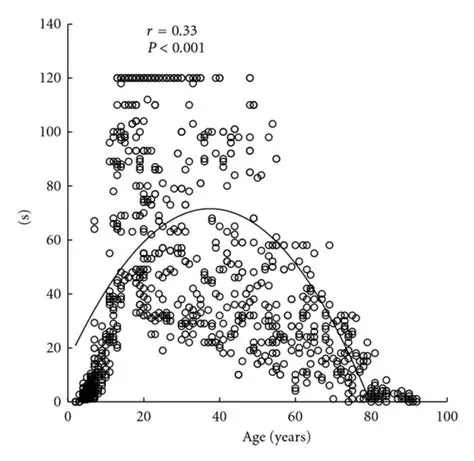
Try it right now. Stand on one leg with your eyes open. Most adults can hold it for ten seconds, even several tens of seconds, without much trouble. Now, same position, close your eyes.
For many people, the moment the eyes close, the body starts to sway — and within seconds, the other foot comes down.
You're just standing there. You're not walking anywhere. So why can't you stand?
The uncomfortable answer: you have never actually stood still.
The body is never still
As long as you are upright on two legs, your center of gravity is constantly drifting — a little forward, a little back, a little side to side. Breathing rocks you. Every heartbeat and every change in muscle tension nudges you. And the body itself is a structure with a high center of mass, which makes it inherently unstable.
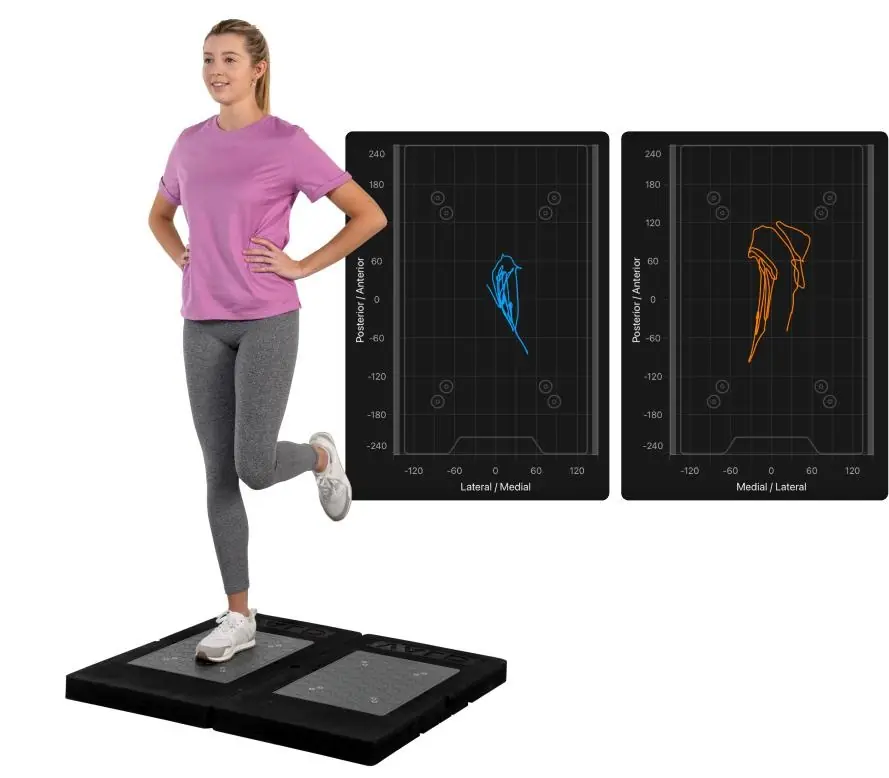
So what we call "standing steady" is not a state of stillness. It is a continuous process: the brain reads the sway, and adjusts the muscles to push the wobbling body back toward the center. Standing is a feedback control loop that never stops.[1]
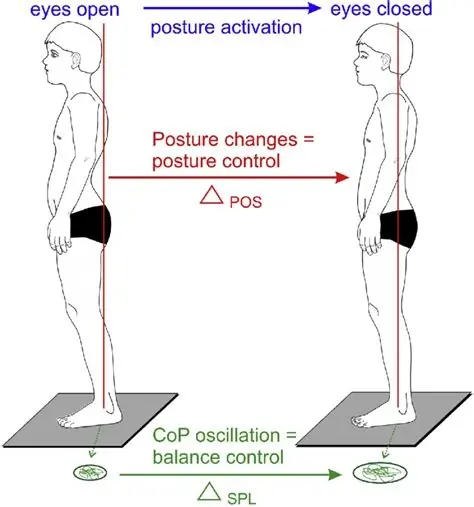
Your body's pressure center (CoP) keeps oscillating even when you look still — posture control is a continuous correction process.
How does the brain know you're leaning?
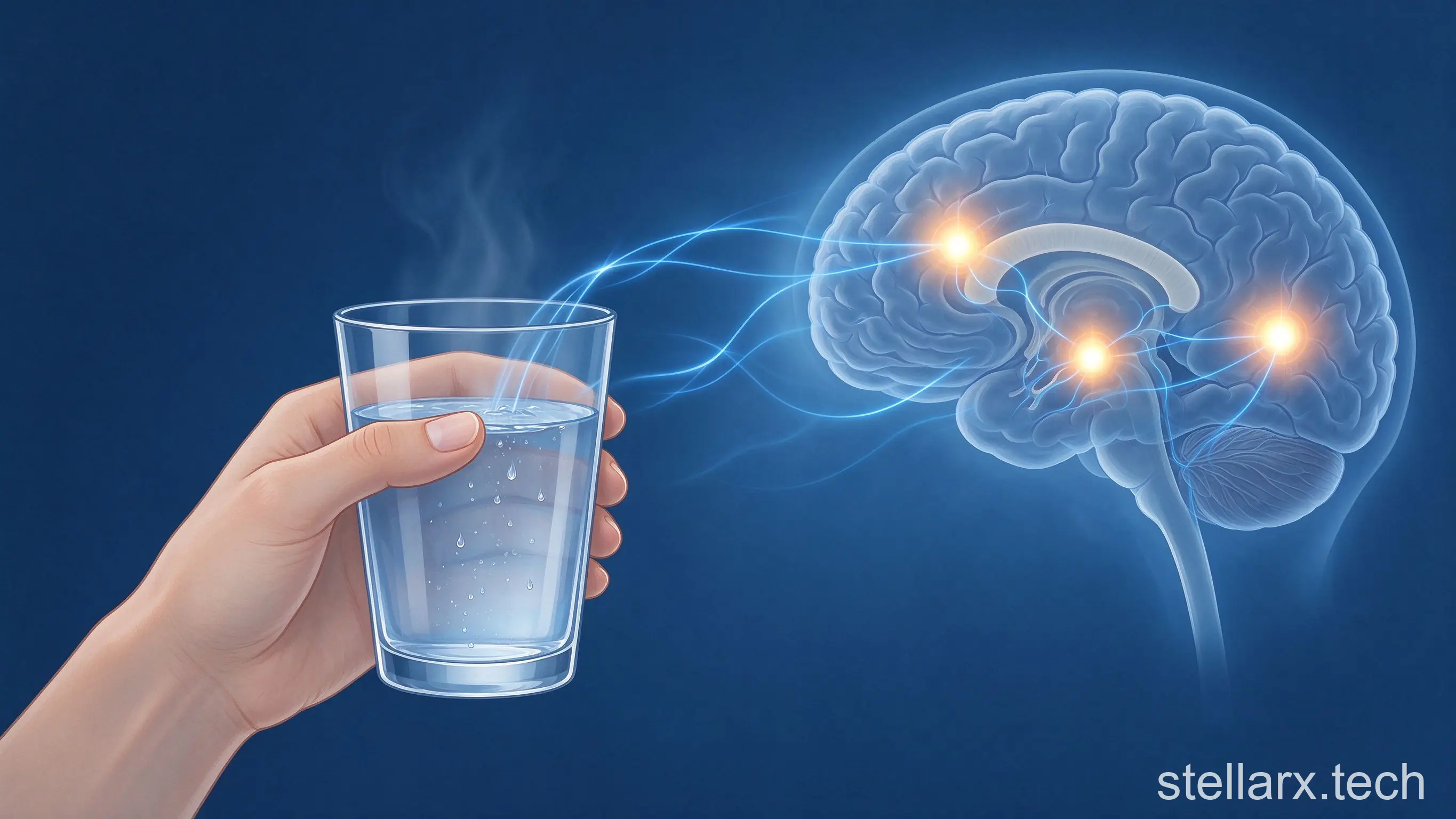
Three streams of information.[2]
The vestibular system, deep inside the inner ear. The semicircular canals detect rotation of the head; the otolith organs detect linear acceleration and the direction of gravity. Roughly: a built-in gyroscope inside your skull.
Proprioception and somatosensation, from muscles, tendons, joints and the soles of the feet. How much is your ankle bent right now? How far has your calf muscle stretched? Is your weight on the ball of the foot or the heel? This information streams to the brain continuously.
The eyes. And here is the surprising part: the eyes are not mainly for checking whether your feet look straight. They give the brain something far more valuable — a stable external coordinate system.
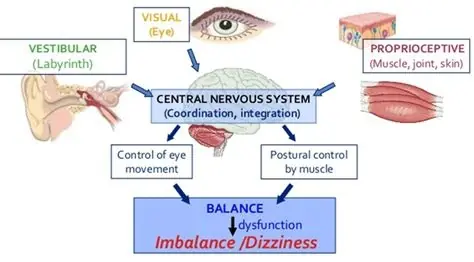
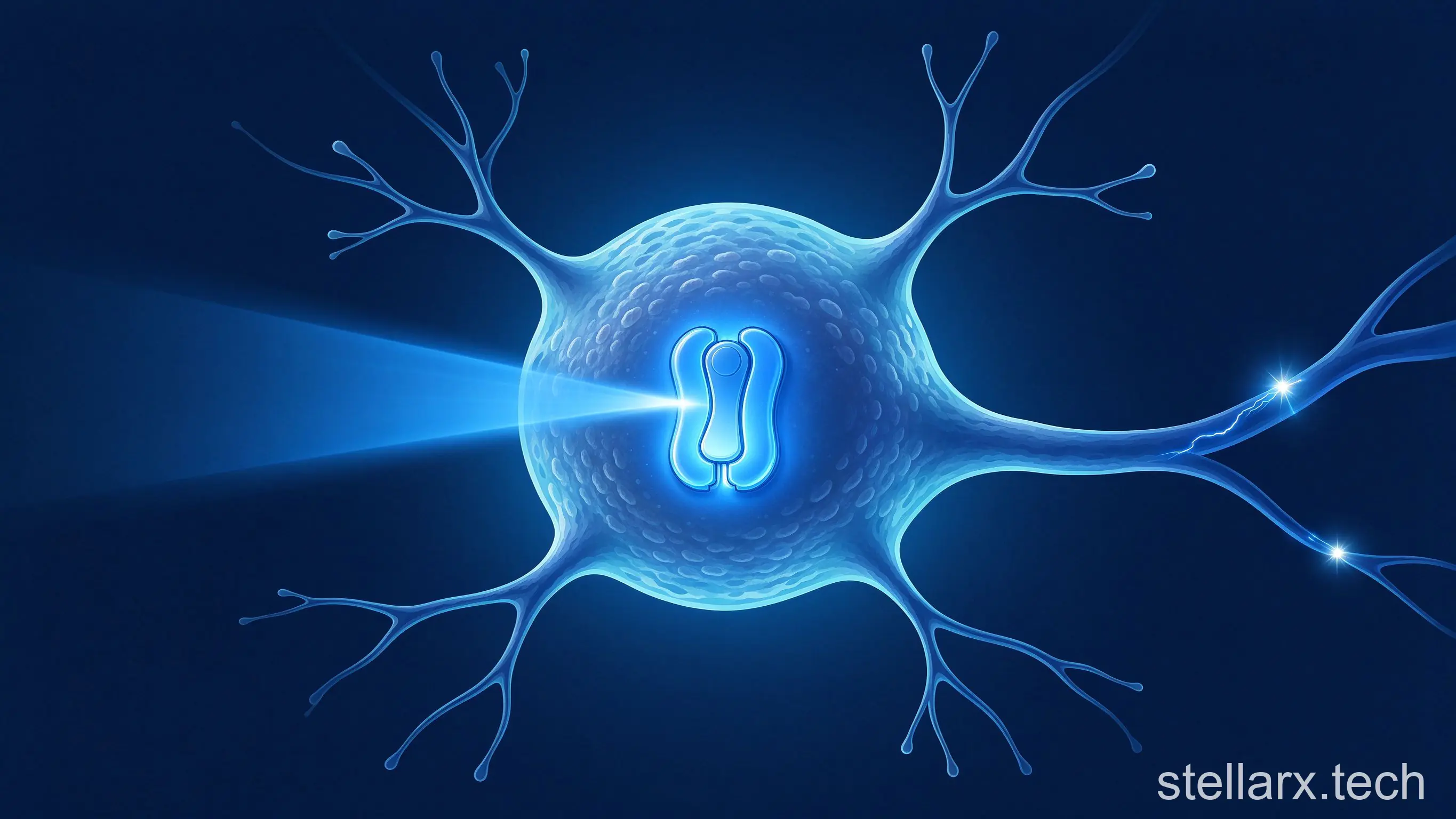
Vision, vestibular and proprioceptive input converge in the central nervous system; dysfunction in any one shows up as imbalance or dizziness.
Stare at the wall in front of you. Lean forward a little. The entire visual field shifts slightly across your retina. Lean left — the visual field moves the other way. The brain reads this and concludes: the wall didn't move, I did.
Sharp readers will recognize this immediately: it's a coordinate system.
Exactly.
This is also why, in a completely dark room, even with your eyes open, you often get that uncertain, "one step into a hole" feeling — there is nothing stable to measure yourself against.
In a 2026 experiment, healthy young adults stood on one leg in complete darkness: opening the eyes made no significant difference in multiple sway measures compared with fully occluded vision.[3] What matters is not whether the eyes are open — it's whether there is a valid visual reference.
Why the eyes-closed one-leg test is so hard
Because the test does two things at once.
First, one leg. With two feet down, the support base is the whole area between your feet, and a sway of a few centimeters is nothing. Lift one foot and the base shrinks to a single foot. The same wobble that used to be trivial now approaches the edge of your support.
Second, closed eyes. The visual channel that was continuously reporting your body's position relative to the world is switched off. What remains: vestibular, proprioceptive, plantar pressure, and the neuromuscular control system.
One leg shrinks the margin of error. Closed eyes remove an entire feedback system. Together they strip standing down to its hardest version.
The numbers make it vivid. In a 2016 study, 40 healthy young adults performed single-leg stance on a force platform. With eyes closed, the distance traveled by the center of pressure increased by about 94%, its velocity by about 89%, and the sway area expanded to roughly five times the eyes-open value.[4]