Will that chubby little face turn fine-boned later?
Can a single eyelid still become a double one?
When does a flat nose finally "stand up"?
Parents keep hunting for one clean number: 7? 12? 18?
From a medical standpoint, a child's face is not a photograph that gets "finalized" on some birthday. Between birth and adulthood the face changes visibly three times — and the double eyelid, the nose bridge and the face shape each run on a completely different clock.

From Birth to Adulthood, the Face Shape Changes 3 Times
Think back to when your baby was small: a big forehead wrapping a tiny face, rounded features, as if a cuteness filter had been switched on.
Then came school age. The proportions shifted — the face got longer, the forehead took up less of it, but the face was still wide, and the profile still looked soft and full.
By adolescence the childish look gives way to something more three-dimensional. A defined jawline appears, and people say the child has changed completely.
Your eyes are not deceiving you. From birth through the whole of puberty, the face goes through three clear changes.
A facial measurement study of 1,594 healthy children and adolescents aged 1 to 18 found that at age 1 the width of the mandible is already highly developed, while growth in the vertical direction lags behind — the face grows sideways before it grows downward.
Further work shows that by age 5 to 6 the horizontal dimensions of the face are already close to adult proportions, while facial height keeps increasing as the jaws, the alveolar bone and the dentition develop.
After age 5, facial height, facial width and facial depth all keep growing slowly.
Then puberty arrives. The mandible, the nose and the vertical dimensions of the face develop further, and the round, flat contours of childhood turn into the sharper, more sculpted contours of an adult.
Infancy and toddlerhood. A short, round face: big head, big eyes, a short midface, and plenty of fat.
School age. Tooth replacement and jaw growth lengthen the face. The child moves from a "short round face" toward a "long face."
Puberty. The jaw, the nose and facial height change markedly, and the contours gain definition.
Through late puberty and early adulthood, the jaw, the teeth and the soft tissue can still shift slowly.
As for the question everyone asks — when does the face "set"?
There is no exact moment. What we read as "settled" is simply change slowing down after adulthood.
Across studies, the average age at which facial form stabilizes is about 18 to 22 — but individual variation is large, and roughly 20% of people keep changing slowly after that.
Girls finish puberty earlier, so their faces usually stabilize earlier than boys'.
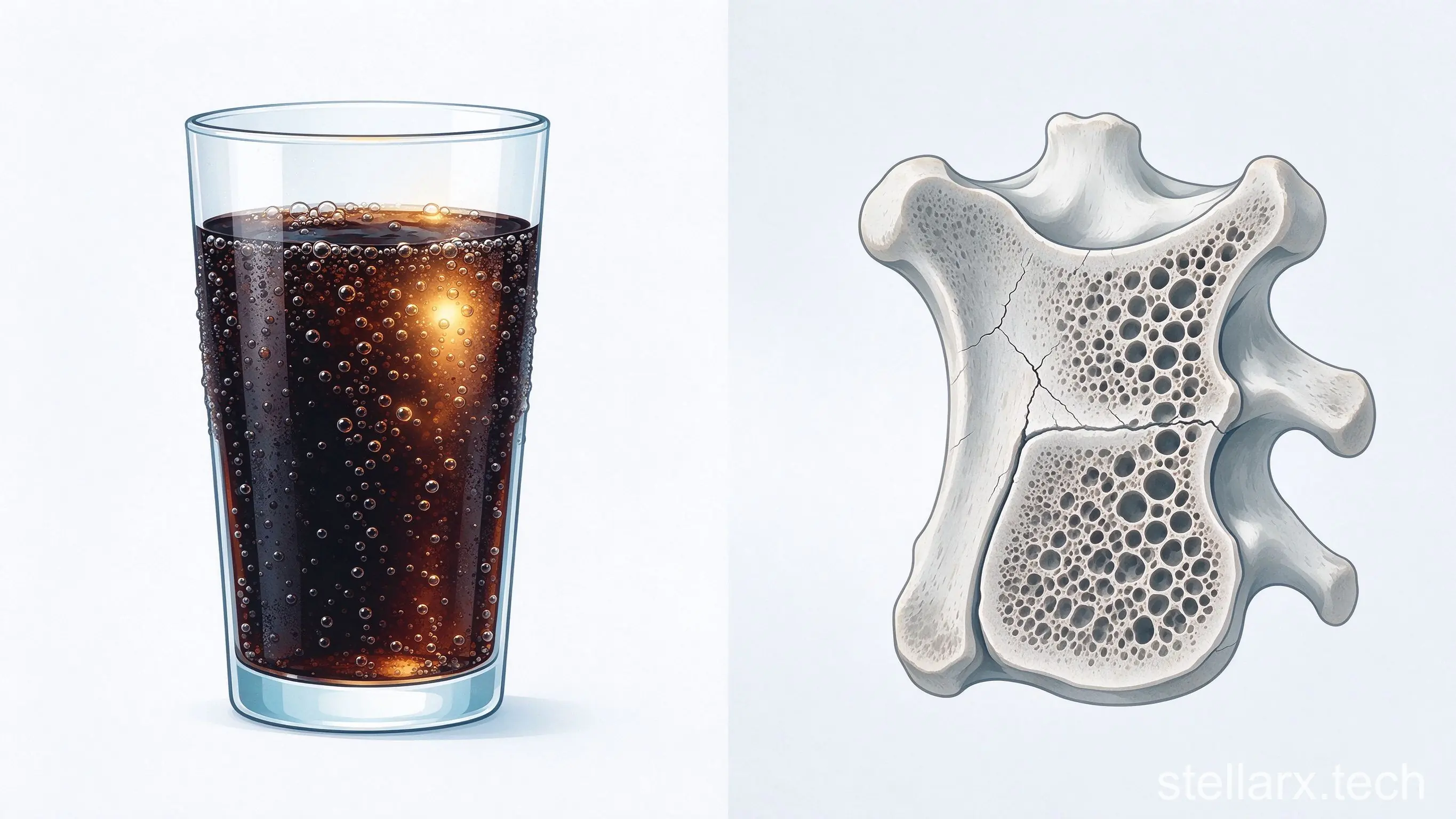
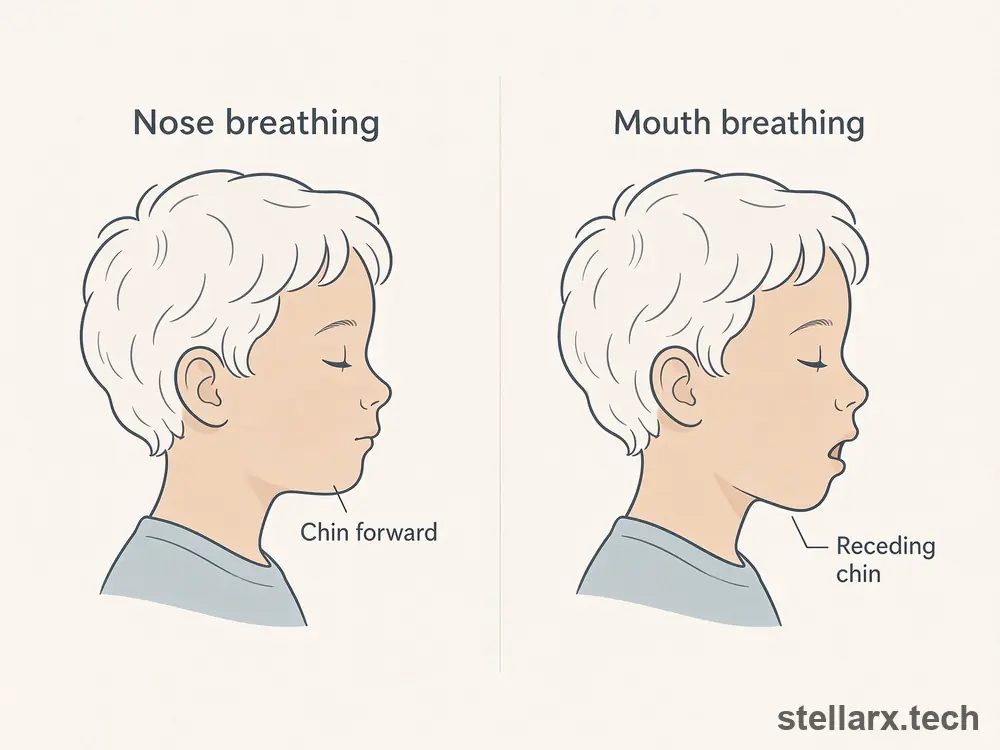
One caution: illness and habit can redirect facial growth. Enlarged adenoids and long-term mouth breathing can pull the mandible back and produce a small, recessed jaw — the pattern clinicians call adenoid face. Over-processed, overly soft feeding and too little chewing load can narrow the upper jaw and crowd the teeth. If you see these signs, get the child assessed rather than waiting it out.
When Does Baby Double Eyelid Appear? What Is the Latest Age?
Plenty of parents wonder when the crease will show up. Both parents have double eyelids, yet the child's seem to be there and not there at the same time.
A double eyelid is not just a line drawn on skin.
Its formation depends on several structures at once: the upper eyelid skin, the levator aponeurosis, the orbicularis oculi muscle, the orbital septal fat, skin thickness, and the epicanthal fold.
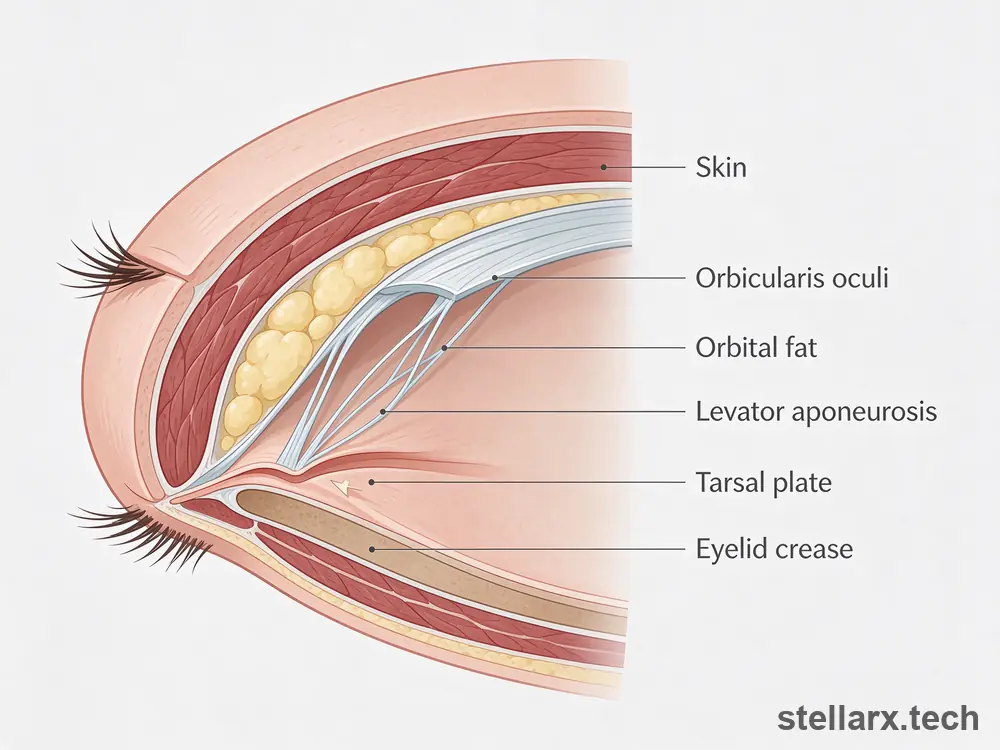
Inheritance shapes that anatomical groundwork — but "when the crease appears" cannot be read off inheritance alone.
As the child grows and the facial proportions and fat distribution change, a crease that was barely visible can gradually surface.
Some children have a crease that comes and goes, or one that is obvious on one side and faint on the other. Too little sleep, crying, allergies, eyelid swelling and shifts in weight can all make the fold temporarily shallower or deeper.
A single eyelid in infancy does not mean a single eyelid for life. And a crease that flashes into view once does not mean anything has "set."
The research suggests the double eyelid may not stabilize until around age 20.
The Japanese researcher Ishikawa (1995) observed 1,844 people in detail and gave the most direct numbers we have:
Under age 10, about 44.8% had a double eyelid.
From 10 to 19 that rises to 57.2%, and in the twenties it steadies at around 67.8%.
The proportion keeps climbing through the thirties to the sixties — then falls back to 57.3% after age 70.
Those numbers say two things. A substantial share of people convert from single to double during puberty. And the fold only settles around age 20; in old age the proportion drops again as the skin loosens.
So if the crease has not appeared yet, there is no need to rush — and no need to put eyelid tape on a child to help it along.
Tape changes appearance for a few hours. It does not change the anatomy.

Will a Child's Flat Nose Bridge Get Higher? When Does It Set?
How high a child's nose bridge will end up seems impossible to predict.
From infancy through school age the nose looks flat. It is growing, but not obviously.
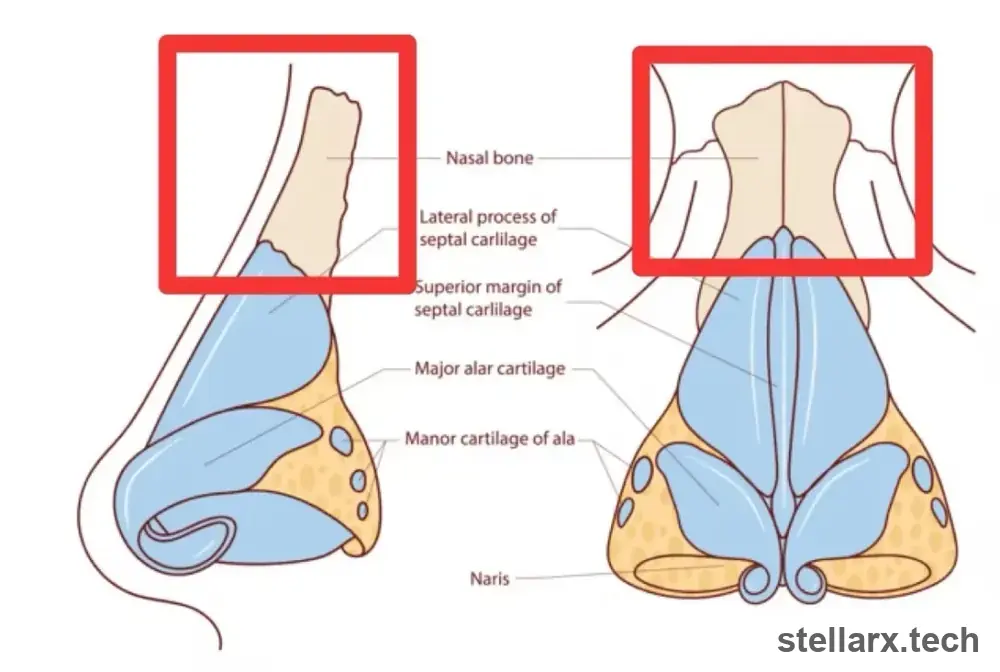
That is because bridge height is not decided by one structure. The nasal cartilage, the nasal bone and the surrounding facial skeleton — the cheekbone and the maxilla — all take part.
The nasal cartilage and the nasal bone matter most, and the two do not grow on the same schedule.