What time do you usually eat dinner? Six in the evening, seven, or after eight?
Plenty of people never give dinner time a second thought — seven or eight is just normal. When work runs long, it slides to nine or ten at night. Keep that up long enough and you start to notice: blood pressure up, blood sugar up, weight up……

More and more studies now confirm it: no dieting, no going hungry. Dinner needs one small change — eat it earlier — and blood sugar, blood pressure, weight, even cancer risk all come down.
One Small Change to Dinner → Every Metabolic Marker Gets Better
In 2026, the international journal BMJ Medicine published a study pooling 41 clinical trials and 2,287 participants. People who ate dinner early had better weight, waist circumference, blood pressure, fasting glucose and blood lipids than people whose three meals were irregular and whose dinner slid into the middle of the night. The clearest improvement was in those who finished dinner before 5 PM and ate nothing afterwards.[1]
Researchers sorted the participants into four groups by when they ate dinner, and at the same time into three bands by how long their daily eating window ran — under 8 hours, 8 hours, over 8 hours.
Group 1: people who ate dinner before 17:00 (5 PM).
Group 2: people who ate dinner between 17:00 and 19:00 (5–7 PM).
Group 3: people who ate dinner after 19:00 (7 PM).
Group 4: people who chose their own eating times.
The conclusion the study reached was clean:
1. Finishing dinner before 17:00 improved metabolism the most.
The analysis found that before 17:00 was best and after 19:00 was worst. Compared with people who ate after 19:00 inside a restricted eating window, those who ate before 17:00 inside a restricted window — early time-restricted eating — brought down body weight and fasting insulin significantly more.
2. People on time-restricted eating improved several metabolic markers at once.
Against a regular diet, time-restricted eating significantly lowered body weight, body mass index (BMI) and waist circumference, and also lowered blood pressure, fasting glucose, insulin and triglycerides — an across-the-board metabolic improvement.
In one sentence: if you want better metabolism, finish dinner early — before 17:00, and nothing else after that. For blood sugar, blood pressure and weight, this may be the highest value-for-effort method there is.

Is It Bad to Eat Late at Night? The Benefits Go Well Beyond Metabolism
1. An early dinner lowers cancer risk.
Dinner time is quietly shaping cancer risk too. A study in the International Journal of Cancer revealed that eating dinner earlier may be tied to lower cancer risk. The data: people who finished dinner before 9 PM and then left more than two hours before going to sleep had roughly a 25% lower combined risk of breast and prostate cancer than people who ate after 10 PM and went to bed soon after eating.[2]
2. An early dinner improves fatty liver.
Eat earlier and the liver carries a much lighter load. In 2024, researchers at Peking University reported in Cell Metabolism that eating nothing from 17:00 until 7 AM the next morning clearly improved liver-injury markers and helped improve fatty liver. In that four-week trial with 19 people, the improvement was tied to Ruminococcus torques in the gut.[3]
3. An early dinner helps you live longer.
Drag dinner into the middle of the night often enough and your lifespan may get pulled in with it. In July 2026, the European Journal of Clinical Nutrition published a large study of more than 31,000 people. Taking a last meal finished between 19:00 and 20:00 as the reference, people who only ate after midnight had a 27% higher risk of death from any cause and a 38% higher risk of cardiovascular death. Past age 50, people with that eating habit lost an average of 2.35 years of life expectancy.[4]
One thing worth knowing from that same study: the lowest risk sat around 20:00, and finishing the last meal before 19:00 carried a 13% higher all-cause hazard — the early eaters in that cohort were older and already less healthy to begin with.
4. An early dinner keeps your blood vessels healthier.
The later dinner gets, the more pressure your blood vessels carry. A 2023 study in Nature Communications also found that eating dinner earlier protects the heart and the brain. The data: every one-hour delay in dinner raised cerebrovascular disease risk by 8%. And compared with people who ate dinner before 20:00, those who ate after 21:00 had a 28% higher risk of cerebrovascular disease.[5]
5. An early dinner keeps your bones solid.
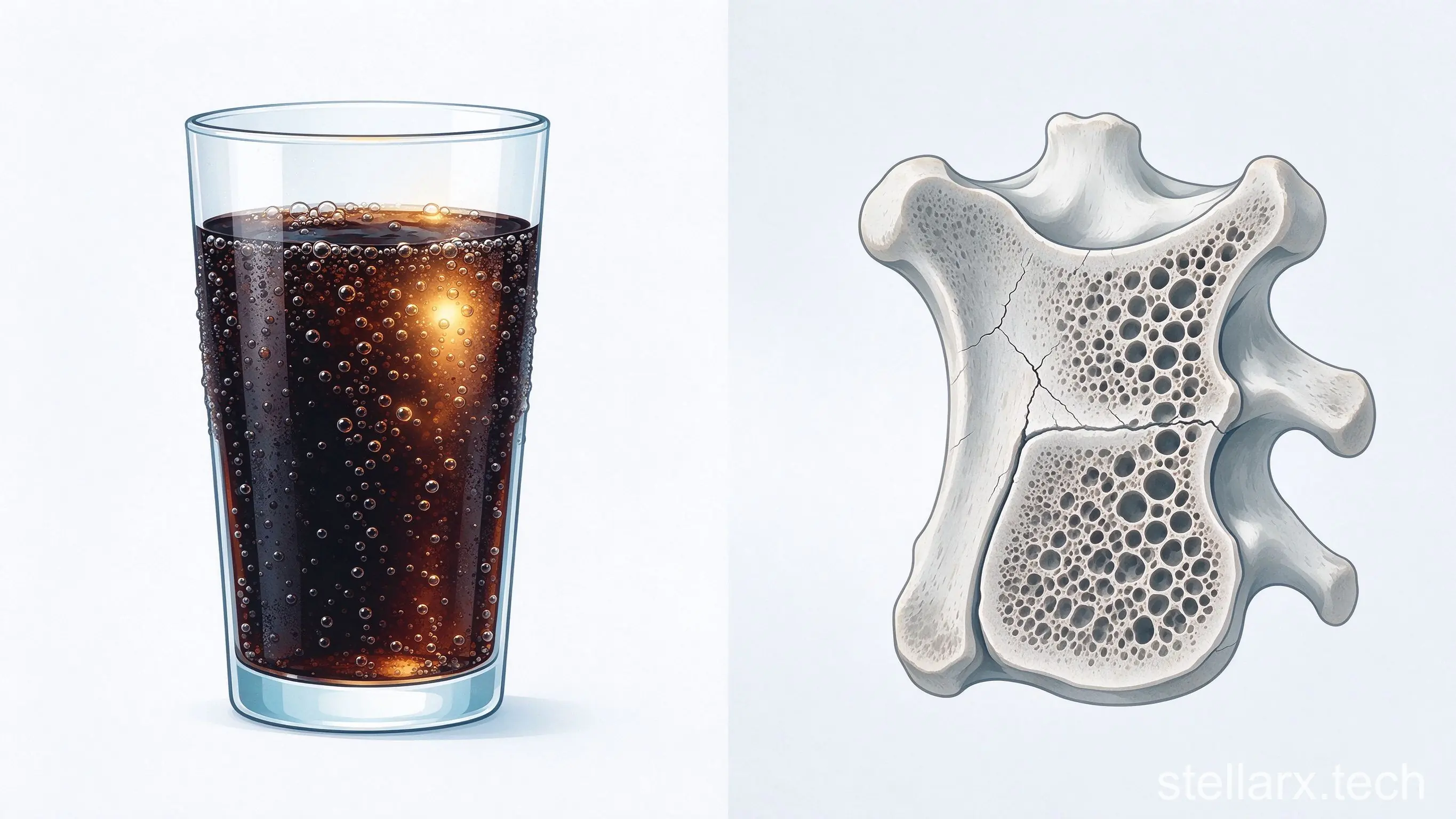
Dinner time even reaches bone density, quietly. A 2025 study in the international journal Journal of the Endocrine Society found that eating dinner too late — meaning at least three times a week eating within two hours of bedtime — raised overall fracture risk by 8%, with hip and vertebral fractures affected more clearly.
The study points out that a late dinner disrupts the body clock and hormone balance, and human bone cells — osteoblasts, osteoclasts and the rest — all run on that body clock. A late dinner can break the circadian rhythm and drive bone mass and bone density down.[6]