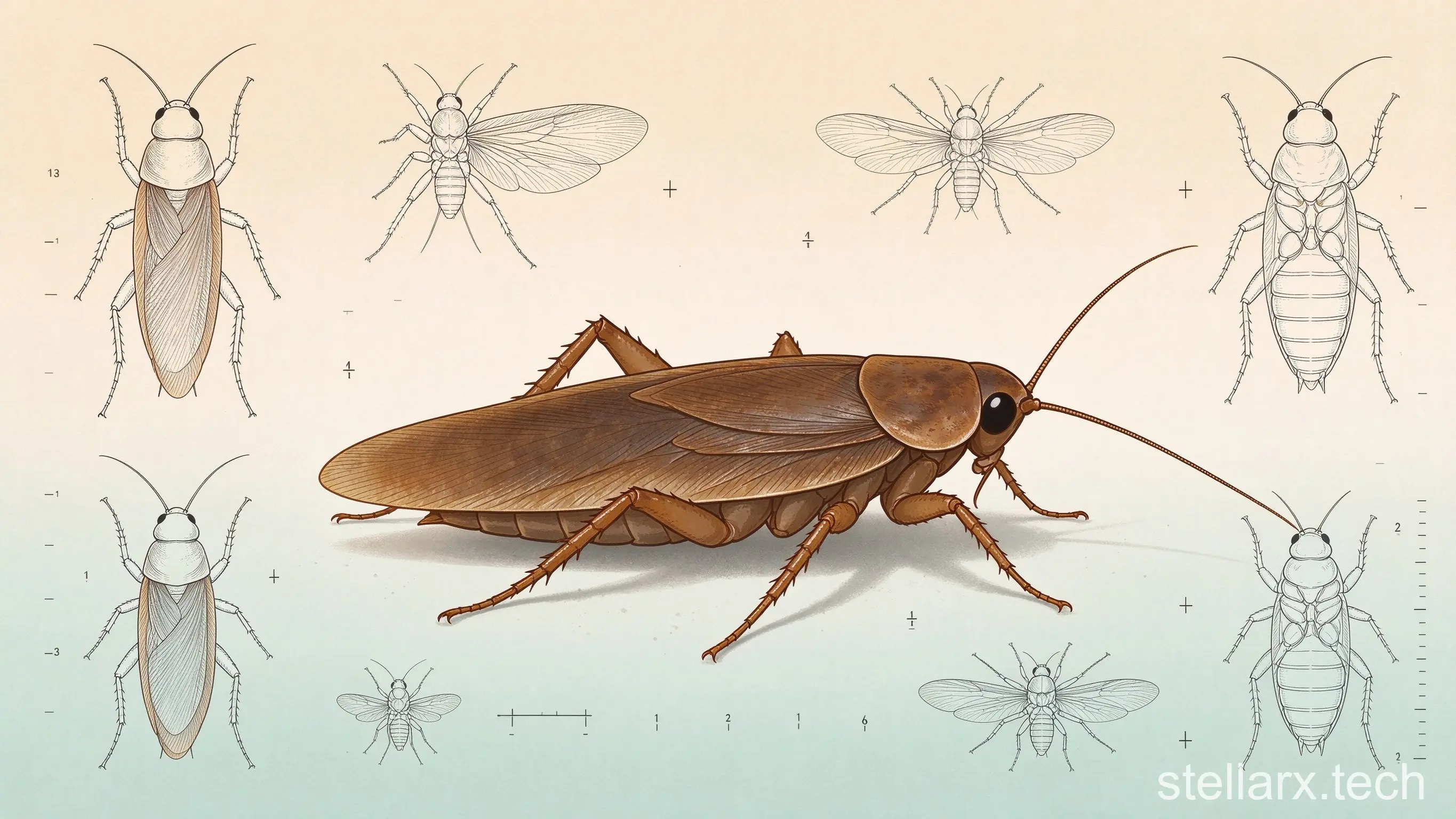
Meet Sacculina — the "unstoppable feminizer" of the parasite world.
A male crab parasitized by it gradually becomes feminized: its abdomen widens, and it turns "maternal." Whatever the host originally was — male or female — its reproductive system is destroyed, while Sacculina forms its own reproductive organs inside the crab. In the end, the crab painstakingly tends Sacculina's egg sac. It plays mother so devotedly that it could move heaven and earth — yet every single egg it raises belongs to the parasite.
A Barnacle That Gave Up Barnacling
Sacculina may sound unfamiliar, but barnacles do not. In fact, Sacculina is a special member of the barnacle family (Cirripedia, the stalked and acorn barnacles) — the order Rhizocephala.
Ordinary barnacles have a hard shell, cement themselves to rocks, whale bodies or turtle shells, and filter-feed from seawater. Sacculina abandoned the hard shell and the filtering cirri entirely, evolving into a purely internal parasite. Within the barnacle family, its lifestyle is extraordinary.
The Injection
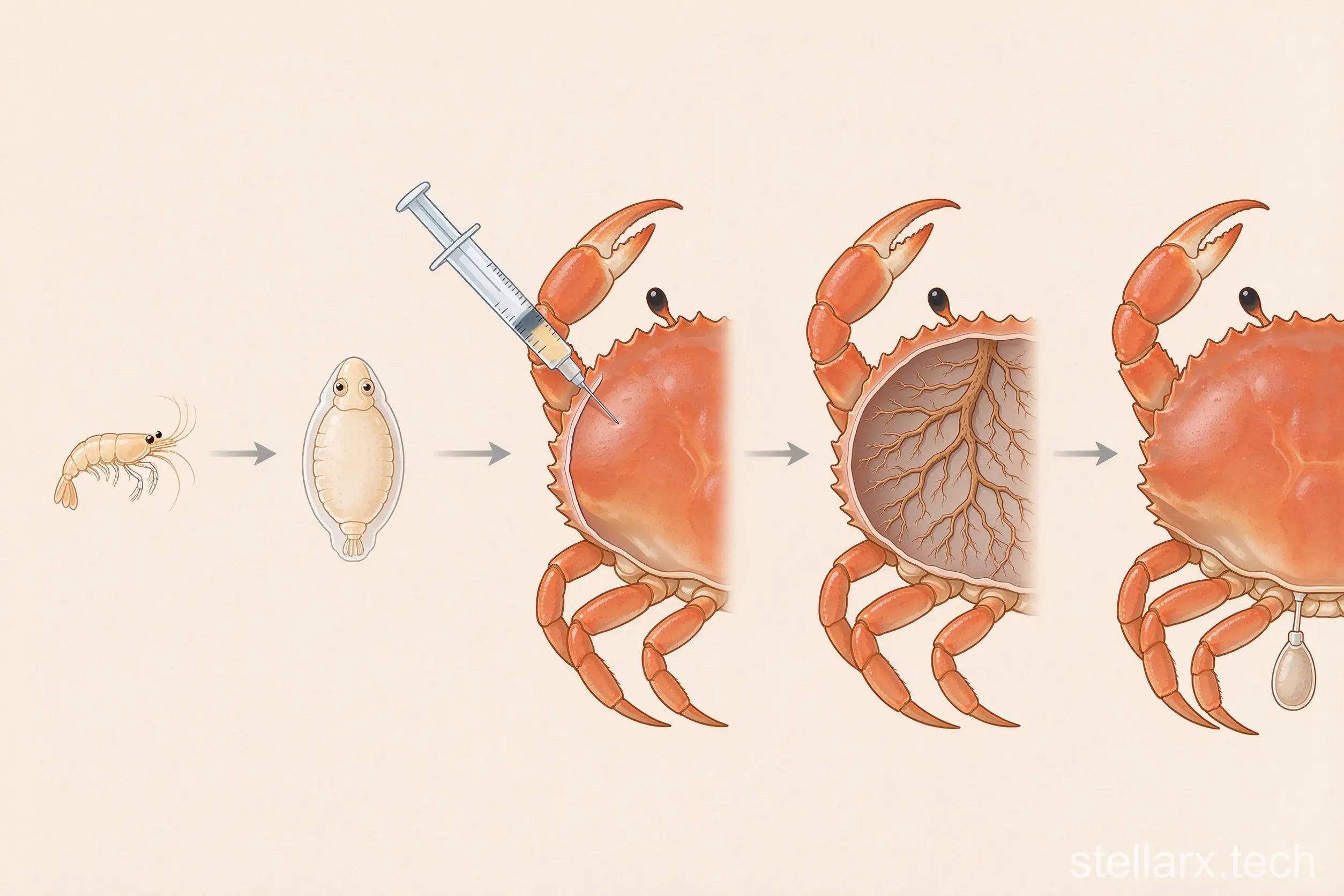
Sacculina's larvae are free-living. The larva that hatches from the egg, the nauplius, looks like a tiny shrimp with eyes and limbs, swimming freely in seawater.
When the nauplius reaches its final stage, it molts into a cyprid. It is the female cyprid that gains the ability to parasitize.
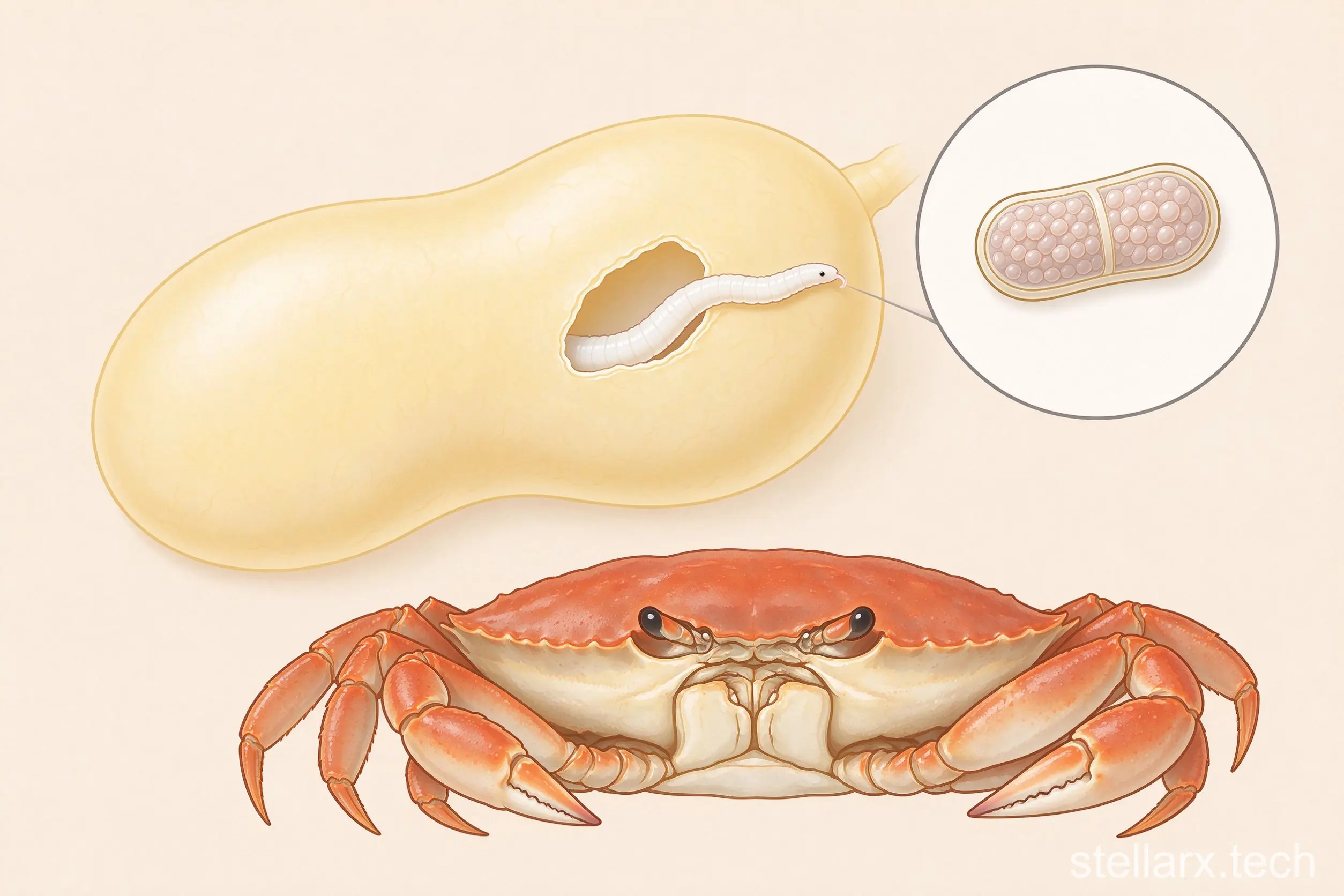
When such a larva meets a crab, it crawls over the crab's surface, looking for a soft spot as its entry point. There it molts into a kentrogon — a form shaped like a syringe. The kentrogon pierces the crab's body wall and injects its cells into the crab's hemocoel (blood cavity), leaving its shell behind outside the crab.
From that moment on, an animal with a "complete" body becomes an unconventional, "formless" parasite inside the crab.
Roots Inside
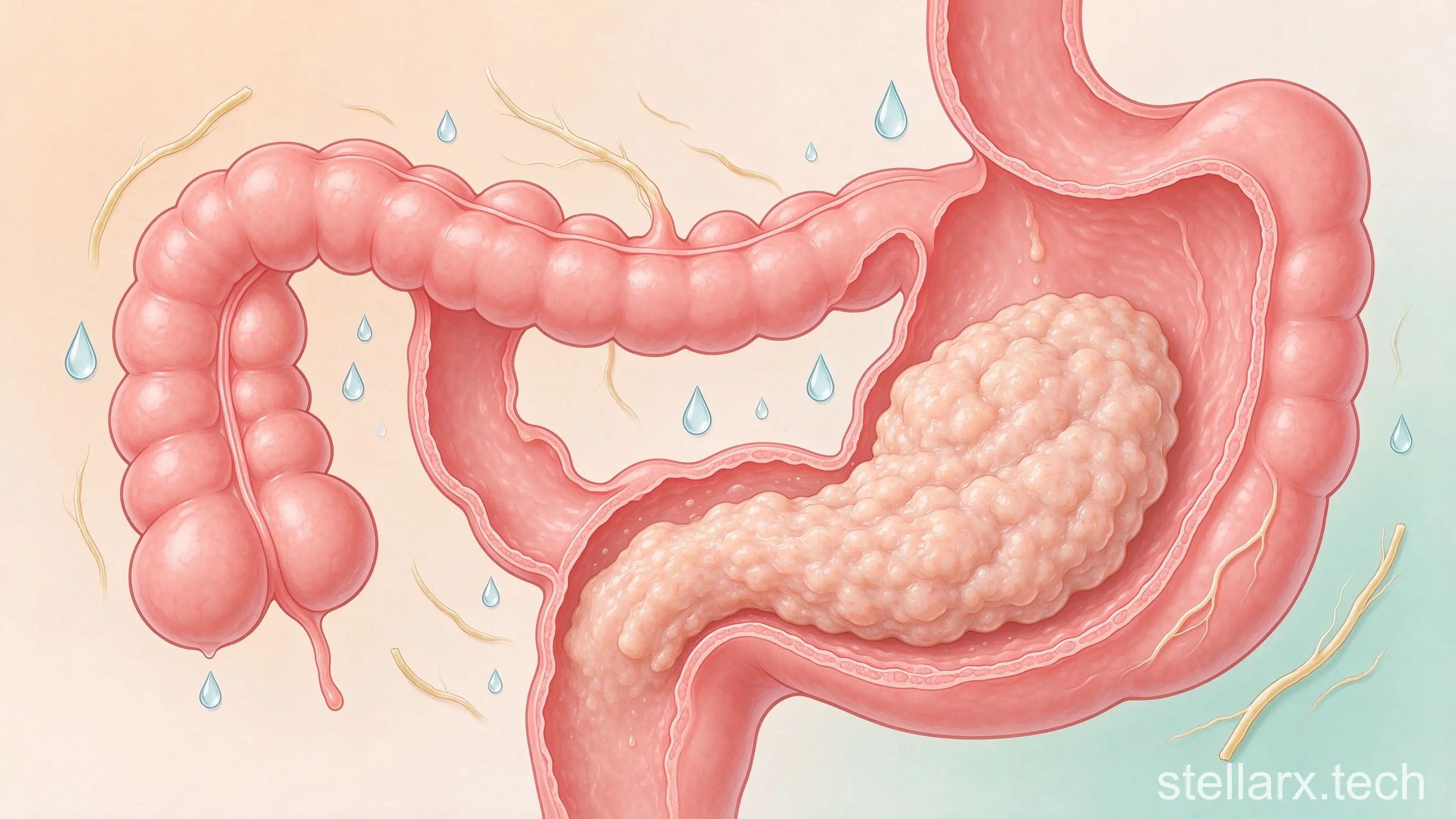
The injected cell mass extends along the gaps between the crab's muscles and organs, gradually growing into a vast, plant-root-like network inside the crab. This network — the interna — draws nutrients from the host and begins a comprehensive interference with the crab's nervous and hormonal regulation.
The crab's gonads atrophy and disappear; its genital openings may close; even the self-protective mechanism of regenerating lost claws fails. Every nutrient is redirected to meet Sacculina's needs.
The External Body
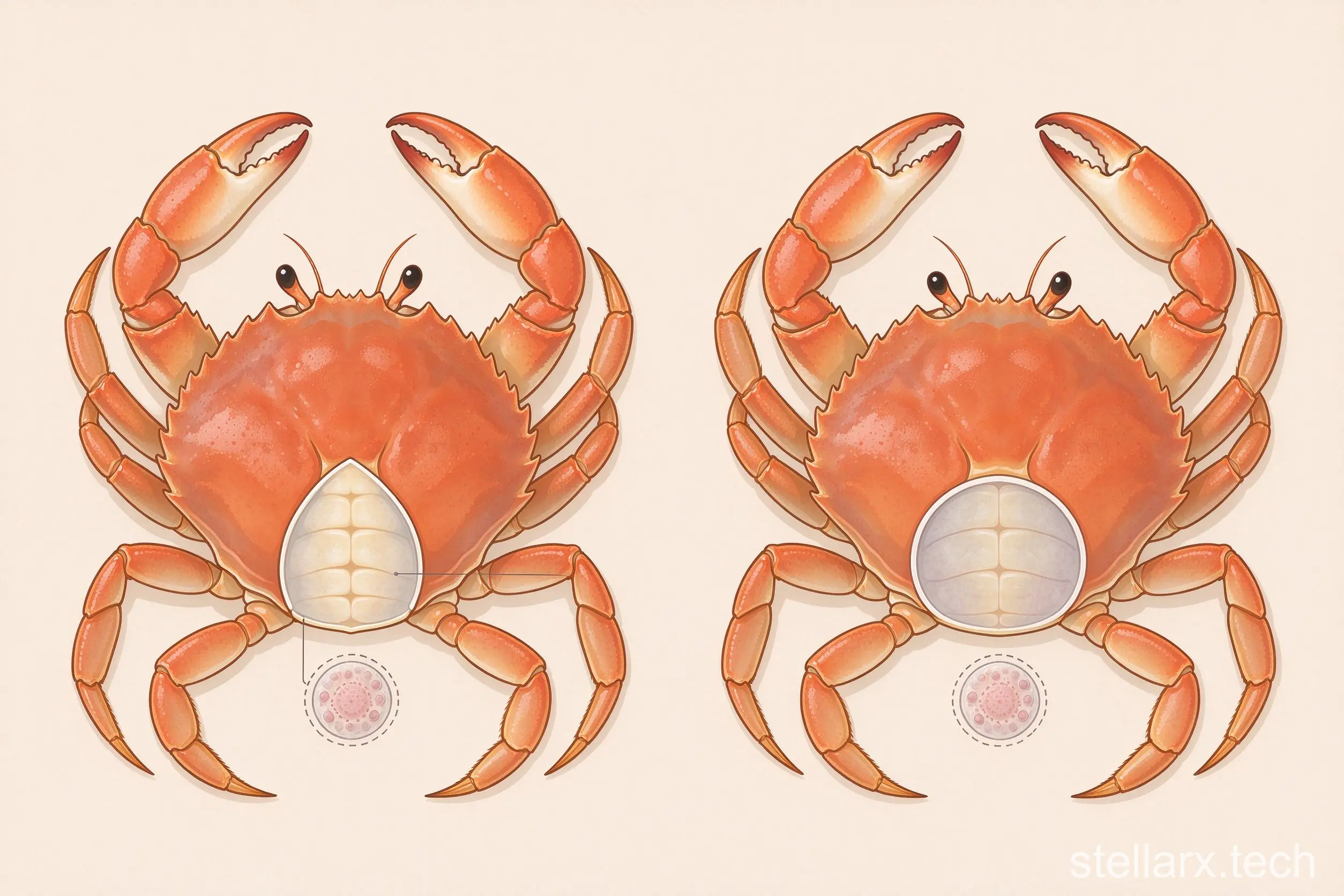
The folded part under a crab's body is its abdomen — the "apron" (the flap colloquially called the crab's belly or "脐"). Normally it folds tightly beneath the carapace like a lid. The shape of this lid is the main external feature used to tell male from female crabs: in most crabs, males have a triangular flap, females a semicircular one.
Inside a female crab's abdomen grow bristles used to hold eggs, forming a "nursery basket." A male crab instead develops a tubular copulatory organ here, used to deliver sperm during mating.
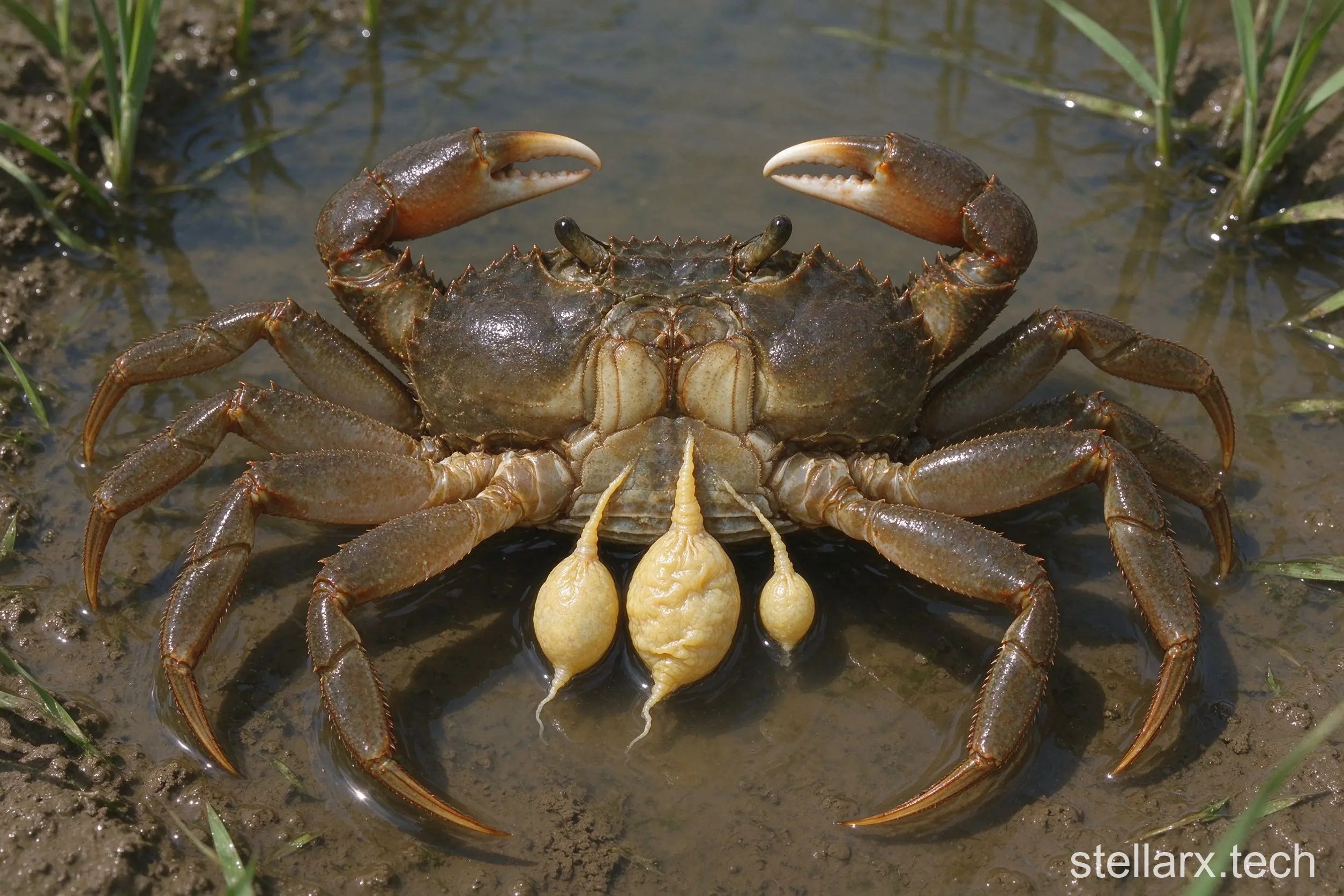
After parasitism, everything changes. The root-like tissue inside the crab is the interna; once mature, it forms a pale yellow or gray-white sac on the inner side of the crab's abdomen. Because it lies outside the crab's body, it is called the externa.
The externa sits exactly where a normal crab carries its egg mass. It mimics an egg sac, tricking the crab into caring for it. Once the externa is present, the crab stops molting.
A Parasite Inside a Parasite
Once the female Sacculina has formed its externa, the male Sacculina steps in. It molts on the externa, transforming from a cyprid into a larva called a trichogon.
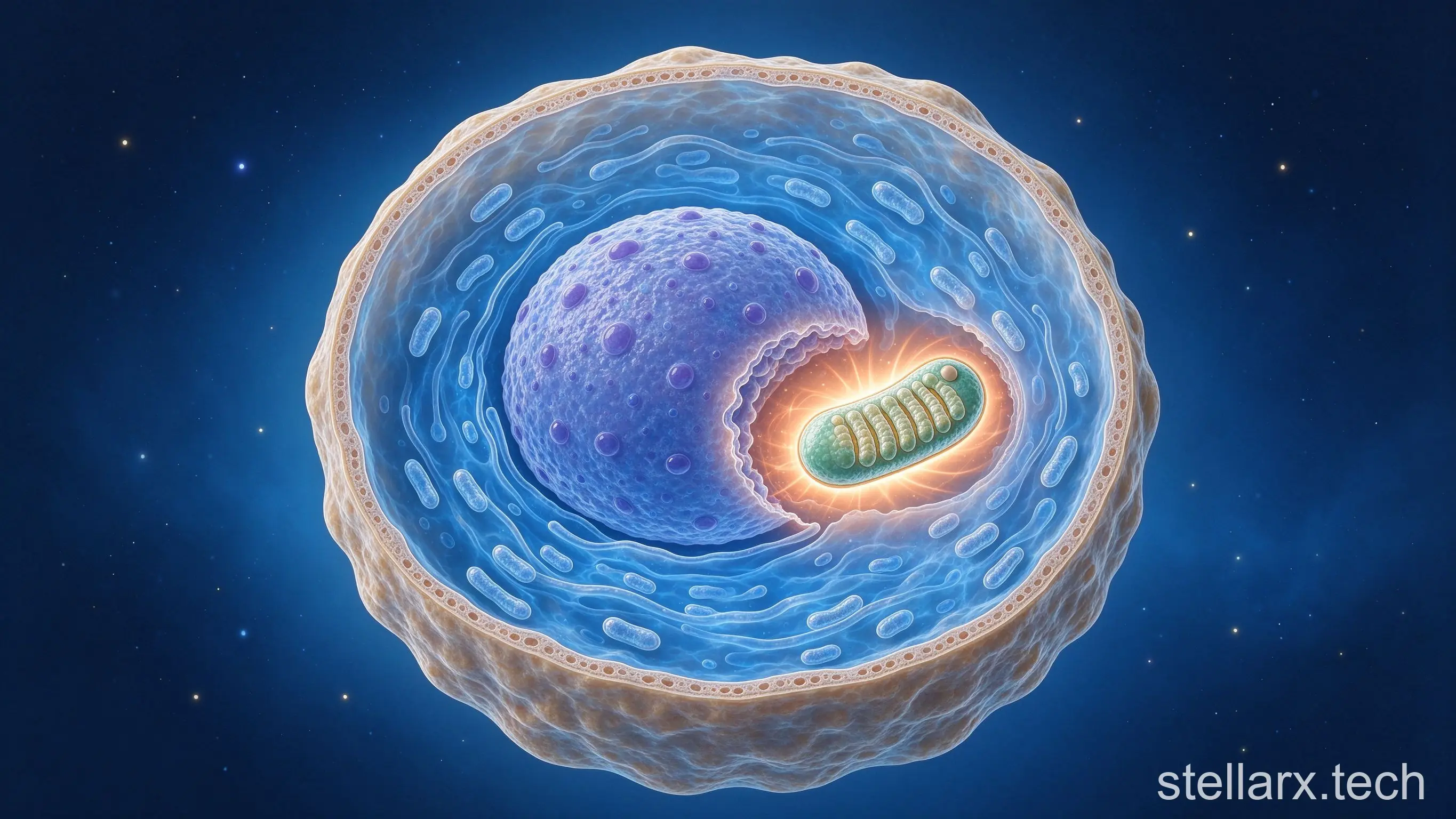
Like the female kentrogon, the trichogon's goal is to bore into a host — except the male's host is the female Sacculina's externa. It enters, finds the entrance to the "seminal receptacle" inside, and develops into a testis there.
From then on, it is no longer an independent individual, but a permanent parasitic appendage living inside the female Sacculina, supplying sperm for life.
This matryoshka-style parasitism is delightful: the female Sacculina parasitizes the crab, and the male Sacculina, as an appendage, permanently parasitizes the female's externa — nesting dolls of the parasite world. A female Sacculina usually has two seminal receptacles, so it is often colonized by two males.
Puppeteering the Host
The male inside the externa continuously supplies sperm, which fertilizes the female's eggs. The fertilized eggs develop inside the externa at the end of the crab's abdomen.
The parasitized crab — male or female — now shows the typical egg-care behavior of a female crab. Normally, female crustaceans (crabs, shrimp, lobsters) glue their fertilized eggs to the setae under the abdomen, then guard and carry them, carefully cleaning the egg surface with claws and pleopods, and rhythmically fanning the abdomen to create a steady current of water — supplying oxygen and washing away accumulating metabolic waste.
A parasitized crab performs these same behaviors, regardless of sex. The parasitized male displays behaviors that normally appear only in egg-carrying females — fully "maternalized."
Of course, a parasitized male can never lay eggs, and a parasitized female's gonads have atrophied, so she produces no eggs of her own. Under their abdomens there are no eggs — only the Sacculina externa, filled with Sacculina's eggs.
Launching the Larvae
When the eggs mature and the larvae are ready to be released, the crab behaves as if releasing its own brood: it climbs onto a rock or other high point, props itself up on its rear legs, and fans its abdomen to release the larvae.
A normal crab releases its own larvae into the water by fanning. In a parasitized crab, the abdomen fans, but the Sacculina larvae are mainly expelled by the contraction and squeezing of the externa itself. The crab body basically serves as a launch platform.
The reproductive output is astonishing: the externa releases larvae at an average interval of about 17 days (Sacculina polygenea), and one externa can produce up to 6 batches, each containing 100,000 to 300,000 larvae (Sacculina carcini).
The Cycle and the Toll
An externa usually survives 6–13 months. When the old externa finishes its mission and drops off, the interna grows a new externa at the same spot to keep reproducing. Over a crab's lifetime, it goes through 1 to 3 rounds of externa replacement. In the gap between the old externa dropping off and the new one growing, the crab may briefly regain molting behavior.
Because molting is drastically reduced, a parasitized crab's body basically stops growing — all nutrients are diverted to Sacculina's reproduction.
Lifespan effects are more complicated. In most cases, parasitized crabs live longer, possibly for several reasons: molting is the most vulnerable period for crabs, and parasitism sharply reduces molting; parasitized crabs no longer invest in their own reproduction, and Sacculina's reproductive cost may be less than the crab's own would have been; and parasitized crabs seem behaviorally manipulated — more reluctant to move, more docile, avoiding more danger.