Why Are Most Enoki Mushrooms in Stores White Today?
Walk into a supermarket or grocery store, and the enoki mushrooms you see are usually long, thin, white, and tightly clustered together.
But have you ever noticed:
Enoki mushrooms can actually be yellow, too!
Compared with the familiar white varieties, yellow enoki mushrooms usually have pale yellow to golden-yellow caps, giving them a more distinctive appearance and a different texture.
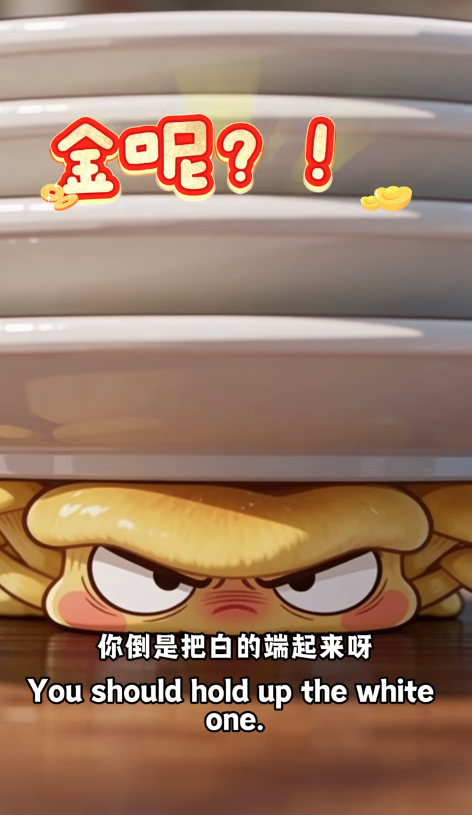
The video introduces both varieties through two personified mushroom characters and raises an interesting question:
Why were yellow enoki mushrooms more common in the past, while white varieties have become much more widespread today?
Eighty Years Ago, Were Yellow Enoki Mushrooms More Common?
The video looks back at how enoki mushroom varieties have developed over time.
In the earlier market period described in the video, yellow enoki mushrooms were more commonly seen, while white varieties were relatively uncommon.
Yellow enoki mushrooms had their own distinctive characteristics, particularly their crisp texture, which made them a recognizable ingredient.
However, as artificial cultivation techniques continued to develop, the varieties available in the market began to change.
White enoki mushrooms, which were once less common, gradually became part of everyday meals in more households.
The Rise of White Enoki Mushrooms Is Linked to Japanese Breeding
The video highlights the development of white enoki mushroom varieties selected in Japan.
By the late 1980s, these white varieties were attracting increasing attention.
Through selective breeding and improvements in cultivation techniques, white enoki mushrooms gradually demonstrated characteristics that made them suitable for large-scale production.
The video also connects their advantages with changing market demand.
As white varieties became more widely available, they gradually established themselves as a popular choice among consumers.
For commercial mushroom production, consistent yields, product quality, and a stable supply are all important.
When a particular variety better meets market requirements, it naturally becomes easier to cultivate and distribute on a larger scale.
Why Did White Enoki Mushrooms Become So Popular?
Whether a food becomes a market favorite depends on much more than its taste.
Cultivation efficiency, production yield, supply stability, and consumer acceptance are all important factors.
The growing popularity of white enoki mushrooms reflects the influence of artificial cultivation and selective breeding on the agricultural market.
As production increased, consumers encountered white enoki mushrooms more frequently in supermarkets and grocery stores.
Over time, white enoki mushrooms became the variety most people recognized and associated with enoki mushrooms.
Meanwhile, yellow varieties gradually became less common.
This does not mean yellow enoki mushrooms are inferior. It simply reflects changes in popular varieties and market supply.
What Makes Yellow Enoki Mushrooms Special? Why Do People Love Their Crunchy Texture?
If white enoki mushrooms are the familiar everyday choice, yellow enoki mushrooms have their own distinctive appeal.
The video particularly emphasizes one characteristic:
Their crisp texture.
Enoki mushrooms naturally have long, slender stems, but different varieties can vary in texture, firmness, and how they feel when chewed.
The crispness of yellow enoki mushrooms gives them a distinctive quality in hot pots, stir-fries, and other dishes.
Especially in hot pot, enoki mushrooms absorb the flavorful broth while still maintaining a satisfying bite.
That is why some people specifically prefer yellow enoki mushrooms rather than always choosing the more familiar white variety.