A new study published in SLEEP Advances, the journal of the Sleep Research Society, found that the link between getting enough sleep and life expectancy is stronger than the link with either diet or exercise.
For a Longer Life, Sleeping Enough Beats Diet and Exercise
Researchers at Oregon Health & Science University took county-level life expectancy figures for the United States and set them against survey data collected by the Centers for Disease Control and Prevention between 2019 and 2025. That is 3,143 counties, tracked year by year, through a pandemic and everything after it.
Insufficient sleep was defined the way the American Academy of Sleep Medicine defines it: fewer than seven hours in a 24-hour period.
After adjusting for physical activity, education level, employment status and other confounders, insufficient sleep and shorter life expectancy stayed significantly linked.
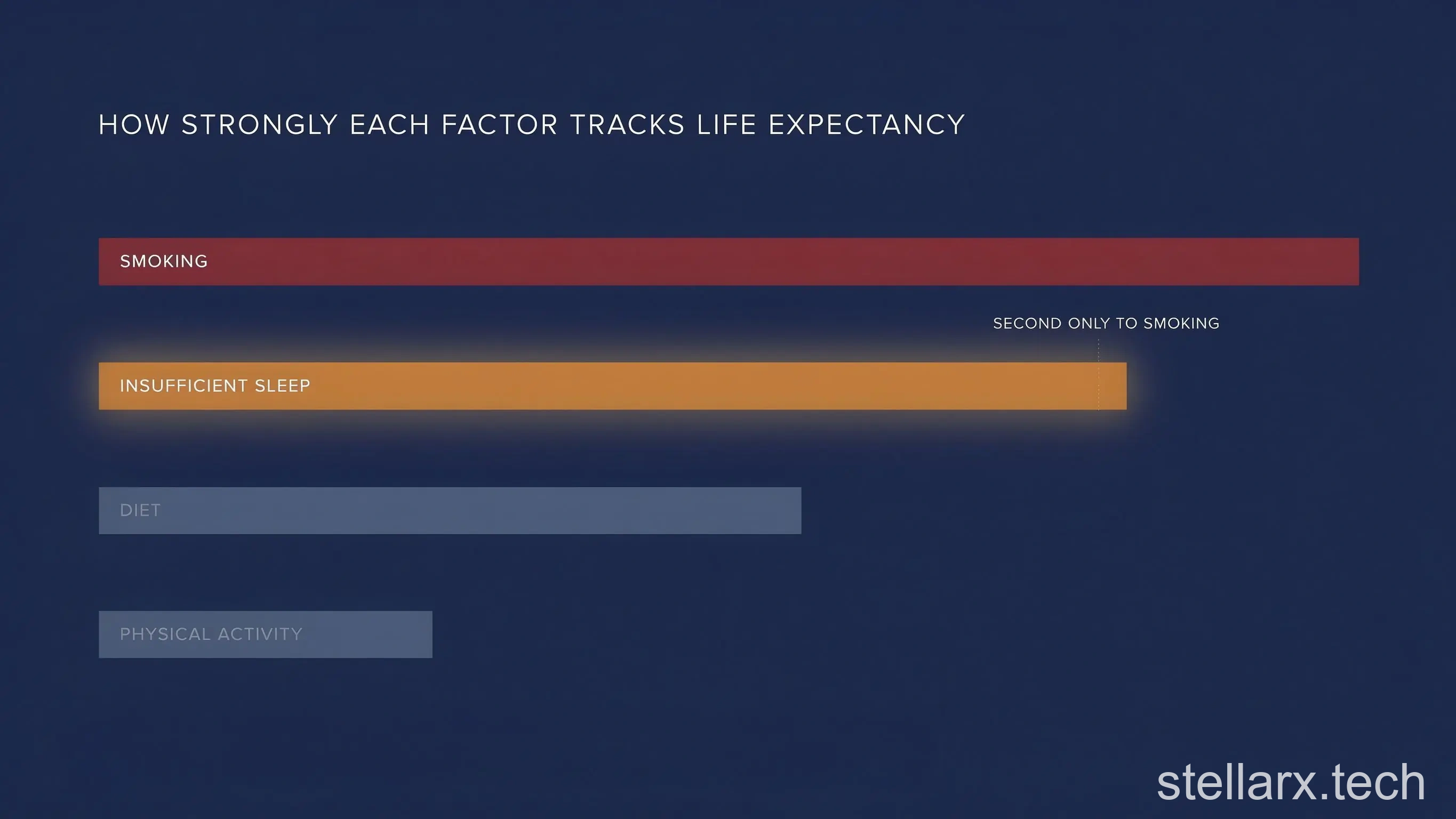
Then came the part that surprised the researchers. Among the lifestyle factors a person can actually change, diet and exercise both mattered less than sleep. Only smoking was a stronger predictor of a shorter life. When obesity and diabetes were added to the model, obesity climbed above insufficient sleep as well.
The study is observational. It cannot prove that short nights cause a shorter life. What it does show is that how long you sleep is one of the clearest long-term signals a population-level dataset can produce.
Andrew McHill, a sleep physiologist at OHSU and the study's senior author, put it plainly: "It's intuitive and makes a lot of sense, but it was still striking to see it materialize so strongly in all these models."
"I'm a sleep physiologist who understands the health benefits of sleep, but the strength of the association between sleep sufficiency and life expectancy was remarkable to me."
The pattern held year after year. In the 2025 data, all but three states showed the association at p < .001; across 2019 to 2024 the share of states showing it never dropped below roughly 84 percent.
Which is where the everyday contradiction shows up. Plenty of people guard their diet carefully and never miss a workout, then treat sleep as the flexible item on the schedule — the thing to cut when a deadline lands, the thing to repay on Saturday morning.
The study's takeaway is not that diet and exercise are pointless. It is that sleep belongs on the same shelf as both of them, and possibly ahead of them.
Two Levers That Turn Sleep Into Years
If sleep is going to do the work, two things matter more than the rest: how long, and how regular.
Duration: a six-hour floor, a nine-hour ceiling
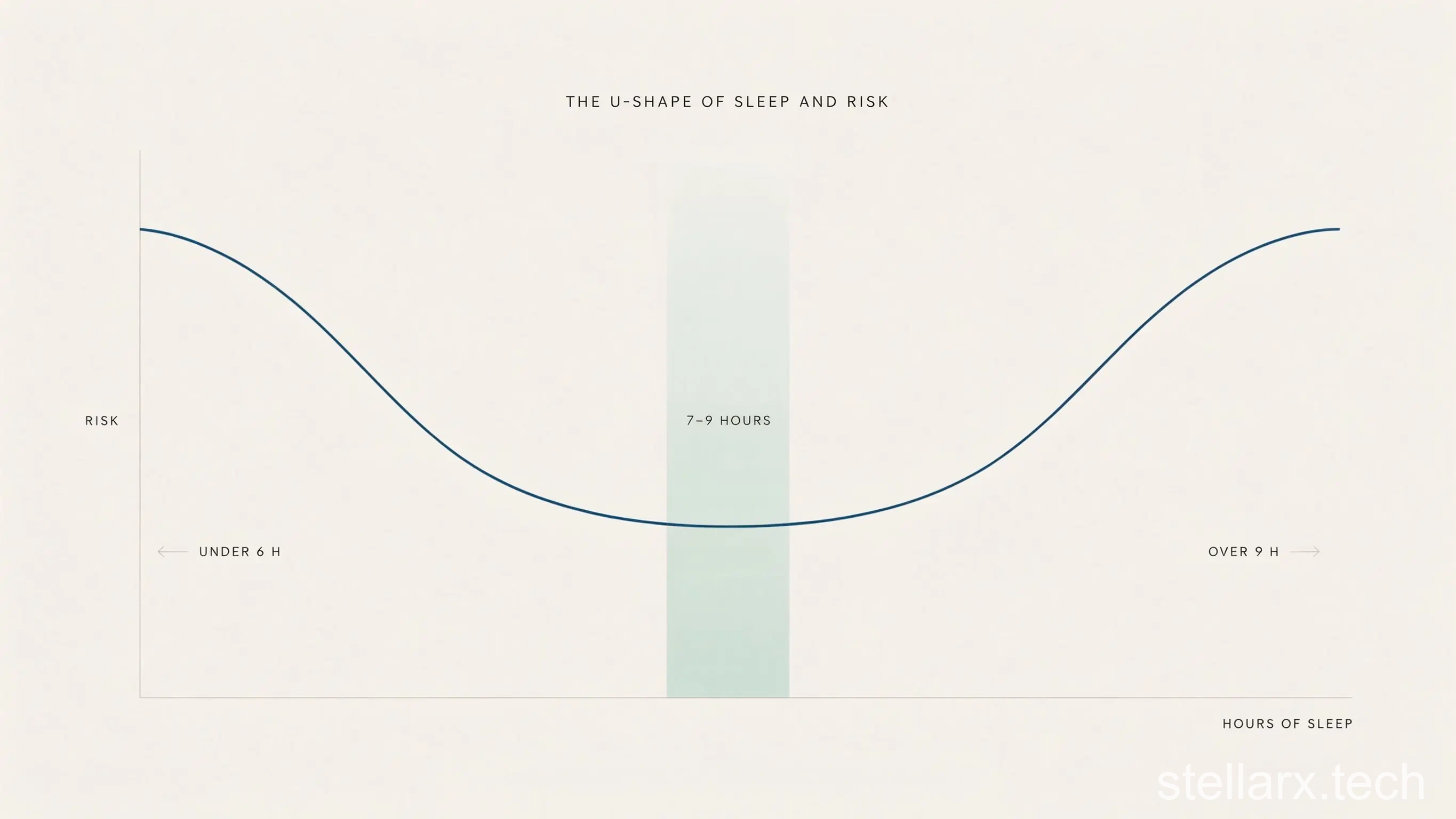
Too little sleep wears the body down; too much is not protective either. For most adults, sleep specialists put the target at seven to eight hours a night, with naps kept under half an hour.
The evidence on the short end is blunt. A study in Annals of Behavioral Medicine found that three consecutive nights of less than six hours was enough to visibly degrade both physical and mental health measures.
The evidence on the long end comes from a study of nearly 500,000 people at the University of Colorado. Compared with six to nine hours a night, sleeping more than nine hours carried a 34 percent higher risk of heart attack. Sleeping under six hours carried a 20 percent higher risk.
And the middle is narrower than the old "eight hours" advice suggests. A team at Shanghai Jiao Tong University School of Medicine analyzed 23,000 adults and found an inverted-U curve between weekday sleep and metabolic health, measured by estimated glucose disposal rate. The peak sat at 7.32 hours — seven hours and nineteen minutes.
Rhythm: regular beats long
Sleeping enough and sleeping on a schedule are two separate jobs, and the second one is the one people abandon first.
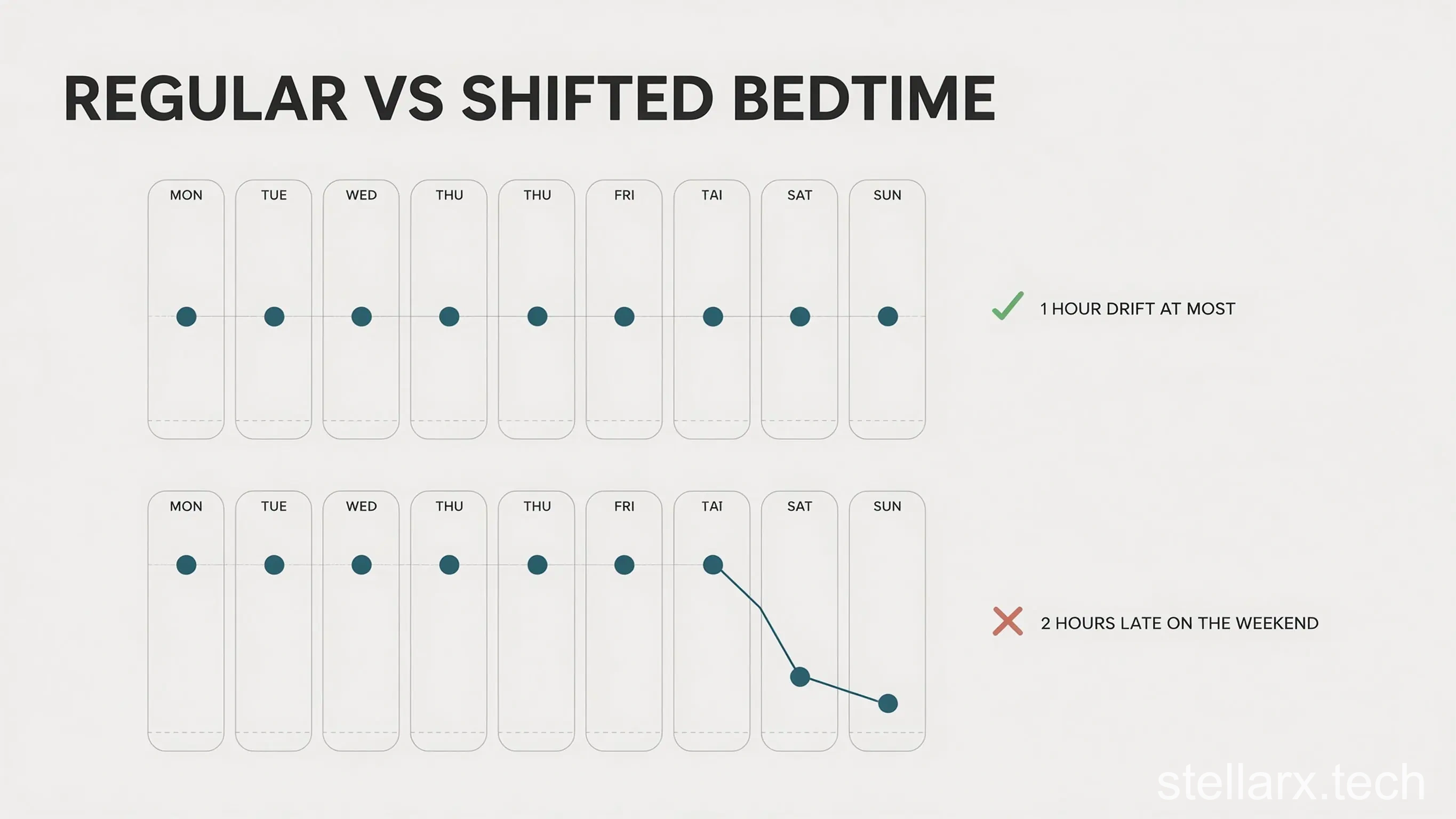
The advice from sleep medicine clinicians is unglamorous: keep bedtime and wake time inside a stable window, weekday or weekend, and try to keep the gap under one hour. Staying up late should not become the default setting.
The reason is that the body clock does not read intent. It reads timing. Shift the timing by two hours on Saturday and the first half of the following week is spent recovering from a small jet lag you gave yourself.
The Other Six Anchors of a Long Life
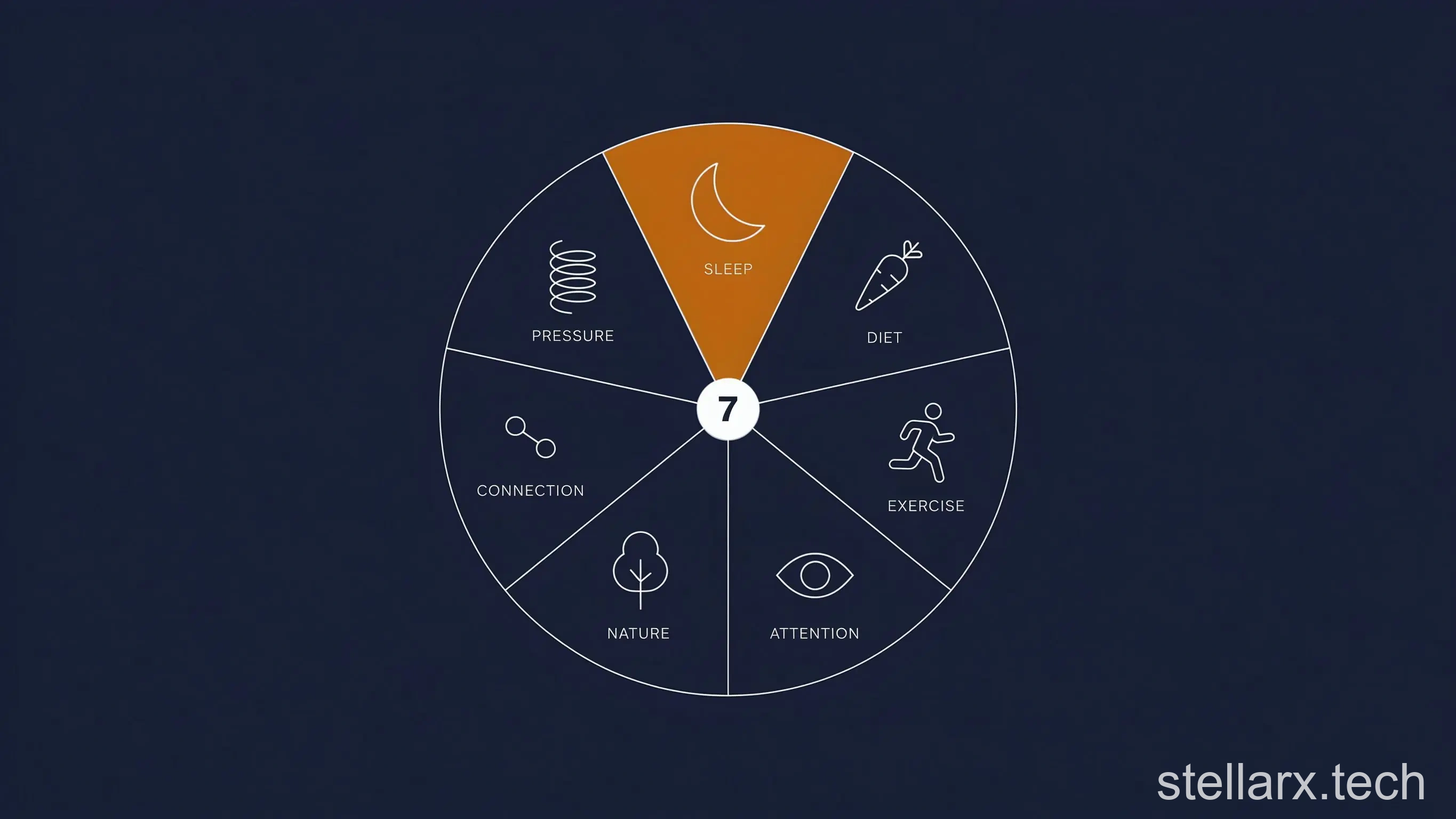
Sleep is one anchor, not the whole mooring. In Go Wild, John Ratey lays out seven habits the human body was shaped for over a very long evolutionary run. Sleep is the first. The other six are worth reading as a set, because each one fails in the same way — quietly, and only after years.
Eat widely, not expensively. Humans adapted to a varied food supply; a narrow diet is a slow debt. The practical version of that advice, from Chinese dietary guidance, is twelve or more different foods a day and twenty-five or more across a week. The foods to cut back on are the industrially refined ones: pastries and biscuits, high-energy carbohydrates, and the trans fats that come with repeated deep frying.

Movement fertilizes the brain. Exercise is not only about muscle. Physical inactivity is a risk factor for at least twenty chronic conditions, and aerobic work is the most reliable lever for keeping both brain and body intact. Thirty minutes of brisk walking most days is enough to count; thirty minutes of dancing to music counts too, and does more for mood.
Step back and notice the present. A large share of what people call stress is not the event but the replay — chewing the same scene over and over and grading yourself on it. Mindful eating is the cheapest entry point: pay attention to what is in your mouth, its temperature, its texture, how hard you