
In early October 2026, a female employee of the Anti-Plague Institute in Irkutsk, Siberia, died after being hospitalized with severe pneumonia. Early media reports suggested possible lab exposure to pneumonic plague. Russian officials called it "pneumonia of unknown cause" — a "highly contagious disease," a "rare imported infection" — but never, in public statements, used the word plague. The United States urged its citizens in Russia to leave or enter a 14-day quarantine.
The word "plague" still carries six centuries of terror. But what does the science actually say?
What the plague actually is
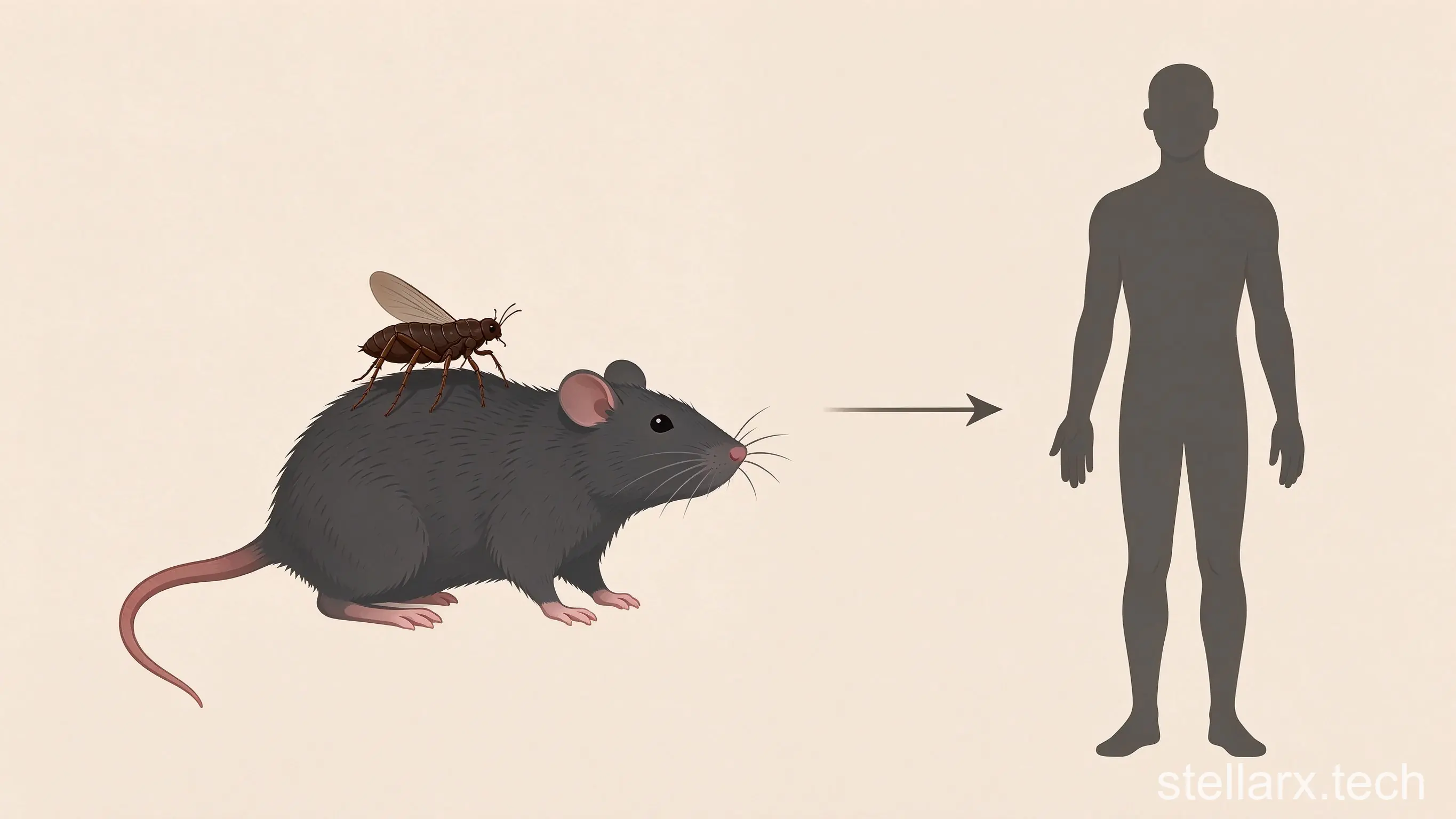
Plague is caused by Yersinia pestis, a short, plump Gram-negative rod that stains darker at both poles under the microscope. It circulates in rodents — especially rats — and is carried to humans by infected fleas. The disease takes three main forms:
Bubonic plague — flea bite; bacteria reach the lymph nodes, which swell into painful buboes (often in the neck, armpit or groin).
Pneumonic plague — bacteria in the lungs; the only form that spreads person to person, via infectious droplets when a patient coughs.
Septicemic plague — bacteria in the bloodstream; rare but the most severe.

Historically, bubonic plague caused the Black Death, which killed tens of millions across 14th-century Europe. That is the image "plague" still conjures — a mass grave, a hooded doctor with a beaked mask.
In the 21st century, plague is treatable
The most important fact about plague today: it is a curable disease. With antibiotics, even in Madagascar and the Democratic Republic of the Congo — two of the poorest countries where plague still circulates — fewer than one in five patients dies. Untreated, bubonic plague kills far more; treated, it drops to a fraction of that.
According to WHO data, the world recorded 3,860 suspected plague cases between 2019 and 2025. Madagascar and the DRC alone accounted for 97.7% of confirmed cases and 87.7% of suspected cases worldwide. And even there, outbreaks are contained after they flare — they do not burn indefinitely across whole regions.
| Plague surveillance, 2019–2025 (WHO) | Figure |
|---|---|
| Suspected plague cases reported worldwide | 3,860 |
| Madagascar + DRC share of confirmed cases | 97.7% |
| Madagascar + DRC share of suspected cases | 87.7% |
| Patient deaths in Madagascar & DRC (antibiotic era) | Fewer than 1 in 5 |
Why pneumonic plague can't break a modern health system
The scary-sounding form — pneumonic plague — has a short incubation period and actually spreads poorly. A patient becomes too sick to move around easily, and the window for infecting others is brief. The pathogen cannot punch through a modern state's surveillance, testing and contact-tracing network. Even the DRC — a country with a weak health system — has never reignited a medieval-scale Black Death since the antibiotic era began.
So there is no good reason to think plague would spiral out of control in Russia, a country with a functioning (if strained) health apparatus.
What actually happened in Irkutsk — the timeline
What did happen is a textbook case of how opacity, not the pathogen, causes panic.
2 October 2026 — An employee of the Irkutsk Anti-Plague Institute dies after hospital treatment for severe pneumonia. Early media reports suspect laboratory exposure to pneumonic plague.
Russian official line — Officials call it pneumonia of unknown cause, a "highly contagious disease," or a "rare imported infection." State media avoid the word plague entirely. One questionnaire handed to residents was headed "Checklist for suspected high-risk infectious disease (plague)," listing fever and chest pain — while staff told residents only that a "new virus" required extra precautions.
Official denials — On 7 October, TASS denied any spread, declaring the "epidemiological risk to the public is zero." Rospotrebnadzor said over 90% of contacts had completed medical observation, nearly 5,000 lab tests found no dangerous pathogen, and only two COVID-19 and two rhinovirus cases were detected among contacts.