On March 21, 2024, a mother in Texas named Alesia Cooper posted a photo on Facebook.
In the photo she holds up a raw chicken breast, and the lower half of it has already come apart into fine strands, hanging down limp — like a handful of soaked spaghetti.
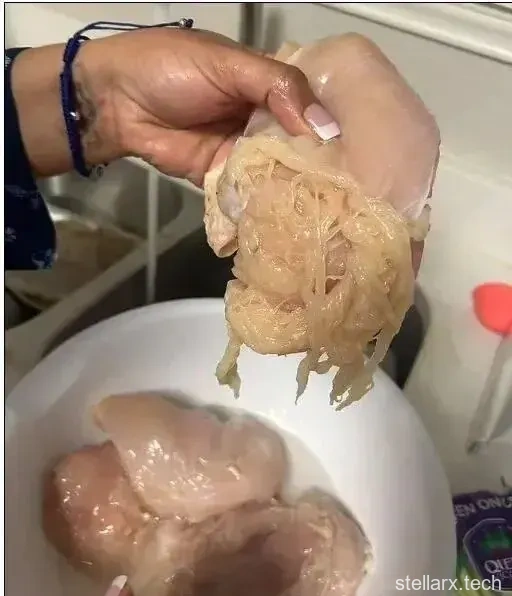
It had happened a few weeks earlier. She had brought the breast home from the supermarket to make dinner for her two children, handled the chicken the way she always did, and when she came back to put it in the pan, one piece had turned into this.
What makes it strange is that the breast had never been cooked.
Cooper could not work it out. She wondered whether she had bought some kind of artificial meat. Once the photo went online, commenters guessed that the chicken might be lab-grown, or even 3D-printed.
The answer, it turns out, was already on record.
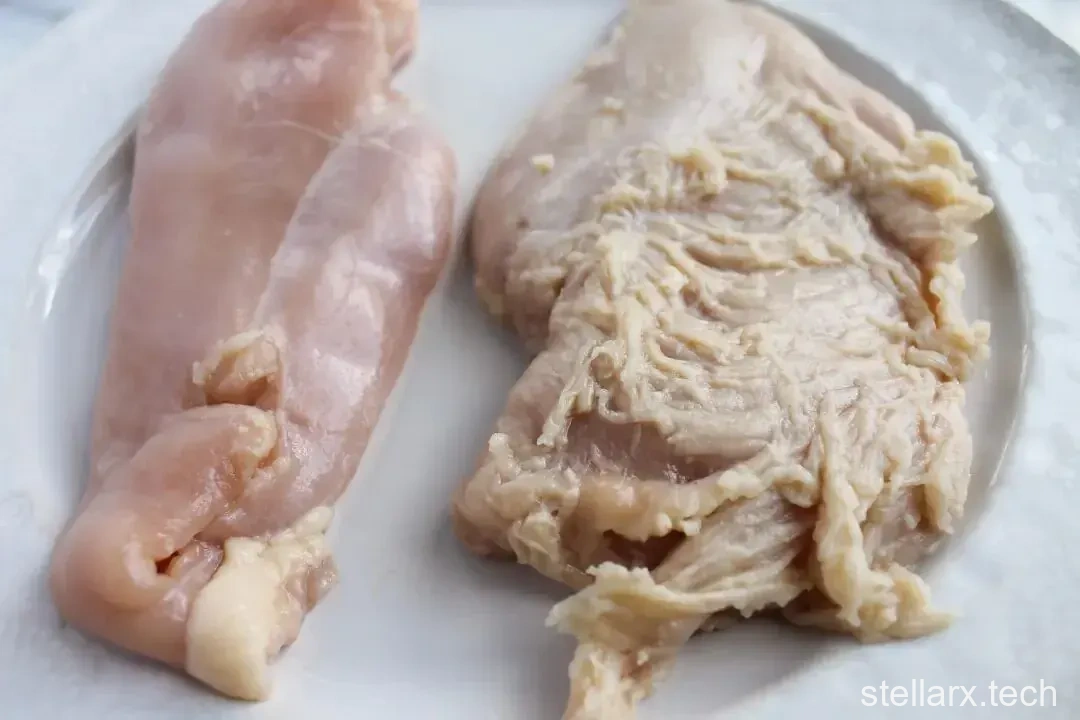
In 2015, researchers reported a muscle abnormality they called "Mushy Breast." Later, because it looks so much like pasta, it was given a more vivid name: Spaghetti Meat.
| Score | Grade | Pectoralis major findings |
|---|---|---|
| 0 | Normal | Normal consistency, no sign of muscular lesion |
| 1 | Moderate | No evident superficial laceration, but a soft, stringy texture felt by pinching the cranial surface |
| 2 | Severe | Extensive superficial lacerations on the cranial and/or caudal surface; fiber bundles separate from one another, resembling spaghetti pasta |
| Grading scale for spaghetti meat in broiler breast fillets (Tushar Z H, et al. Poultry Science 2026;105(9):107224). | ||
What has happened is that intact muscle tissue has come loose on its own. The surface of such a fillet still looks fairly normal; pinch it, and you can feel the bundles inside separating. In severe cases, the fibers peel off the block in strands without any cooking at all.
When we pull cooked chicken apart for a shredded-chicken dish, the meat separates into strands along the grain. A chicken breast is built that way from the start: a large number of long, thin muscle fibers gathered into bundles, and the bundles assembled into the whole muscle. Each fiber is itself one long muscle cell.
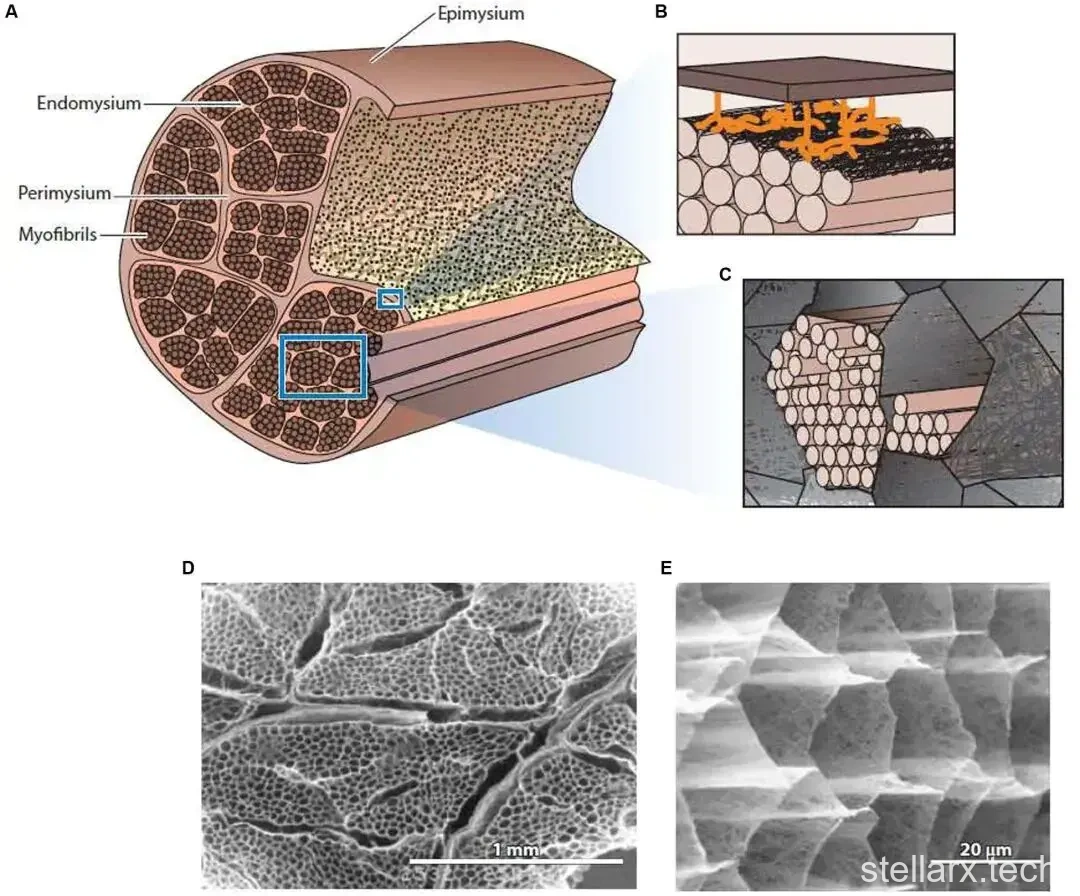
Around the fibers and around the bundles runs connective tissue, and the collagen in it forms an interconnecting net that holds many long muscle cells tightly together so they can share the pulling load.
It is a little like bundles of thread tied firmly together. Heat changes the internal structure of cooked breast, which is why you can tear it along the grain; a normal raw breast does not fall apart into a handful of noodles.
And when scientists put spaghetti meat under a microscope, they found exactly this structure failing.
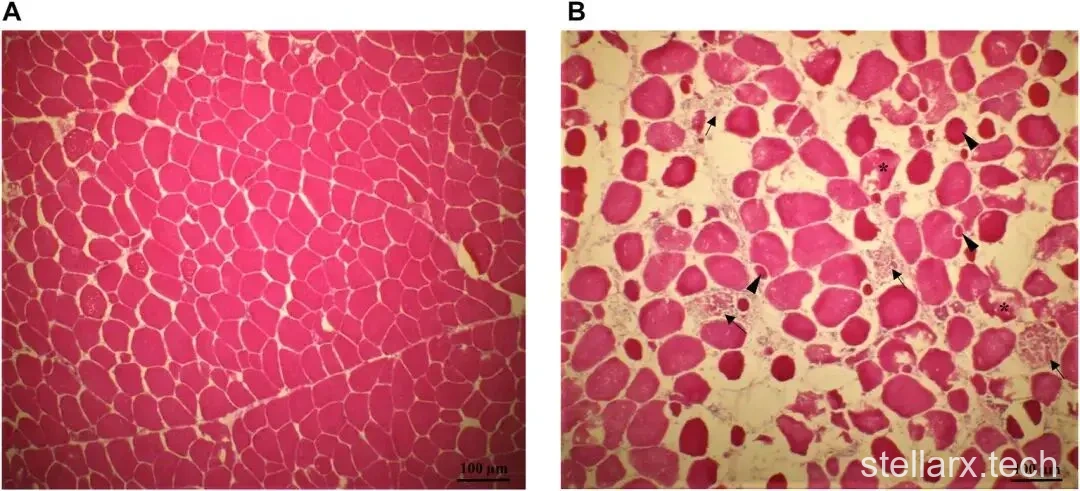
In abnormal fillets, some muscle fibers are damaged and breaking down, and the surrounding connective tissue has changed as well. Tissue that was tight has become sparse, and some collagen fibers are thin, loose, and immature.
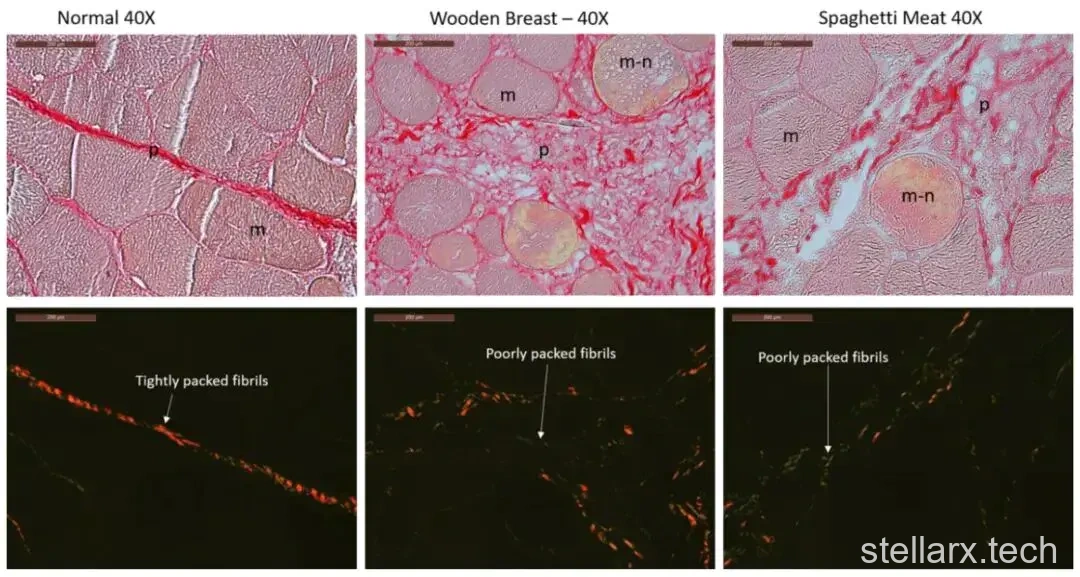
It is as if the string around the bundle has slackened: the threads are still there, but they can no longer hold together the way they once did. A breast that used to be firm then separates, strand by strand, along the direction in which the muscle runs.
So what did this to the chicken's breast muscle?
Researchers turned to the astonishing growth rate of the modern broiler.
By 2025, the average U.S. broiler needed only 47.5 days, yet reached about 3 kg.
In other words, across 100 years of breeding and husbandry, the growing period fell by more than half, while market weight became more than 2.6 times what it had been.
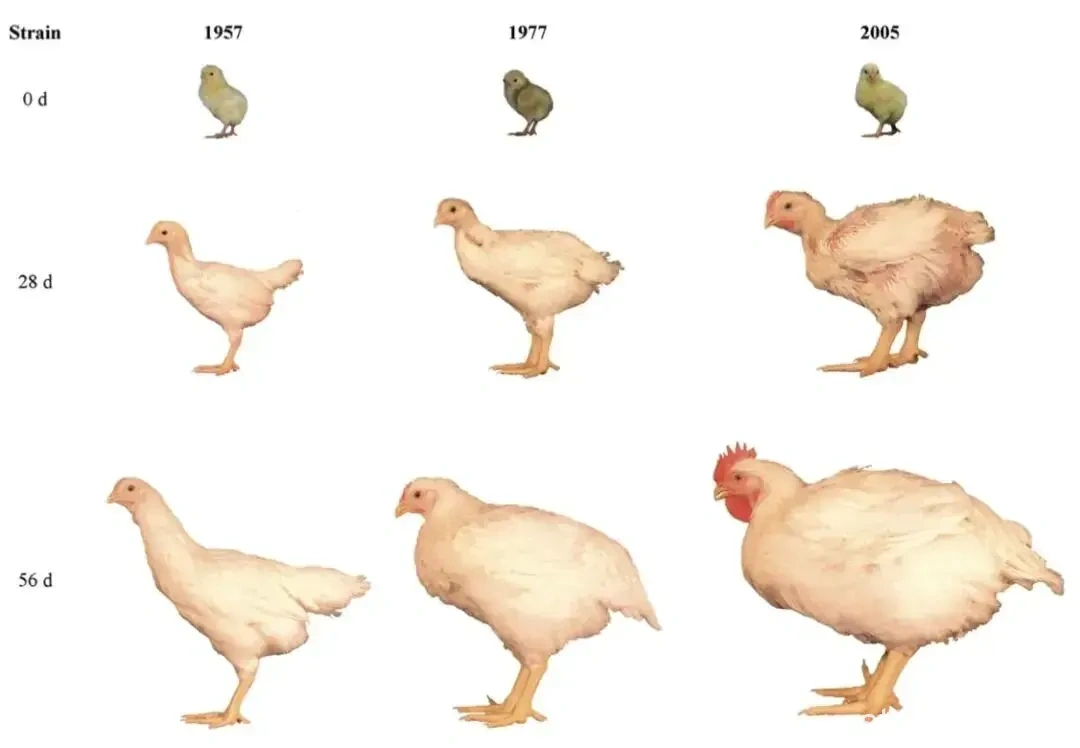
After long selection, modern broilers can grow a full breast in a very short time. But adding muscle is not simply adding weight.
As the fibers thicken quickly, the blood supply inside the muscle does not necessarily keep pace. In the thick breast region in particular, oxygen and nutrients have to travel a longer distance before they reach the muscle cells.
Scientists believe this shortfall in oxygen supply, and the metabolic stress that follows it, may be an important trigger for breast abnormalities in modern broilers.