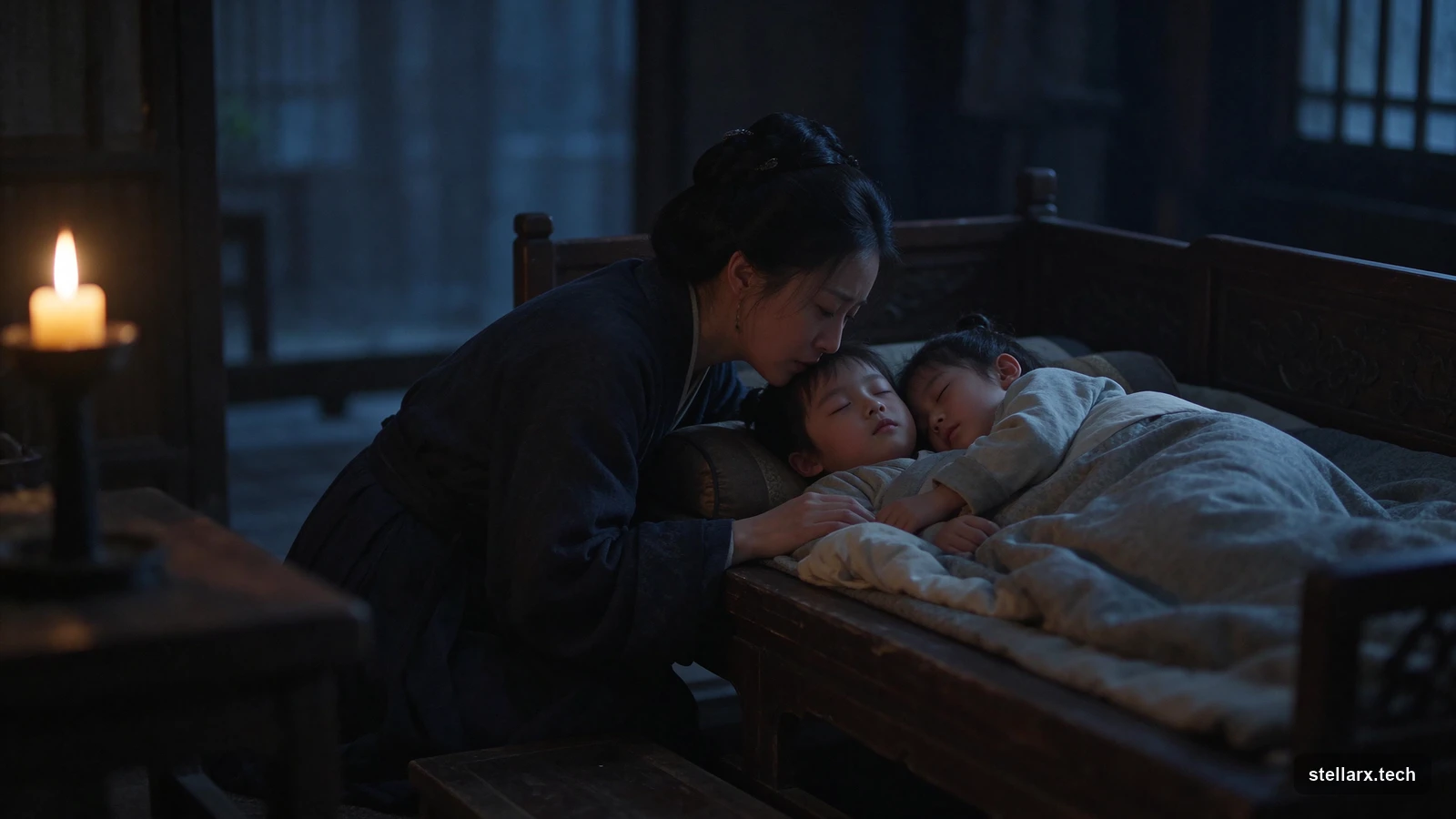
This autumn, BookTok and overseas web-novel shelves are full of one particular setup: a woman pulled into a story she did not write, judged by a crowd she cannot see, and asked to play a part someone else designed. Transmigration and system novels keep climbing the reading lists, alongside second male lead romances and betrayed-wife stories, and the supply side keeps growing too — by the end of 2025, Chinese online literature had exported more than 130,000 works overseas, with roughly 250 million registered readers abroad across more than 200 countries and regions.
Most of these plots put a knife in the hand of a villain. This one puts a comment section in front of the heroine's eyes. That is the angle worth reading through: this comment section romance follows a woman who lives inside other people's verdict — their labels, their votes, their expected happy ending — and for a long time she mistakes that rented voice for her own life.
What "living in the comment section" actually means
We usually read cruelty as something loud: a raised voice, a public insult, a door slammed. The comment-section version is quieter, which is exactly why it survives longer. The crowd never knocks on your door. It only leaves a verdict about who you are, what you deserve, and how the story should end, floating where you can see it but cannot answer back.
Three habits show up in this kind of story. The first is the label: the crowd decides your role before you act — the doting second male lead, the demanding female lead, the wife who should be grateful. The second is the vote: affection, loyalty and worth are treated like a score someone else controls, so reaching a perfect number feels like proof you are loved. The third is the expected ending: everyone agrees how the book should finish, and any life outside that outline is treated as selfish. A person who lives in the comment section spends her energy defending herself against judgments that were never fair to begin with.
A wife of convenience who became a love match
This transmigration novel is told in the first person by Gu Niaoniao, a woman who woke up inside a novel and was assigned a mission: win over the childless second male lead, Pei Zhao.
Her constitution was unusually fertile. Within three years she had twins, breaking the Pei family's nine-generation tradition of having only one son. They were married for five years, a marriage of convenience that blossomed into love, and the man's affection for her reached 100%. On the surface, this was the happy ending a second male lead romance promises: the overlooked supporting character gets the quiet devoted husband, the children, the home.
The small tendernesses were real enough to remember. When she bled in early pregnancy, he canceled his border military exercises and stayed home for three days and three nights. When she craved wontons from the south alley at midnight, he rode two hours through a blizzard to buy them. He bought the pearl hairpin she had glanced at in the Treasure Pavilion, and coaxed her gently when she was upset. For five years, he seemed to put her first in everything.
The comments that scroll before her eyes
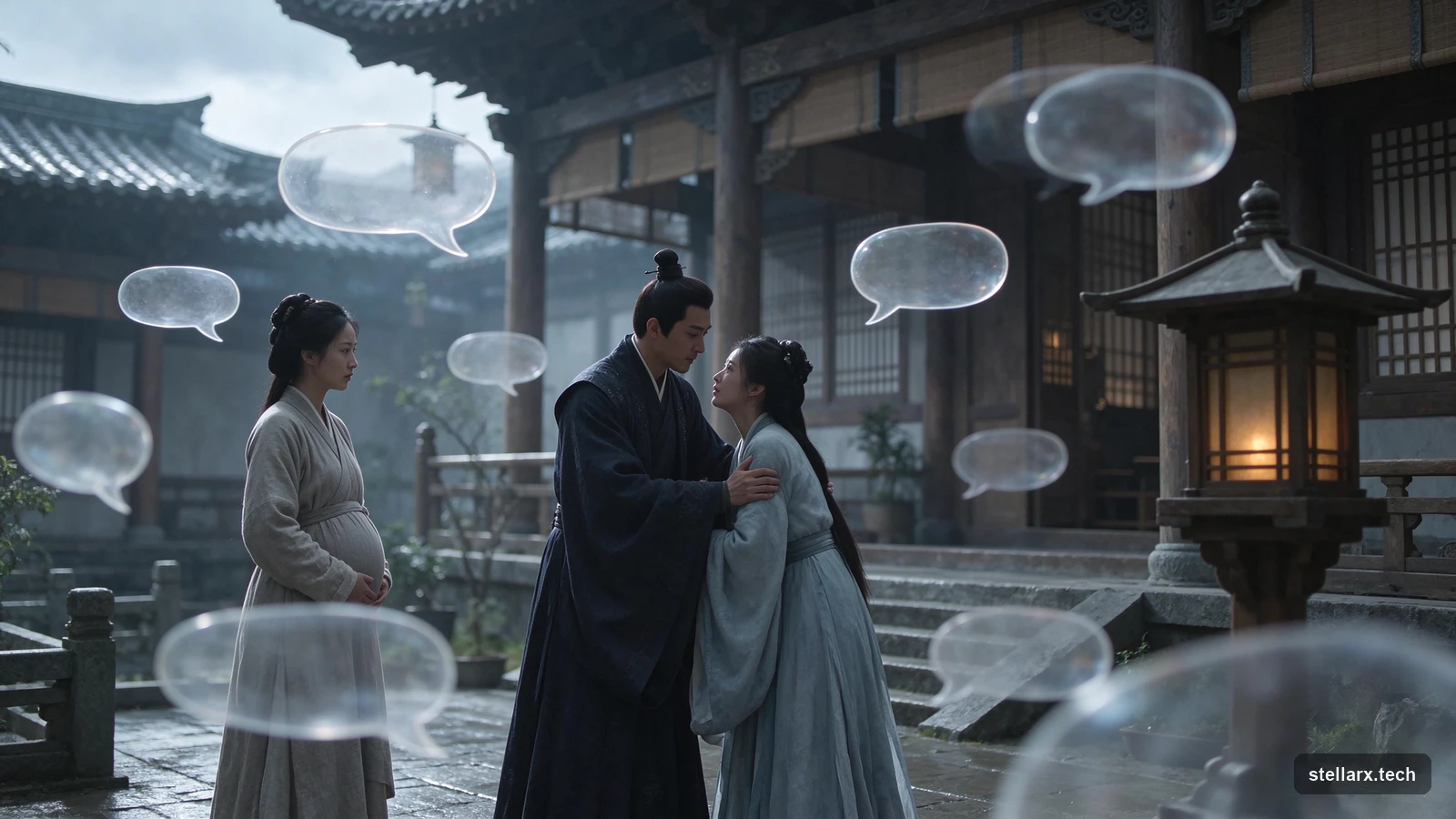
The turn comes just as she is ready to spend the rest of her life with him. Comments appear before her eyes, like a live chat running over the story:
[The second male lead is too doting on our female lead.]
[He actually sent his wife to the male lead's cousin's bed just to make her happy.]
[But Gu Niaoniao deserved it.]
[Knowing full well our female lead was depressed because she couldn't have children, he still flaunted her fertility, drawing both families' attention.]
[Now let her have as many children as she wants. In the end, our female lead will painlessly take one of his children and be pampered by the male lead.]
She cannot believe a man who seemed to have only her in his heart and eyes could do this. She spends everything she saved to rewind time, and sees it with her own eyes: Pei Zhao personally drugs her and pushes her into someone else's arms. Then she changes her mind. "System, I don't want to stay. And my chosen way to leave is to die during childbirth, along with my unborn child."
The system cuts her remaining lifespan from eighty years to twenty-eight days, turning her from healthy to frail, because it needs a reasonable death. Her strength drains away; even lifting a hand to close the window exhausts her. Yet whenever Pei Zhao arrives, he wraps her in that familiar scent of bamboo, his heart full of worry, and the physicians around her whisper that the marquis rushed over before putting on his outer robe and stayed by her side all night — "that's true love."
A perfect score that does not keep you safe
The hardest thing to see in this book is the difference between affection and loyalty. Overwhelmed, she cries out to the system whether Pei Zhao truly loves her. The system replies coldly that the values are accurate: he does love the host to the bone right now, and if anything happens to her he will not live alone. She curls her lip at that. Does reaching 100% mean he truly loves you? If he loves you, why hurt you?
The backstory makes the betrayal legible. Pei Zhao is the brilliant but heartbroken second male lead of the book, consumed by an unrequited love for the female lead, Jiang Xinyan. Jiang Xinyan's pregnancy turns out to be fake, her kindness