Why Are Century Eggs So Dark? Are They Really Safe to Eat?
For anyone seeing a century egg for the first time, its appearance can be surprising.
A normal duck egg has a pale or translucent egg white and a yellow or orange yolk.
A century egg looks completely different:
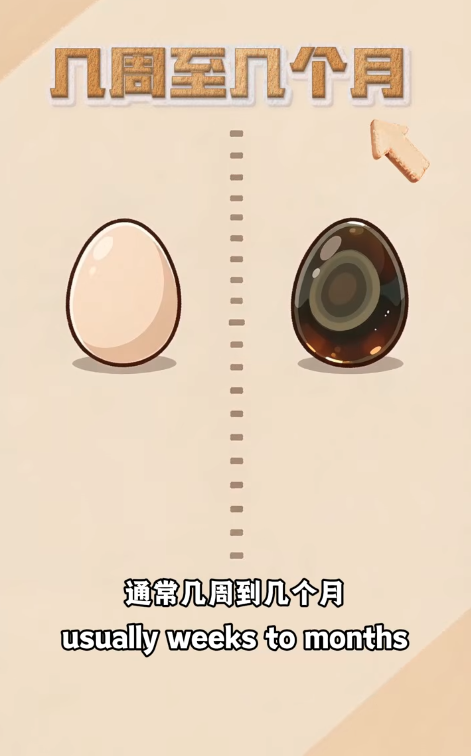
The egg white becomes dark brown, sometimes almost black, with a translucent jelly-like texture, while the yolk may appear deep green, gray-green, or dark brown.
So the first reaction is often:
“Has this egg gone bad?”
The answer is no.
The unusual color and texture are created by a controlled preservation process involving alkaline conditions, rather than ordinary food spoilage.
Who Was Brave Enough to Eat the First Century Egg?
There are several folk stories about the origin of century eggs.
One popular version says that duck eggs were accidentally left in an environment containing lime, plant ash, and other alkaline materials.
After some time, someone discovered the eggs and opened them.
Instead of looking like normal eggs, the whites had turned dark and translucent, with a gel-like texture.
At first glance, they certainly looked spoiled.
But someone apparently decided to taste one—and discovered a completely different flavor and texture.
Over time, similar preservation methods were refined and passed down.
It is important to remember that stories like these are mainly folk legends about the origin of century eggs. There is no single confirmed historical answer to who invented them or who ate the very first one.
So the question from the video—
“Who was brave enough to eat the first bite?”
—actually does not have one simple answer.

Why Do Century Eggs Turn Dark Brown or Black?
One of the most fascinating things about century eggs is how dramatically an ordinary duck egg changes.
A key factor is:
alkaline curing.
During traditional or modern century egg production, the egg is placed in a carefully controlled alkaline environment.
These alkaline conditions change the structure of proteins in the egg.
As the proteins denature and reorganize, the originally liquid egg white gradually turns into a firm, elastic gel.
At the same time, other compounds inside the egg undergo additional chemical changes, creating the deep brown, translucent, or nearly black appearance.
So:
The dark color does not come from the egg being stored too long. It is a normal result of the preservation process.

Why Does the Egg White Look Like Dark Jelly?
A hard-boiled egg white is white and firm.
Century egg white, however, looks much more like a piece of dark, elastic jelly.
This is also related to protein changes under alkaline conditions.
As the original protein structure is altered, the proteins reorganize into a new network that traps water inside.
The result is the distinctive century egg texture:
translucent, elastic, and gel-like.
That is why a sliced century egg looks so different from an ordinary chicken or duck egg.

What Are the “Pine Flower” Patterns on Century Eggs?
Some century eggs have beautiful pale patterns on the surface of the egg white.
These shapes often resemble pine branches or leaves, which is why century eggs are also commonly called:
“pine flower eggs” (songhua eggs).
These patterns are not painted on.
They form naturally during processing as certain compounds in the egg crystallize or create deposits on the surface.
Each egg can develop slightly different patterns.
So opening a particularly beautiful century egg can almost feel like discovering a tiny natural work of art.