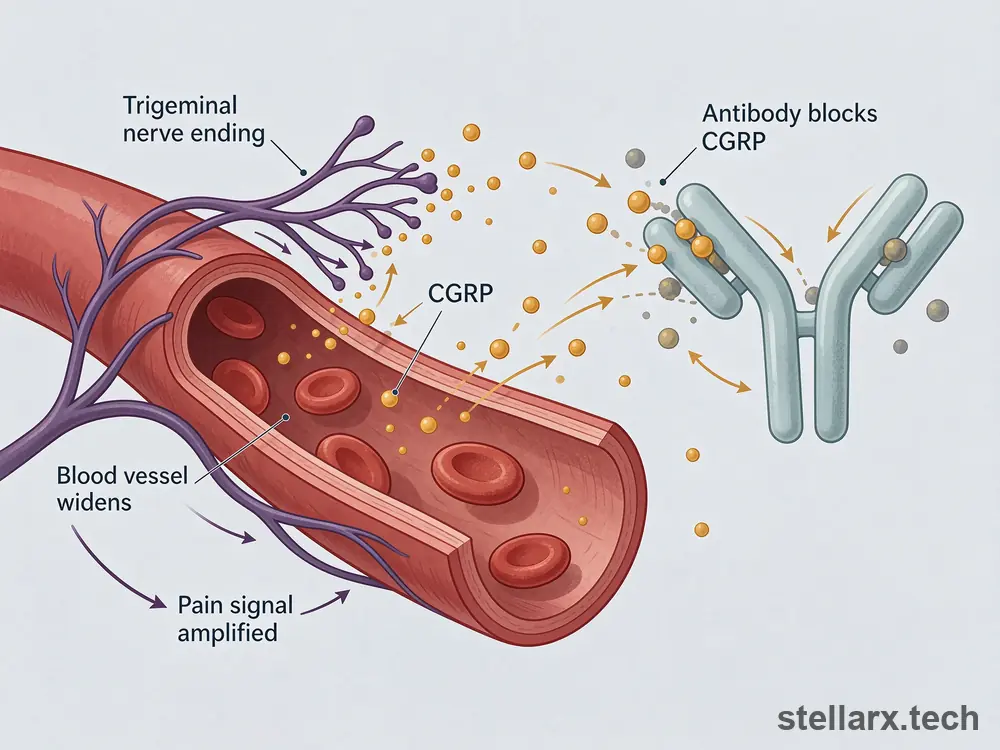
"Every time it hits, I want to cut my head off and gouge my eyes out."
"But everyone else figures you should just tough it out — you look fine, after all. Some people will tell you you're being dramatic."
This is a common disease. Roughly 1.2 billion people worldwide have it, and 130 million of them are in China. There is a good chance that you, reading this right now, are one of them.
Its health burden is also extraordinary. At one point it ranked as the second leading cause of disability on the planet.
And yet a disease this widespread, this expensive, has been chronically underrated: nearly 7 in 10 people living with it have never been correctly diagnosed.
It is migraine.
Once the World's Second Biggest Disabler — "the Meanest Disease"
Migraine is a common neurological disorder. The typical picture is recurrent moderate-to-severe throbbing head pain, usually with nausea, vomiting, photophobia and phonophobia. Some patients also get aura — visual, sensory, or involving speech.
Despite what the name suggests, migraine does not have to stay on one side of the head. It can be bilateral. It can involve the whole head.
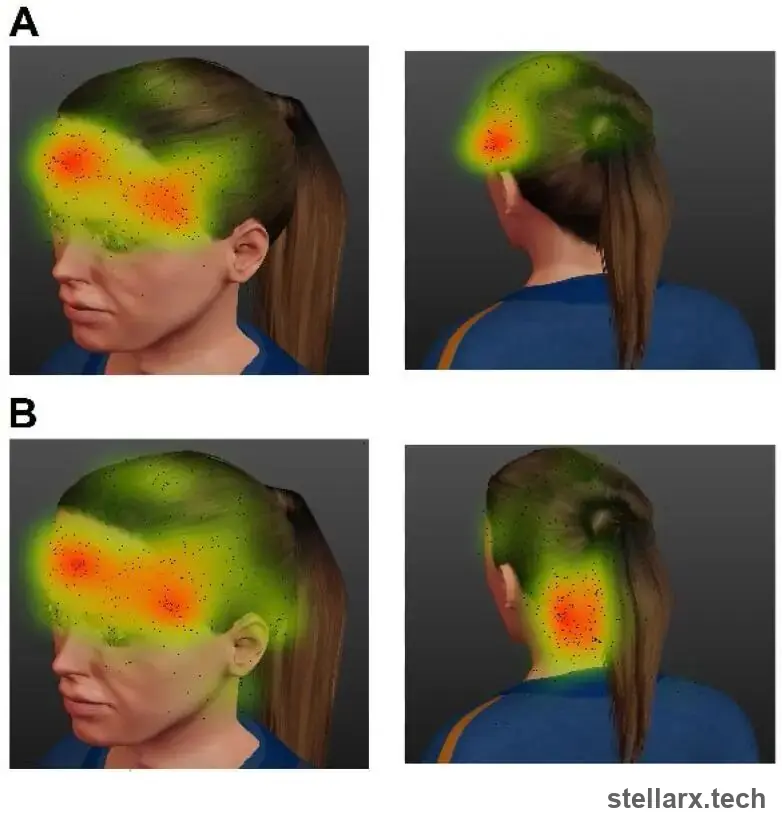
The map above comes from a study of trigeminocervical convergence — the wiring that lets head pain and neck pain feed into the same relay. In panel A, the hot spots sit across the forehead and both temples. In panel B, the chronic group, a separate hot spot appears low at the back of the neck. That is why "my migraine comes with a stiff neck" is not a second problem. It is the same one.
During an attack, the pain plus the nausea, the vomiting, the light and the noise make normal work or study impossible. Sometimes even simple daily tasks are out of reach.
"The air conditioning blows on me and it starts. I run to the bathroom and throw up. Then the pain begins. I can't sit still at all — I just have to take leave and go home." Because of how often this happened, Chen Hao (a pseudonym) had to quit his last job.
In 2025, a study of employees in a large US healthcare system found that staff who screened positive for migraine had, over the previous three months, an average of 0.66 days absent due to illness — plus another 3.77 days working at half efficiency or worse.
Add those together and the researchers' estimate is blunt: the effective working time migraine takes from each patient amounts to roughly 10 full working days a year.
What makes it worse is that attacks are almost impossible to predict. One can arrive at any moment and dismantle whatever you had planned. That is exactly why some patients call it "the meanest disease."
A patient-made graphic that circulates online puts it better than any textbook:
The triggers refresh at random. Too much sleep hurts. Too little sleep hurts. Heat hurts. Cold hurts. Wind hurts. Sun hurts. Being idle hurts. Too much noise hurts. You never work out what will set it off — it hurts whenever it decides to hurt. When it is bad, even your eyeballs hurt along with it. No idea what monstrous sin I committed in a past life to end up with this.

That graphic labels the condition "neuropathic migraine," which is not a standard term — a small detail that turns out to matter later.
Between attacks, patients look almost exactly like everyone else. Routine neurological examination and head imaging usually show nothing obviously wrong.
The suffering is real. It is just very hard for anyone else to perceive. That is why migraine is also called an invisible disability.
Under the Global Burden of Disease study (GBD 2019), counting by detailed disease category, migraine ranked second in the world for years lived with disability — behind only low back pain.
A GBD 2023 analysis published in The Lancet Neurology in 2025 put it differently: by age-standardised years-lived-with-disability rate, migraine still sits eighth globally. In 2023 alone it produced about 40.9 million years lived with disability.
Over 100 Million Patients in China, Nearly 7 in 10 Never Correctly Diagnosed
The scale and the burden stopped being ignorable a long time ago. The attention never caught up.
Many patients treat head pain as an ordinary symptom. They push through on willpower or painkillers. It never occurs to them that this is a specific disease, so it never occurs to them to see a doctor about it.
The second problem is worse: even the ones who do go to hospital often leave without a correct diagnosis.
Xiao Le (a pseudonym) had headaches from childhood, with blurred vision before each attack. When her family took her in as a child, "the doctor said it might be a problem with my eyes."
Not until university, reading other patients describe the same thing online, did she realise that what she had lived with for years was probably a textbook migraine visual aura.
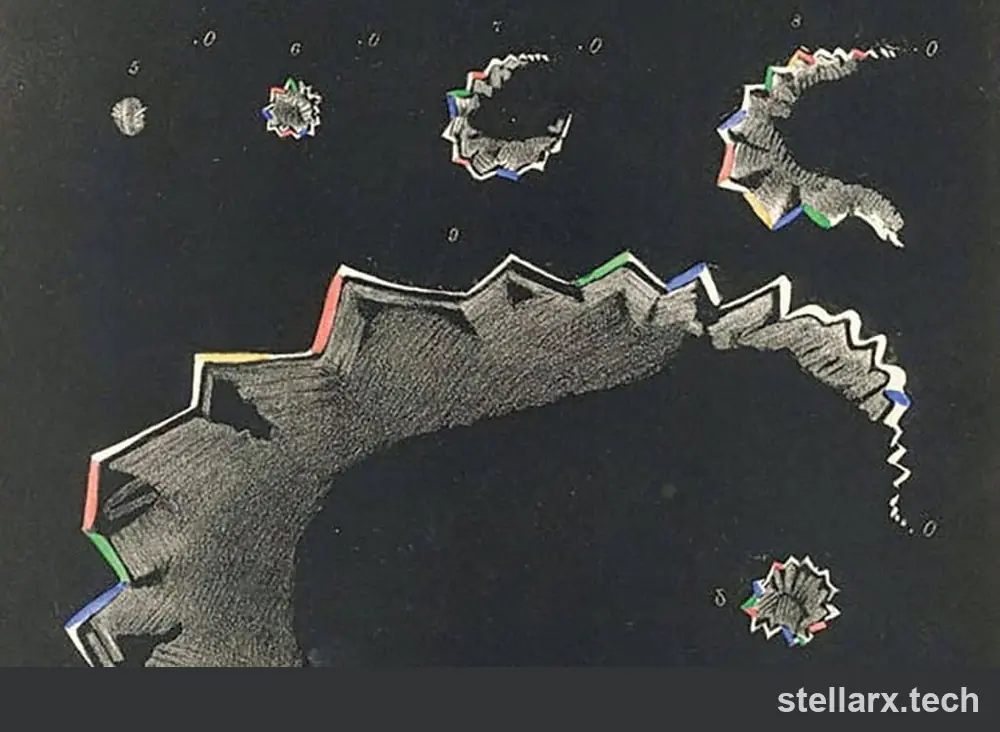
The drawing above is the one British physician Hubert Airy made in 1870, recording his own aura. He drew the same thing patients still describe today: a small shimmering blind spot that grows into a horseshoe with a jagged, coloured, fortification-like edge — the pattern clinicians call a fortification spectrum, or scintillating scotoma. It was drawn 150 years before anyone could image a living brain, and it is still accurate.
Her story is not unusual. Some patients spend tens of thousands of yuan in gastroenterology because their main symptoms are nausea and vomiting. Others, with dizziness, blurred vision and numb hands, have been told it was hysteria.
In 2026, a Chinese multicentre study called CHIME, published in The Journal of Headache and Pain, covered 28 provinces and more than 100 headache specialist centres, enrolling 11,814 patients. More than 85% of them had already undergone head imaging. Yet before enrolment, only 31% had ever received a correct diagnosis. 42.94% had never been given a definite diagnosis at all, and 26.06% had been misdiagnosed.
The first author of the CHIME registry points out that many doctors simply do not have a clear grasp of migraine — especially at primary care level. A large number still use diagnoses that have been retired, such as "nervous headache" and "neurovascular headache."
There is also a interviewing problem, and it is remarkably specific.
Take photophobia and phonophobia. If a doctor asks directly, "Are you afraid of light?" "Are you afraid of noise?", some patients will answer "no" — and the symptom disappears from the record.
Change the question and the answer changes. "When your head hurts, would you rather be out in the sunlight, or somewhere dim?" "Would you rather be in a noisy square, or a quiet room?" Now patients recognise it: they would rather be somewhere quiet and dim. They just would not have called that "being afraid of light."
Beyond technique, there is time. Migraine diagnosis leans heavily on the interview, and several doctors noted that the minutes available per patient in a real clinic are severely limited.
There Are Effective Treatments — Please Stop Guessing
Alongside the diagnosis gap sits a treatment gap that has lasted just as long.
Online, the remedies multiply endlessly. Foods: fries, cola, coffee. Behaviours: making yourself vomit, pressing on points, talking rapidly. Medical interventions: assorted painkillers, patent foramen ovale closure, nerve decompression surgery.
Some patients buy painkillers online for years. Certain products contain allylisopropylacetylurea, an ingredient banned in several countries because of the risk of severe thrombocytopenia and bleeding.
And overusing painkillers can produce medication-overuse headache (MOH) — where the treatment makes attacks more frequent, and the patient ends up in the loop everyone recognises: the more it hurts, the more pills; the more pills, the more it hurts.
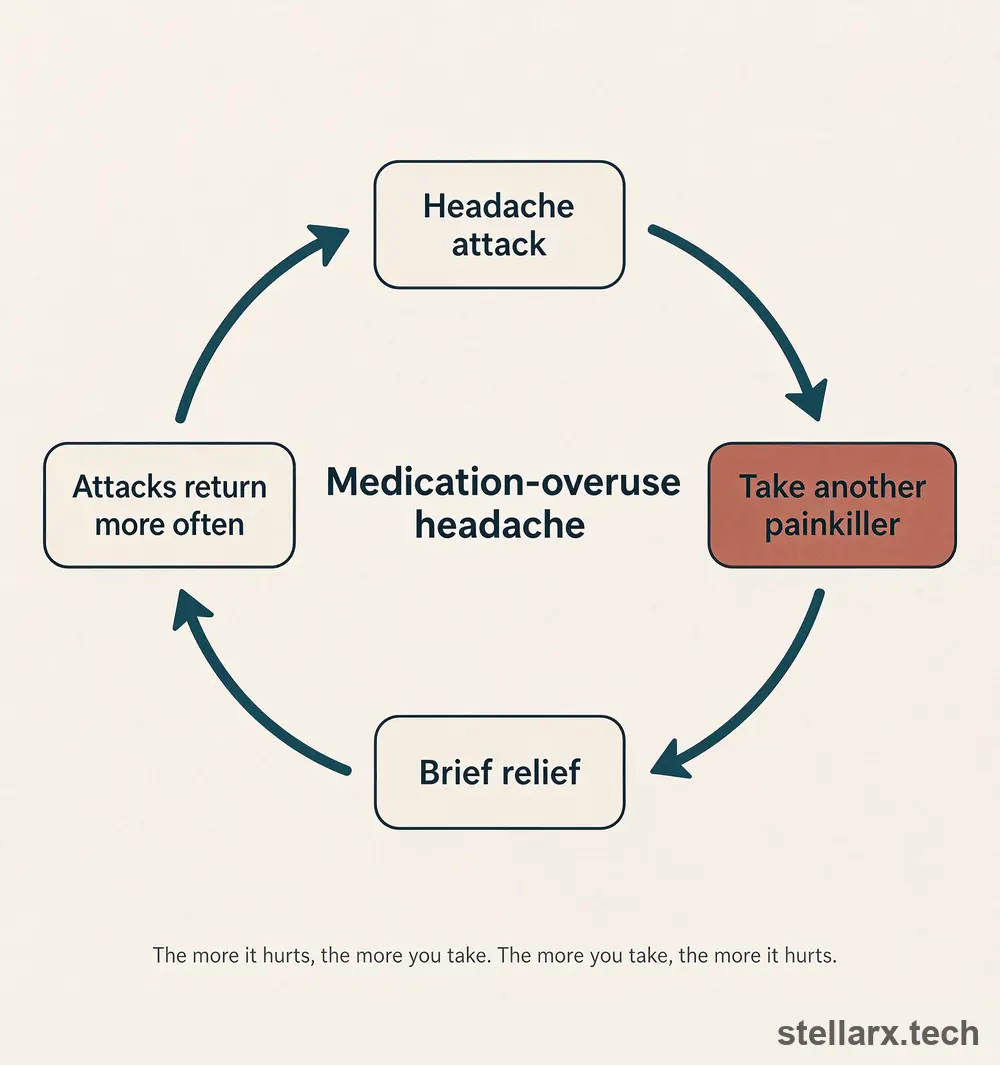
The advice from the CHIME author is straightforward: when attacks keep recurring and painkillers work less and less well, go back to hospital and have the treatment plan reassessed. Preventive treatment may be needed.
The Newest Treatment Just Entered Insurance — Half of Patients Get Far Fewer Attacks
Preventive treatment means taking medication even when your head does not hurt, to control how often attacks come, how long they last, and how severe they are.
Most traditional migraine preventives were never developed for migraine at all. They were borrowed from other diseases — propranolol from hypertension, topiramate from epilepsy. Because of efficacy or tolerability problems, many patients cannot stay on them.
US, 2026 AAN/AHS guideline. Offer preventive treatment if any one of these is met: migraine on 4 or more days a month; moderate-to-severe headache on 4 or more days a month; or migraine causing significant disability, with no minimum headache-day requirement. Prevention should also be offered to patients with medication overuse or medication-overuse headache. All of the above are Grade B recommendations.
China, 2022 guideline for diagnosis and treatment of migraine. The general indication is more than 2 migraine attacks a month, further stratified by headache days and disability. Indicated: no disability 6+ days/month