"Dad, this dish is way too salty!" "Is it? Tastes fine to me — maybe even a little bland."
Sound familiar? As parents get older, the food they cook gets saltier and saltier. It is not stubbornness: aging dulls the taste buds, so it takes more salt to taste anything at all. But the salt that restores their sense of flavor also pushes sodium intake past what a healthy body can handle — and excess sodium is one of the main dietary drivers of high blood pressure.
There is a fix that takes no willpower, no new diet, no bitter pills: switch the salt in their kitchen.
What low-sodium salt actually is
Low-sodium salt is also called potassium-enriched salt. The recipe is simple: replace part of the sodium chloride in ordinary salt with potassium chloride.
[TABLE: salt-swap-composition]
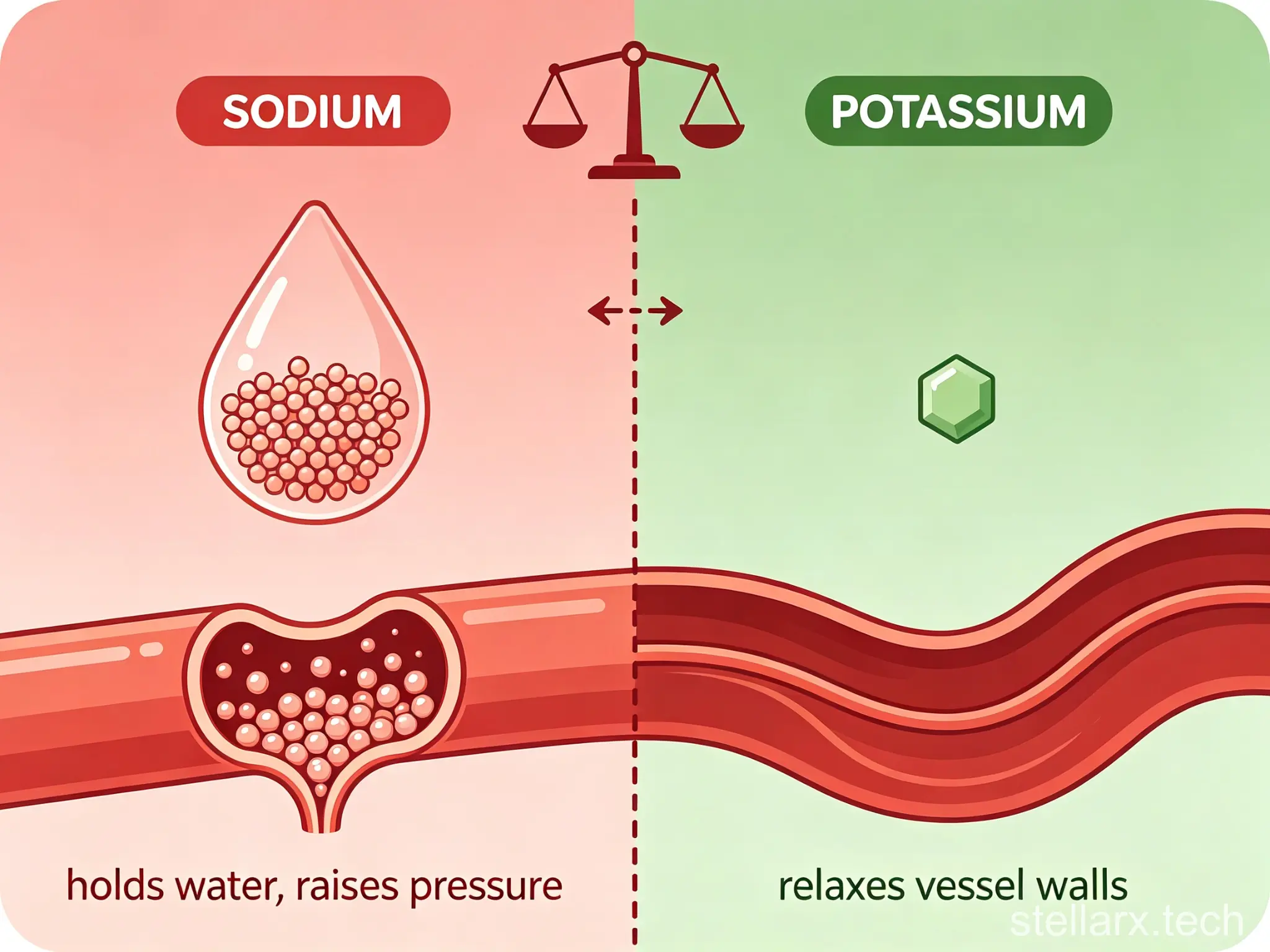
The swap does two things at once. You eat less sodium — the mineral that raises blood pressure. And you get more potassium — the mineral most people do not eat enough of, the one that helps keep blood pressure down.
The numbers from a 21,000-person trial
The strongest evidence comes from a large randomized trial. Researchers enrolled 21,000 people who either had a history of stroke, or were over 60 with high blood pressure that was not under control. Anyone taking medicines that affect potassium excretion, using potassium supplements, or with severe kidney disease was excluded.
Half the villages switched to low-sodium salt; the other half kept regular salt.
The results, compared with the regular-salt group:
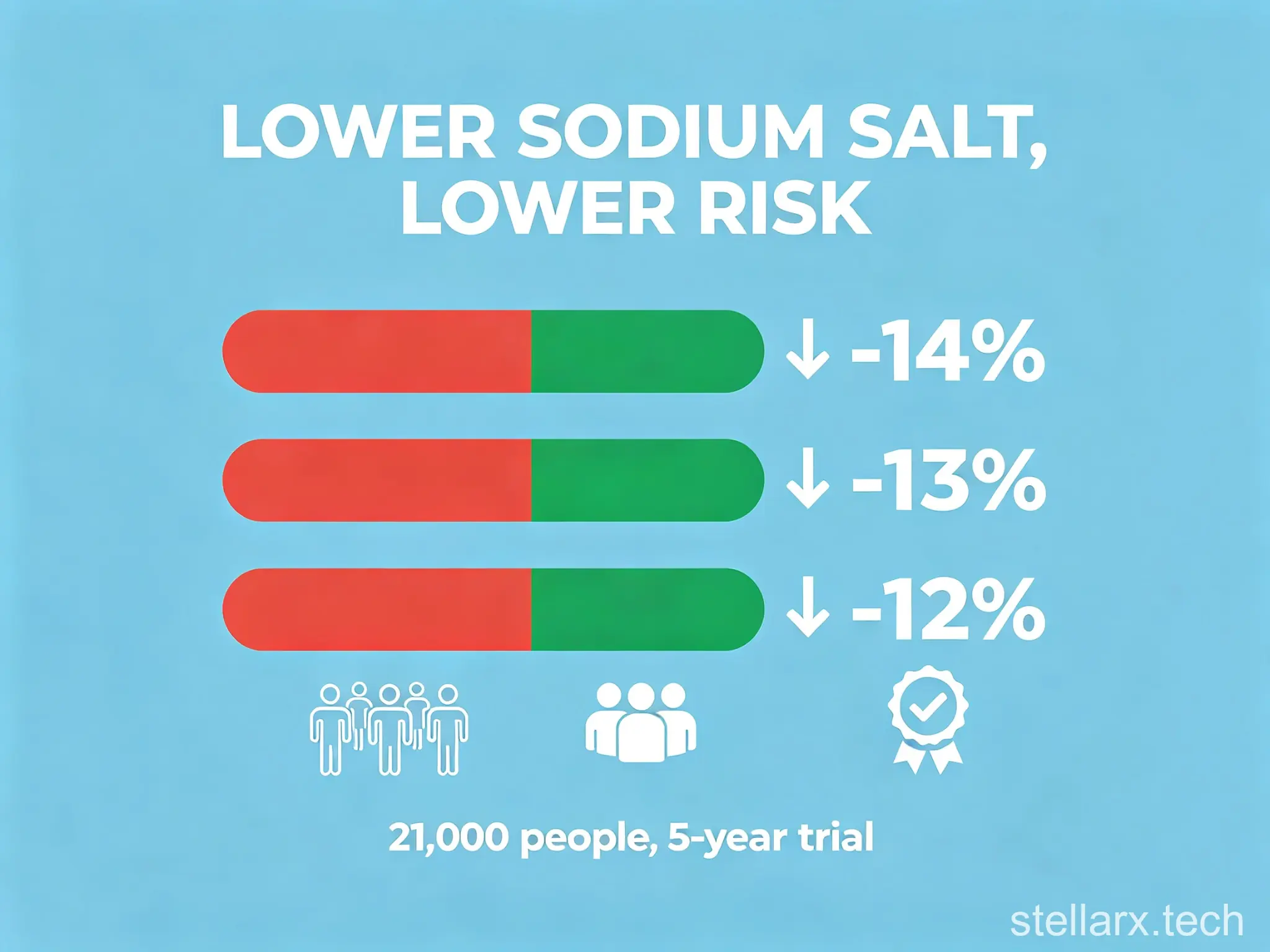
Stroke risk dropped 14%
Major cardiovascular events (stroke plus heart attack combined) dropped 13%
Risk of premature death dropped 12%
Even the trial's design stacked the deck against the salt: participants were not told to limit how much they used, and were given an average of 20 grams a day — while the average Chinese adult uses only about 11 grams. Eat as salty as you like, and the benefit still held.
Is it safe? Yes — for most people
Low-sodium salt was invented precisely to lower blood pressure, and its safety record is part of why the swap works as a population strategy.
Hyperkalemia (too much potassium in the blood) occurred in about 2% of people — and the rate was nearly the same in both the low-sodium and regular-salt groups.
Deaths linked to hyperkalemia were not higher in the low-sodium group.
The trial used a formula with 25% potassium chloride. Current evidence says that as long as potassium chloride stays at or below 30%, most people can use it without trouble.
Who the guidelines recommend it for
The 2024 Chinese guidelines on low-sodium salt promotion (published in the Chinese Journal of Preventive Medicine) recommend replacing regular salt with low-sodium salt for:
People with high blood pressure — whether or not they take medication. Clear blood-pressure-lowering effect, plus fewer cardiovascular events and deaths.
People at high cardiovascular risk: a history of stroke, coronary heart disease, peripheral vascular disease, or a 10-year cardiovascular risk of 10% or higher.
Middle-aged and older adults.
Healthy people with normal blood pressure — it lowers blood pressure, cuts new-onset hypertension, and does not cause low blood pressure.
Who must ask a doctor first
Low-sodium salt is not for everyone. A small minority should check with a doctor before switching:
Kidney problems: an abnormal glomerular filtration rate or urine protein test, or diagnosed chronic kidney disease. Be especially careful if eGFR is below 60 mL/(min·1.73 m²) or urine protein is positive. The kidney is the organ that removes excess potassium — when it is impaired, the extra potassium has nowhere to go.
People on medicines that block potassium excretion — especially the RAAS inhibitors (ACE inhibitors like "pril" drugs, ARBs like "sartan" drugs, and aliskiren) commonly used for high blood pressure and heart failure. If you are not on a RAAS inhibitor, ordinary blood-pressure or heart-failure drugs are usually fine.
Unless you have severe kidney disease or take a drug that clearly blocks potassium excretion, low-sodium salt is safe for you — and it prevents hypertension.
Buying rule: keep potassium chloride at or below 30%